
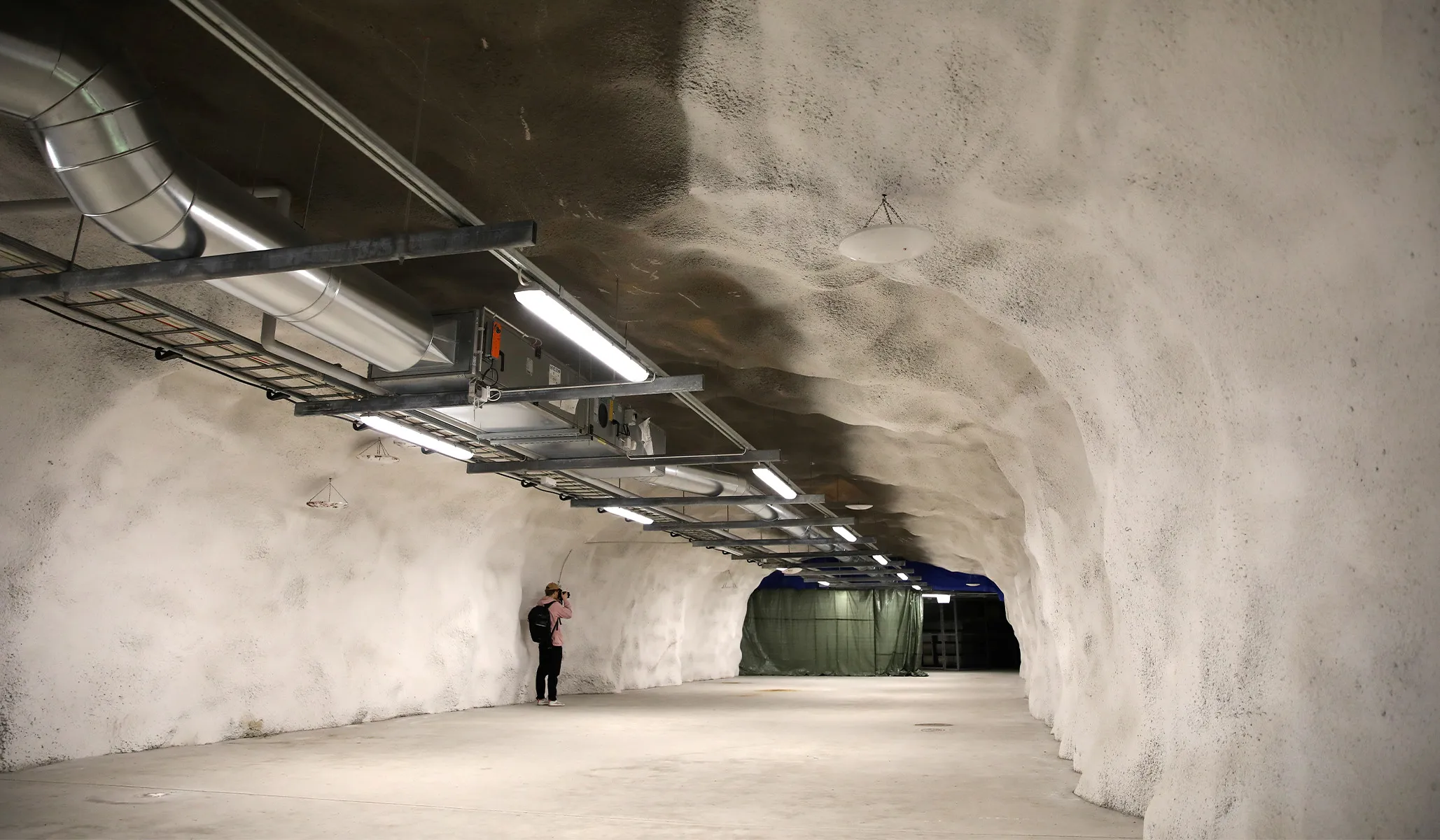


Finland’s long-standing investment in civil defence is drawing renewed international attention as Russia’s war in Ukraine forces European nations to reassess their preparedness for potential conflicts. Hidden beneath the streets of Helsinki lies one of the world’s most extensive underground shelter networks — a vast system capable of protecting nearly one million people in the event of war or a large-scale emergency.
According to The Sunday Times, Finland’s capital is built above more than 5,500 underground shelters, enough to accommodate the city’s population of over 675,000 residents while leaving room for thousands more. What was once viewed as an overly cautious approach is now being studied by governments around the world as a blueprint for modern civil defence.
A Defence Strategy Shaped by Geography and History
Finland’s security planning has always been influenced by its proximity to Russia. Helsinki lies less than 200 miles from St. Petersburg, while the country shares an 830-mile border with Russia — the longest border between any NATO member and Russia.
Unlike many European countries that reduced defence infrastructure after the Soviet Union collapsed in 1991, Finland continued expanding its underground protection network.
“We started building them in 1939 and never stopped. Under this city is a big cheese full of holes,” Jukka-Pekka Schroderus, from Helsinki’s City Rescue Department, told The Sunday Times.
The shelter system forms part of Finland’s broader Comprehensive Security strategy, which combines military readiness with civilian preparedness.
The model includes:
- Mandatory military service for men aged 18 and above, with voluntary service for women.
- Defence training courses for professionals, including editors and business executives.
- Weekend preparedness programmes teaching practical survival skills such as cooking without electricity, operating field kitchens and identifying drones.
- Construction companies maintained on six-hour standby to rapidly build defensive structures during emergencies.
An Underground Playground That Becomes a Nuclear Shelter
One of Helsinki’s most remarkable examples of dual-purpose infrastructure is the Play Cave, an indoor children’s play centre located beneath Hakaniemi Market Square.
On ordinary days, it functions as a colourful recreation space filled with climbing frames and trampolines. During a national emergency, however, it can be transformed into a nuclear-proof shelter capable of protecting up to 6,000 people.
A small blue triangle on an orange background near the entrance quietly identifies the facility as an official civil defence shelter.
“This is the idea of dual use. They are built by the city for emergencies but then rented out. It’s good they are used so we know everything works, but also very important for us that kids are playing here, so in times of crisis they are already very familiar with the place,” Schroderus explained.
Bomb Shelters Hidden Beneath Everyday Life
Finnish legislation requires all new office and residential buildings above a specified size to include bomb shelters.
Across Helsinki, these underground spaces serve multiple purposes during peacetime. Many operate as:
- Swimming pools
- Saunas
- Skate parks
- Go-kart tracks
- Churches
- Archery ranges
- Music rehearsal studios
- Sports facilities
One of the city’s largest shelters spans 15,000 square metres, carved approximately 20 metres beneath solid bedrock.
Visitors enter through two massive steel blast doors. The first absorbs the impact of explosions, while the second seals the shelter against chemical, biological and radioactive threats.
Inside, markings indicate where portable toilets and washing stations would be installed during emergencies. Storage facilities contain 2,000 folding beds, along with emergency supplies such as helmets, gloves, rubber boots, masks, pumps, filters, flashlights and other essential equipment.
Separate sections are designated for families, elderly residents and other vulnerable groups.
Designed to Operate Like a Submarine
Although the shelter houses 2,000 beds, it is designed to accommodate up to 6,000 people.
Schroderus explained that residents would rotate between sleeping, daily activities and maintenance duties.
“The idea is we are like a submarine where at any one time a third of people are resting, a third doing activities and a third on duty, cleaning,” he said.
The shelters are entirely self-sufficient, featuring independent power systems and large water storage tanks capable of sustaining occupants after the facility is sealed.
Each resident would receive approximately 50 litres of water, though food is not stocked inside the shelters. Instead, Finnish authorities encourage households to maintain a 72-hour emergency survival kit, including food supplies, medicines and portable power banks, ready to bring in the event of an evacuation.
Finland’s Underground Network Becomes an International Benchmark
For decades, Finland’s extensive civil defence preparations were often regarded as excessive by many outside observers.
That perception has shifted dramatically following Russia’s invasion of Ukraine in 2022, where repeated attacks on civilian infrastructure highlighted the importance of bomb shelters. Recent tensions in the Middle East have further reinforced global interest in resilient urban infrastructure.
Officials from several countries have since visited Helsinki to study the Finnish model firsthand. Delegations have included representatives from the United Kingdom, Ukraine, Saudi Arabia and other nations seeking to strengthen their own emergency preparedness.
“We’ve been contacted by Gulf countries and Israel and asked to advise others,” Schroderus said.
“We are happy to share our information, apart from a few classified things, but are also always updating by collecting ourselves from Ukraine, Switzerland and the Middle East.”
As geopolitical tensions continue to rise, Finland’s decades-long investment in underground infrastructure is increasingly being viewed as one of the world’s most comprehensive examples of civilian defence planning.