
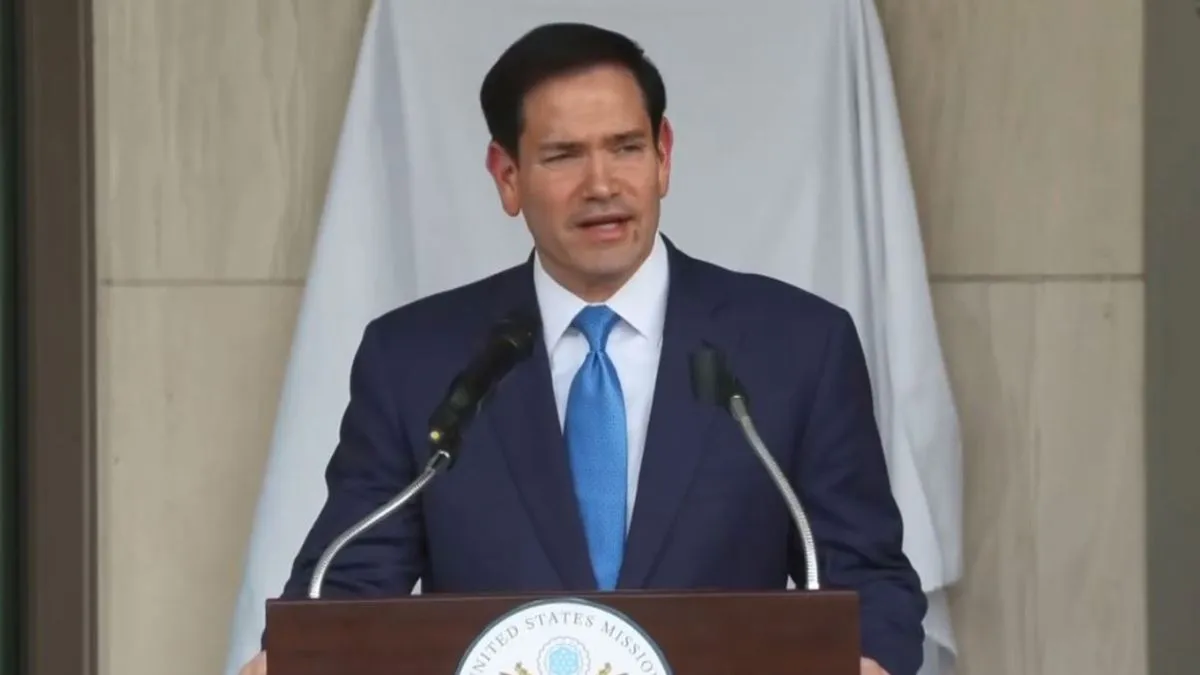


Marco Rubio on Saturday clarified that the United States’ new immigration policy requiring many temporary visa holders to leave the country before applying for permanent residency is not specifically aimed at India, but is part of a broader global immigration reform effort.
Speaking to media during his visit to New Delhi, Rubio said the changes are intended to streamline and strengthen the American immigration system after what he described as a major migration crisis in recent years.
‘This Is Not About India’: Rubio
“Well, it’s not about India. It’s about the whole world,” Rubio said.
“The United States has taken a decision that it needs to streamline and improve our system of immigration. The fact of the matter is, and I think every country would understand it, again, this is not about India. This is a global situation that we’re dealing with.”
Rubio claimed the US had experienced a severe migration crisis in the past few years, with over 20 million people allegedly entering the country unlawfully.
“Our country, unfortunately, faced a very serious migratory crisis a few years ago. Over 20 million people unlawfully entered the country. We saw abuses of the green card system in many cases as well. And so we decided that we were going to reform it,” he said.
New USCIS Policy Changes Green Card Process
The clarification comes after the United States Citizenship and Immigration Services introduced a policy that significantly changes how many immigrants on temporary visas can apply for permanent residency or Green Cards.
Under the revised rules, many applicants already living legally in the United States on temporary visas — including:
- H-1B workers
- International students
- Researchers
- Tourists
- Other non-immigrant visa holders
may now have to leave the US and complete Green Card processing from their home country instead of adjusting their status while remaining in America.
The policy redefines “Adjustment of Status” as an exceptional form of relief rather than a routine immigration pathway.
USCIS said applications would now be evaluated individually and officers would determine whether applicants qualify for what the agency described as an “extraordinary form of relief.”
Rubio Says System Will Become ‘More Stable’
Acknowledging that the transition could create difficulties for applicants, Rubio said reforms often come with disruptions in the short term.
“Any time you reform a system, there’s going to be some disruptions. There’s going to be some hiccups. There’s going to be some inconvenience,” he said.
However, Rubio insisted the revised immigration structure would eventually become more reliable and efficient.
“The policy and system will become much more stable in the long term… much more viable,” he stated.
“And I think Indians who seek to come to the United States are going to find themselves with a system that, in the long run, is going to prove to be more efficient and more effective and better for both them and our country as well.”
Concerns For Indian Professionals And Families
The changes could have a significant impact on Indian nationals living in the US, especially technology professionals and students who have historically relied on Adjustment of Status because of lengthy Green Card waiting periods and country-specific visa caps.
Immigration lawyers and advocacy groups have warned that requiring applicants to leave the US during processing may create major disruptions involving:
- Employment continuity
- Family stability
- Children’s education
- Long-term residency plans
Thousands of Indian-origin families currently waiting in Green Card backlogs could potentially be affected if the policy is implemented strictly.
Rubio Meets PM Modi In New Delhi
During his India visit, Rubio also held talks with Narendra Modi and conveyed an invitation from Donald Trump for the Prime Minister to visit the White House in the near future.
The visit comes amid ongoing discussions between India and the US on trade, immigration, defence cooperation and strategic ties.