
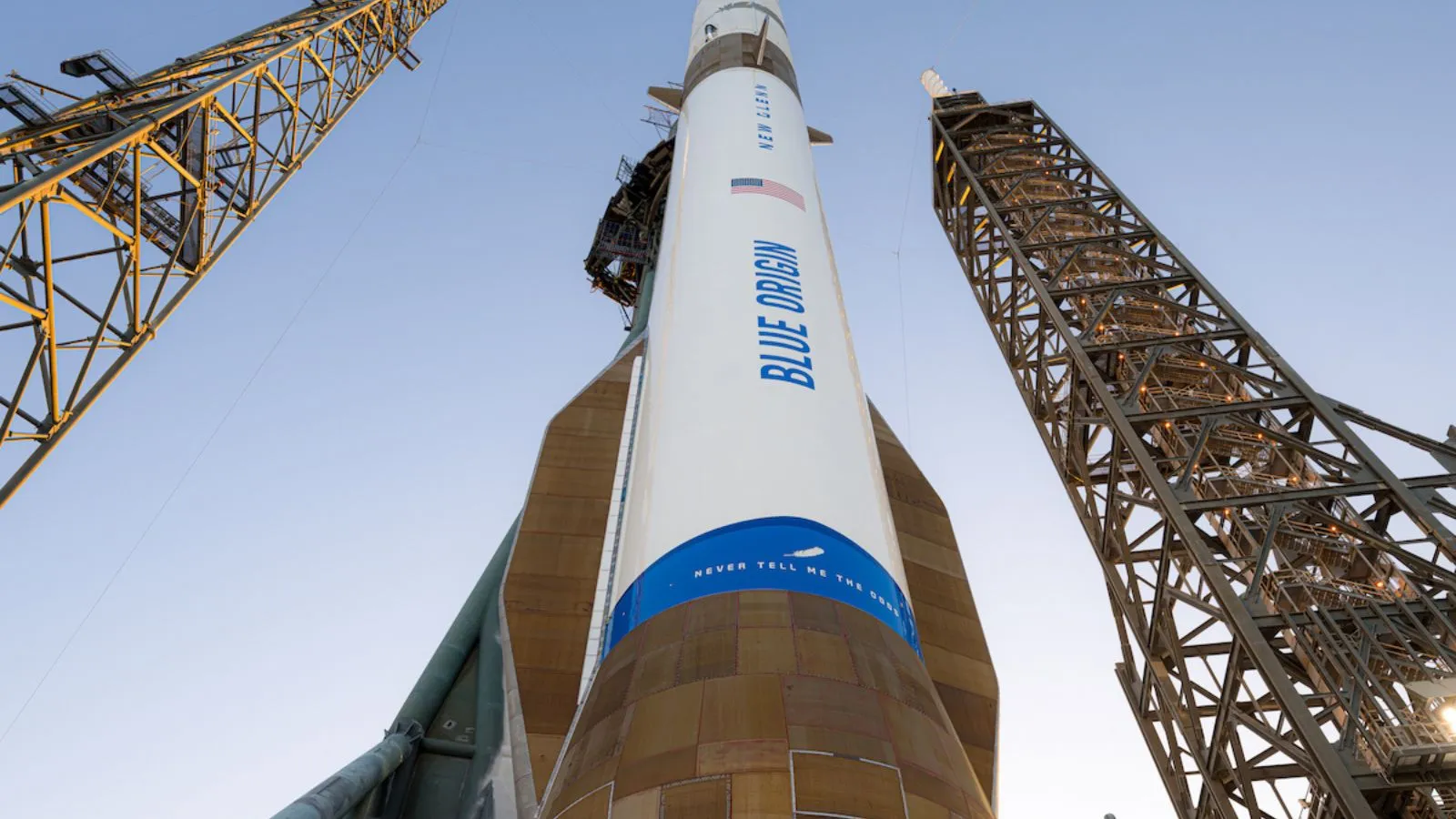


Jeff Bezos’ Blue Origin is facing renewed challenges in its long-running competition with Elon Musk’s SpaceX after a major explosion involving its New Glenn rocket damaged a launch facility in Florida, raising fresh concerns about the company’s ability to catch up with its rival.
The incident occurred on May 28, when one of Blue Origin’s New Glenn rockets exploded in a massive fireball at the company’s launch site. The blast left significant damage and dealt a blow to Blue Origin’s ambitions at a time when the company had been hoping to narrow the gap with SpaceX.
According to a report by the Financial Times, the explosion came at a particularly sensitive moment for Bezos, who has watched SpaceX establish itself as the dominant force in the commercial space industry.
SpaceX Continues To Pull Ahead
While Blue Origin works to recover from the setback, SpaceX has continued to expand its lead. Elon Musk’s company successfully launched around 170 missions last year and recently completed a highly anticipated initial public offering (IPO), further strengthening its financial position and market influence.
The success of SpaceX has reportedly not gone unnoticed inside Blue Origin.
“It burns Jeff up that we’re so far behind SpaceX,” a senior Blue Origin employee told the Financial Times, highlighting growing frustration within the company over its inability to match the pace of its competitor.
Before the explosion, Blue Origin had been preparing to accelerate operations and increase the frequency of New Glenn launches. The accident has now forced the company to focus on rebuilding damaged infrastructure while SpaceX continues to expand its capabilities.
Bezos’ Long-Term Space Ambitions
Jeff Bezos founded Blue Origin in 2000 with the vision of making space travel more accessible and eventually enabling millions of people to live and work in space.
For much of its early existence, however, the company functioned more as a research and development operation than a commercial launch provider. It only began transitioning into a more active spaceflight company under former NASA engineer Rob Meyerson during the late 2000s.
Blue Origin achieved success with its New Shepard suborbital rocket programme, but many of its accomplishments were overshadowed by SpaceX’s rapid advancements in reusable rockets, satellite deployment and commercial launch services.
Industry observers have often pointed to Blue Origin’s cautious corporate culture, development delays and periods of limited involvement from Bezos as factors that slowed the company’s progress compared with SpaceX.
Leadership Changes Sparked New Momentum
A major shift occurred in 2023 when former Amazon executive Dave Limp took over leadership of Blue Origin.
Under Limp’s stewardship, the company adopted a more aggressive strategy aimed at competing directly with SpaceX in multiple areas of the space business.
Among its ambitious initiatives is a proposal to deploy a constellation of 5,408 TeraWave satellites. Blue Origin claims the network could provide significantly faster internet speeds than SpaceX’s Starlink system.
The company has also reportedly submitted plans for an even larger satellite project known as Project Sunrise, a proposed constellation of approximately 51,000 satellites designed to support artificial intelligence workloads and advanced computing applications.
Challenges Beyond Rocket Development
Despite these ambitious plans, Blue Origin faces significant hurdles.
One challenge is financial. While SpaceX’s IPO has unlocked access to substantial capital, Blue Origin remains privately funded, largely relying on Bezos’ personal wealth. Analysts note that matching SpaceX’s financial firepower would require Bezos to sell a significant amount of his holdings in Amazon.
The company also faces concerns about employee incentives. Unlike SpaceX, where many employees stand to benefit from the company’s growing valuation and public-market success, Blue Origin workers have fewer opportunities to gain equity-linked rewards.
This difference could affect talent retention and motivation in an increasingly competitive aerospace industry.
Future Of New Glenn Under Scrutiny
The New Glenn rocket remains central to Blue Origin’s plans for growth. The heavy-lift launcher is designed to compete directly with SpaceX’s Falcon Heavy and future Starship missions.
However, following the recent explosion, questions remain about when New Glenn will return to flight.
Industry experts suggest that delays could prompt satellite operators and other commercial customers to seek launch opportunities elsewhere, with SpaceX likely to be the primary beneficiary.
Moon Mission Competition Intensifies
The rivalry between the two companies extends beyond commercial launches.
Both Blue Origin and SpaceX are developing lunar landing systems for NASA’s Artemis programme, which aims to return humans to the Moon.
NASA plans to test lunar landing technologies during the upcoming Artemis III mission, currently scheduled for next year.
The recent explosion represents a setback for Blue Origin’s lunar ambitions as well, potentially affecting development timelines and testing schedules.
Space Race Far From Over
Although Blue Origin remains one of the most well-funded private space companies in the world, the latest setback underscores the scale of the challenge it faces in catching SpaceX.
With SpaceX continuing to launch rockets at a record pace, expanding its satellite network and benefiting from fresh capital, Blue Origin will need a successful New Glenn recovery and consistent execution to close the widening gap.
For now, the balance of power in the private space industry remains firmly in SpaceX’s favour, leaving Bezos’ company with considerable ground to make up in one of the world’s most closely watched technological rivalries.