


New Delhi:
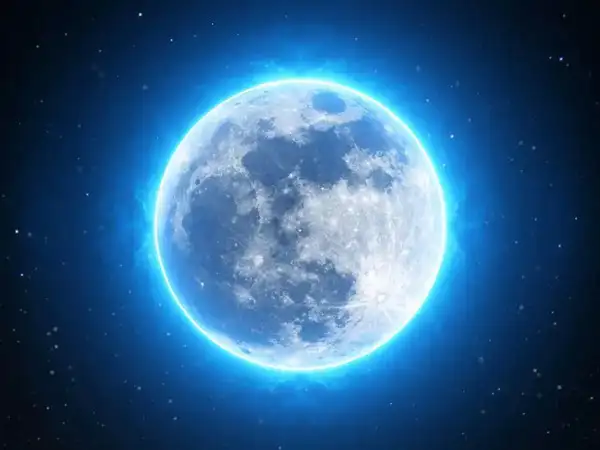
Skywatchers across the world are set to witness a rare celestial phenomenon this weekend as a “Blue Micromoon” appears in the night sky.
The event combines two unusual lunar occurrences into a single full moon — a Blue Moon and a Micromoon — making it one of the more distinctive astronomical events of 2026.
According to reports, the full moon will reach peak illumination at 8:45 UTC on May 31, 2026.
At that moment, the Moon will be approximately 252,360 miles away from Earth, making it the most distant and smallest-looking full moon of the year.
What Is A Blue Micromoon?
A “Blue Moon” does not refer to the Moon turning blue in colour.
Instead, the term is used for the second full moon occurring within a single calendar month.
Meanwhile, a “Micromoon” occurs when the Moon reaches its full phase while being near apogee — the farthest point in its orbit around Earth.
When these two events happen simultaneously, the result is called a Blue Micromoon.
Astronomers say the Moon will appear around 6 per cent smaller and roughly 10 per cent dimmer compared to an average full moon.
Why The Moon Will Look Smaller
The Moon follows an elliptical orbit around Earth, meaning its distance from Earth constantly changes.
When the full moon happens near perigee — the closest point to Earth — it is called a supermoon and appears larger and brighter.
In contrast, during a micromoon, the Moon is much farther away, causing it to appear slightly smaller in the sky.
Experts say the difference may not be immediately obvious to casual observers without comparing photographs of a normal full moon and a micromoon side-by-side.
It Will Not Actually Appear Blue
Despite the name, the Moon will not look sapphire, turquoise or blue.
Observers can expect the Moon to appear pale white, yellowish or golden-orange depending on atmospheric conditions and its position near the horizon.
The term “Blue Moon” is purely calendar-based and has no connection to the Moon’s actual colour.
Southern Hemisphere May Get A Better View
Astronomers say the event could appear particularly striking in parts of the Southern Hemisphere and Pacific regions.
In those areas, the Moon is expected to pass in front of Antares, the bright red star located in the constellation Scorpius.
Observers in the Northern Hemisphere will still be able to see the Moon positioned close to Antares, creating an attractive night-sky pairing.
How To Watch The Blue Micromoon
Best Time To View
The ideal viewing time depends on your location, but astronomers recommend looking shortly after moonrise or during late evening hours.
A clear sky away from city lights will provide the best viewing conditions.
No Telescope Required
The Blue Micromoon will easily be visible to the naked eye.
However, binoculars or telescopes can help reveal more details on the lunar surface, including craters and darker maria regions.
Photography Tips
Astrophotographers often photograph micromoons and compare them with future supermoons to highlight the noticeable difference in size.
Using foreground objects such as buildings, mountains or trees can also create dramatic compositions.
Why Blue Moons Are Rare
Blue Moons occur only once every two to three years because the lunar cycle lasts around 29.5 days and does not align perfectly with calendar months.
The combination of a Blue Moon and a Micromoon happening together is even less common, making this weekend’s event especially interesting for astronomy enthusiasts.
Astronomers Say Most People May Not Notice The Difference
Gianluca Masi, who will livestream the event through the Virtual Telescope Project, said many viewers may not instantly notice the Moon’s smaller appearance.
Still, the rarity of the event and its combination of lunar phenomena make it a notable astronomical spectacle.