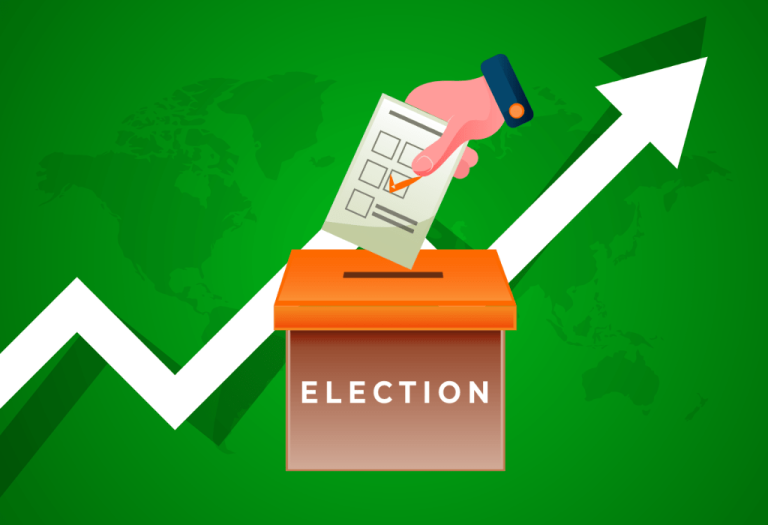
As the counting of votes for the 2026 Assembly Elections continues today, May 4, 2026, the Indian stock market is reacting with notable optimism. The combination of a “Saffron Surge” in West Bengal and Assam, alongside the surprising performance of actor Vijay’s TVK in Tamil Nadu, has created a bullish environment for investors.
The Market Reaction
- Sensex & Nifty: The Sensex jumped over 800 points, while the Nifty 50 comfortably crossed the 24,200 mark in morning trade.
- Investor Sentiment: Market participants are interpreting the BJP’s stronger-than-expected performance in West Bengal and Assam as a sign of political stability and policy continuity ahead of the 2029 General Elections.
Key Electoral Triggers for Investors
1. The West Bengal “Saffron Surge”
West Bengal is currently the primary market trigger. Early trends showing the BJP leading in a significant number of seats—particularly in the border districts—have fueled hopes of “double engine” growth. Analysts believe that policy alignment between the state and the Centre could unlock massive industrial investments in Eastern India.
2. The “Vijay Factor” in Tamil Nadu
The debut of actor Vijay’s Tamilaga Vettri Kazhagam (TVK) has added a layer of intrigue. By leading in several pockets and challenging the status quo, the TVK’s performance suggests a shift in the regional political landscape. For the markets, a diversified political field in a major industrial state like Tamil Nadu is being watched for potential impacts on local business policies.
3. Stability in Assam & Puducherry
With the BJP crossing the halfway mark in early trends in Assam (leading in 66 seats), the market feels reassured about the continuity of infrastructure projects and peace in the Northeast, which has become a key area for resource-linked companies.
What This Means for Your Portfolio
- Infrastructure & Defense: Stocks in these sectors are leading the rally, anticipating continued government spending and localized manufacturing pushes.
- Banking & PSU: Shares of public sector banks and enterprises are seeing fresh buying interest as political stability reduces the “risk premium” often associated with Indian markets during election years.
- Short-Term Volatility: Experts caution that while the current rally is sentiment-driven, the long-term trajectory will revert to fundamental factors like the Manufacturing PMI (which rose to a strong 54.7 in April) and global crude oil prices.
The 2026 election results are being viewed by the D-Street as a “semi-final” confirmation of the current administration’s popularity. If the trends in West Bengal hold, analysts predict the Nifty could test even higher resistance levels in the coming sessions.