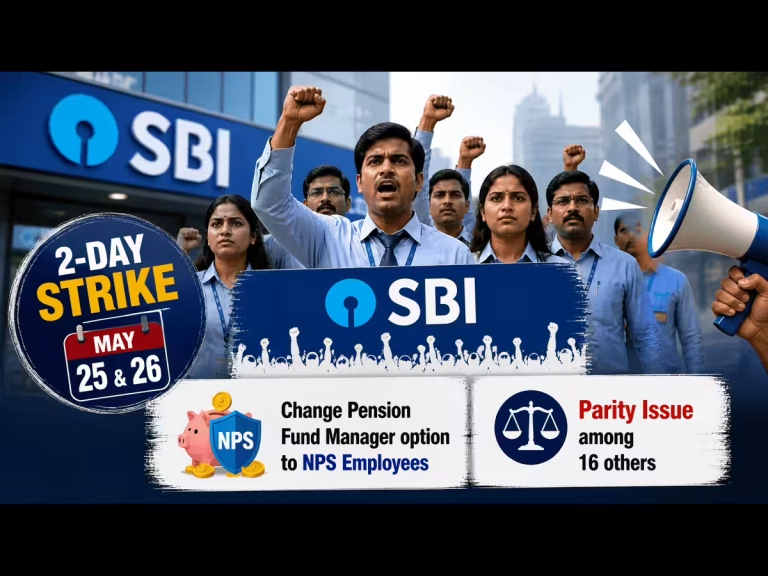
NEW DELHI – Millions of customers of the State Bank of India (SBI) may face significant service interruptions later this month as employee unions have called for a two-day nationwide strike on May 25 and 26, 2026. The protest, led by workmen staff unions, aims to press the management on a 16-point charter of demands primarily focused on pension reforms and staffing shortages.
As India’s largest public sector lender with over 500 million customers, any halt in SBI operations is expected to impact physical banking services across the country.
Why Are SBI Employees Striking?
The agitation stems from long-pending grievances regarding retirement benefits and an increasing administrative burden on branch-level staff.
The 16 Key Demands include:
- NPS Reforms: Allowing employees under the National Pension System (NPS) to select their own pension fund managers.
- Pension Parity: Resolving anomalies in pension benefits to ensure fairness across different employee batches.
- Staffing Crisis: Immediate recruitment to fill vacant posts and reduce the “extreme workload” currently faced by existing staff.
- Welfare & Promotions: Improvements in medical benefits, transfer policies, and fair promotional opportunities.
- Service Security: Strengthening grievance redressal and protecting employee rights.
Impact on Customers: What to Expect
If the strike proceeds, physical branch operations will be the most affected. Customers should prepare for delays in the following areas:
- Over-the-Counter Services: Cash deposits, withdrawals, and passbook updates.
- Clearing Operations: Delays in cheque clearances and inter-bank transfers processed through branches.
- Documentation: Loan processing, account opening, and locker access may be unavailable.
What will remain functional? Digital banking platforms are expected to remain operational. Customers can still rely on:
- SBI YONO App
- Internet and Mobile Banking
- UPI Transactions
- ATMs (Though cash replenishment could be impacted if the strike is prolonged).
Expert Guide for Customers
To minimize inconvenience, financial experts recommend the following:
- Advance Planning: Complete any essential branch-related tasks—such as high-value withdrawals or submitting loan documents—before May 24.
- Digital First: Use YONO or Internet banking for routine transfers and bill payments.
- Emergency Cash: Keep a modest amount of cash on hand in case local ATMs face high demand or technical glitches during the strike period.