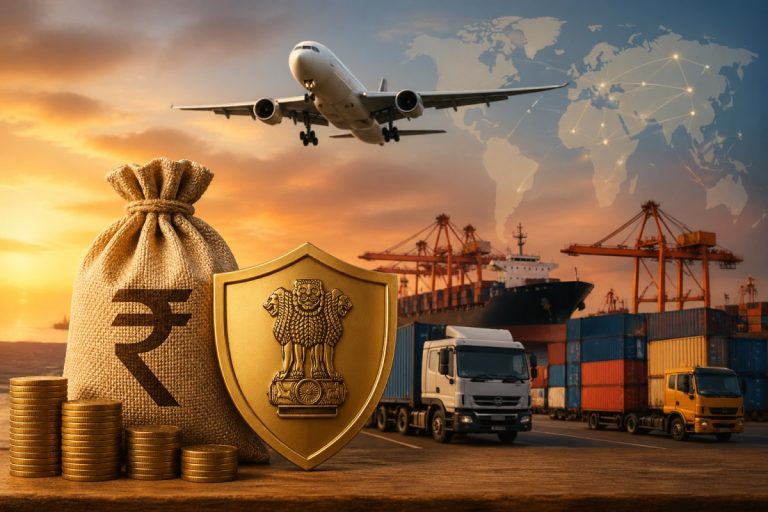
With the US-Iran war disrupting global trade and sending energy prices soaring, the Indian government is reportedly finalizing a massive ₹2.5 lakh crore financial support package. This “sovereign guarantee” framework is designed to protect key industries—ranging from aviation to manufacturing—from the economic aftershocks of the Middle East crisis.
A Sovereign Shield for Businesses
Modeled after the COVID-era Emergency Credit Line Guarantee Scheme (ECLGS), the new package aims to ensure that banks continue lending to businesses despite the heightened geopolitical risk.
- Total Outlay: ₹2.5 lakh crore ($26.7 billion) in credit guarantees.
- Guarantees: The government will back up to 90% of the loan amount, significantly reducing the risk for lenders.
- Targeted Aid: While the scheme covers various sectors, it primarily targets MSMEs in textiles and glass, which are facing severe raw material shortages and rising production costs.
- Loan Ceiling: Eligible borrowers can access loans up to ₹100 crore with capped interest rates and no processing fees.
Emergency Bailout for Airlines
The aviation sector is currently the “frontline” of this economic shock due to the dual impact of skyrocketing jet fuel (ATF) prices and the closure of critical West Asian air corridors.
- ₹4,000–₹5,000 Crore Window: A dedicated financing facility specifically for domestic carriers.
- Borrowing Limits: Each airline is eligible for up to ₹1,000 crore in sovereign-backed loans.
- Promoter Clause: Carriers can access an additional ₹500 crore if their promoters invest an equivalent amount, ensuring “skin in the game.”
- Potential Beneficiaries: Cash-strapped airlines like SpiceJet, which are struggling with grounded fleets and unpaid dues, are expected to be the primary beneficiaries.
The RELIEF Scheme for Exporters
In addition to the credit lines, the Ministry of Commerce has expanded the RELIEF (Resilience and Logistics Intervention for Export Facilitation) scheme.
- Financial Aid: A ₹497 crore fund to reimburse exporters for “extraordinary freight escalation” and war-related insurance premiums.
- Geographic Expansion: Originally focused on the Gulf, the government recently added Egypt and Jordan to the list of eligible destinations for transshipment support.
- Insurance Cover: The state-owned ECGC Ltd is providing up to 100% risk coverage for stranded goods bound for the conflict zone.
Economic Context: The Hormuz Factor
The urgency of this package is driven by the semi-blockade of the Strait of Hormuz, through which nearly 68% of India’s LNG and a vast portion of its crude oil transit. With oil prices rattling the Sensex and Nifty throughout March and April, this ₹2.5 lakh crore intervention is seen as the government’s primary tool to prevent widespread bankruptcies and stabilize the domestic economy.