
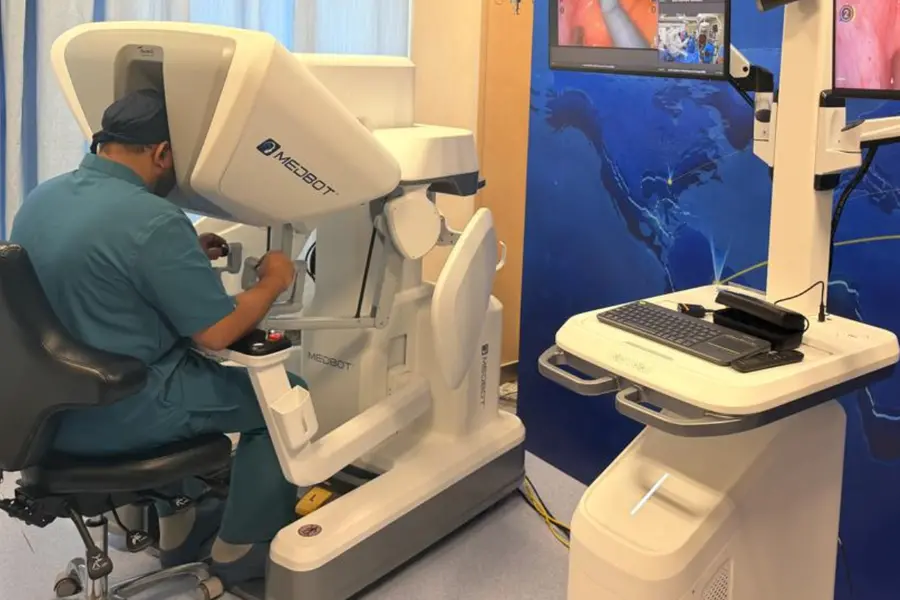


A groundbreaking medical achievement has pushed the boundaries of modern healthcare. A Hyderabad surgeon successfully performed a complex robotic surgery on a patient in India while physically located more than 4,000 kilometres away in China, marking a major leap in telesurgery technology.
The procedure highlights how robotic systems and high-speed connectivity are reshaping surgical practices, allowing doctors to operate across continents in real time.
How The Remote Surgery Was Performed
The surgery was conducted by Dr Syed Mohammed Ghouse, a robotic surgeon at the Asian Institute of Nephrology and Urology.
The patient was admitted in Hyderabad, while the doctor operated from Tongji Hospital in Wuhan, China, using a robotic system connected through a secure high-speed network.
The operation involved a ureteric reimplant surgery for a patient diagnosed with lower ureteric stricture. The medical team in Hyderabad prepared the patient, while Dr Ghouse controlled the robotic instruments remotely in real time.
The Technology Behind Telesurgery
The procedure was performed using the MedBot robotic platform developed by MicroPort, a Chinese medical technology company.
The system operates through three key components:
- A patient-side robotic unit
- An imaging and processing console
- A surgeon’s remote control console
From his console in Wuhan, the surgeon manipulated robotic arms in Hyderabad with precision, replicating the experience of an in-person robotic surgery.
Real-Time Coordination Across Countries
A trained surgical assistant remained physically present in Hyderabad throughout the operation to monitor the patient and assist if required.
Continuous two-way communication between teams in India and China ensured smooth coordination during every stage of the surgery.
According to the surgeon, the experience felt as seamless as operating inside the same operating theatre despite the distance.
Internet Connectivity and Safety Measures
Stable high-speed internet was crucial for the success of the procedure, with speeds of 30–50 Mbps required for real-time control and imaging transmission.
Hospitals maintained multiple backup internet lines to prevent disruptions. Even in the event of connectivity failure, a surgical assistant on-site could immediately take control of the situation.
These safety protocols ensured that patient risk remained minimal throughout the operation.
Recovery and Medical Outcome
Following the successful surgery, the patient recovered well and was discharged on the same day, highlighting the efficiency of robotic-assisted procedures.
A Glimpse Into The Future of Surgery
This milestone at Asian Institute of Nephrology and Urology demonstrates how telesurgery could transform access to expert medical care, especially in remote or underserved regions.
While still in its early stages, such advancements suggest a future where geography may no longer limit surgical expertise.