
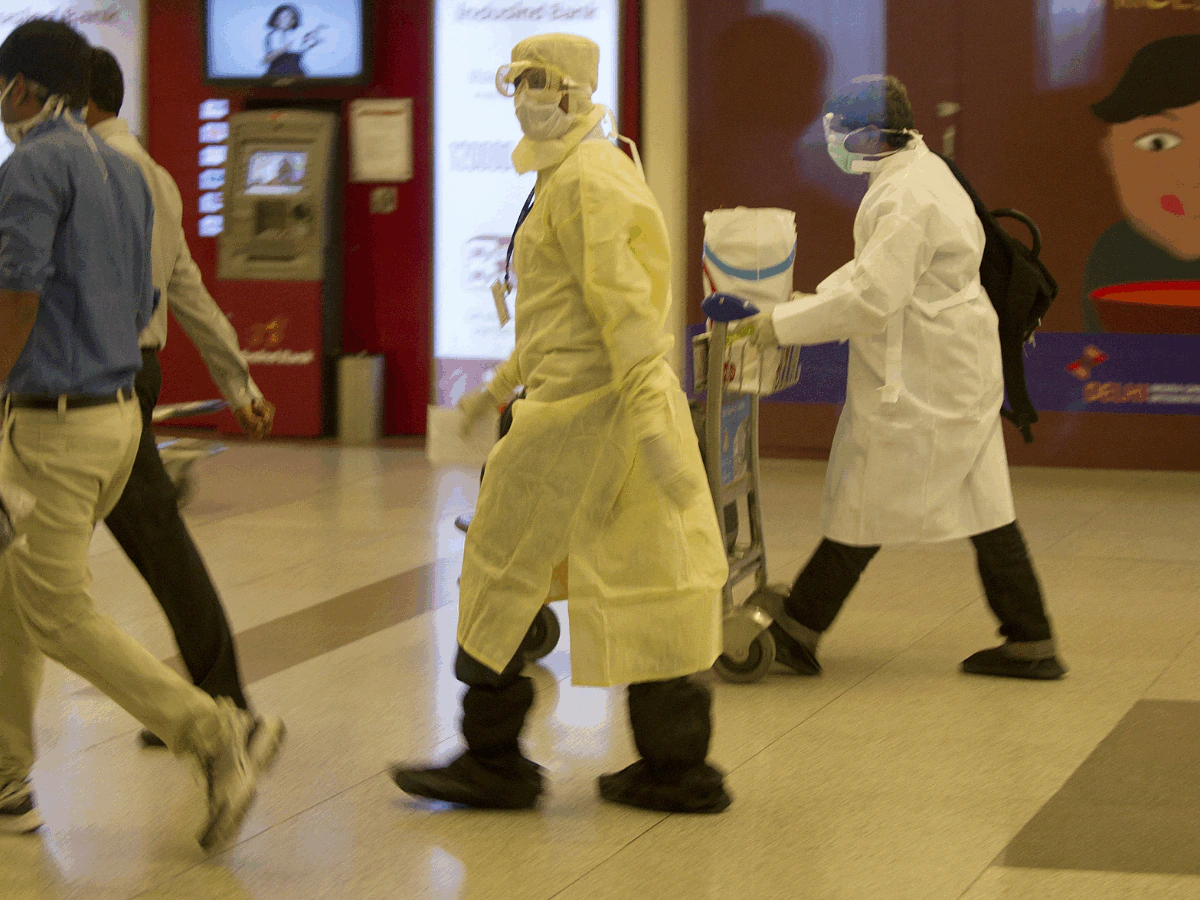


Health authorities across India have intensified surveillance and quarantine measures after two suspected Ebola cases were reported in Bengaluru and Ahmedabad in May 2026. The developments have prompted heightened screening at airports and increased monitoring of travellers arriving from Ebola-affected regions in Africa.
The alert comes after the World Health Organization (WHO) classified recent Ebola outbreaks in Uganda and the Democratic Republic of Congo (DRC) as a Public Health Emergency of International Concern (PHEIC).
While officials remain cautious, authorities have stressed that no confirmed Ebola case has been detected in India so far.
Bengaluru Woman Tests Negative For Ebola
The first suspected case involved a 28-year-old woman from Uganda who arrived in Bengaluru and later developed mild symptoms, including body ache and fever-like discomfort.
As a precaution, she was isolated at the Epidemic Diseases Hospital in Bengaluru and her samples were sent to the National Institute of Virology (NIV), Pune for testing.
Health officials later confirmed that the woman tested negative for Ebola, bringing significant relief to authorities and the public.
Second Suspected Case Under Observation In Ahmedabad
The second case concerns a 37-year-old businessman from Congo, identified as Amuri Lokula, who recently travelled through Mumbai, Silvassa, Daman, and Vadodara before developing symptoms such as fever, cold, and cough.
He was admitted to a special isolation ward at Ahmedabad Civil Hospital, while his samples were sent to NIV Pune for examination. Authorities expect the test results within 24 to 48 hours.
Three individuals who came into close contact with him, including two travel companions and a doctor, have also been placed under medical observation as part of precautionary measures.
Airport Surveillance Intensified Across India
Following these suspected cases, the Airport Health Organisation (APHO) has strengthened screening protocols at major airports across the country.
Travellers arriving from Ebola-affected regions are undergoing detailed health checks, and even mild symptoms such as headaches or fatigue are being treated with caution.
Health officials are actively tracking passengers, isolating suspected cases, and conducting rapid testing to prevent any potential spread.
Authorities continue to follow strict WHO guidelines for quarantine, contact tracing, and surveillance.
What Is Ebola And How Does It Spread?
Ebola Virus Disease (EVD) is a rare but severe viral infection that affects humans and certain animals. The virus attacks the immune system and blood vessels, potentially causing severe fever, bleeding, and organ failure.
Unlike airborne illnesses such as influenza or COVID-19, Ebola spreads through direct contact with bodily fluids of an infected person or contaminated surfaces.
Transmission can occur through exposure to blood, saliva, sweat, vomit, or infected medical equipment, making isolation and protective measures critical in controlling outbreaks.
Common Symptoms Of Ebola
Symptoms of Ebola can appear within 2 to 21 days after exposure and may include:
- High fever
- Severe headache
- Muscle pain
- Extreme fatigue
- Vomiting
- Diarrhoea
- Internal or external bleeding in severe cases
Doctors advise immediate medical attention if symptoms develop after travel to affected regions.
Should India Be Worried?
Health experts say there is currently no reason for panic.
The recent incidents demonstrate that India’s disease surveillance and emergency response systems are functioning effectively. Suspected cases are being identified early, isolated quickly, and tested before any community transmission can occur.
Since Ebola does not spread easily through the air and requires direct contact with infected bodily fluids, the likelihood of a large-scale outbreak in India remains extremely low if strict precautions continue.
Important Advice For Travellers
Travellers returning from or transiting through Ebola-affected African countries are being advised to monitor their health carefully for up to 21 days after arrival.
Anyone experiencing symptoms such as fever, headache, fatigue, or vomiting should immediately contact health authorities or visit the nearest hospital.
Officials also recommend maintaining strict hand hygiene, avoiding close contact with sick individuals, and following all airport screening guidelines.