
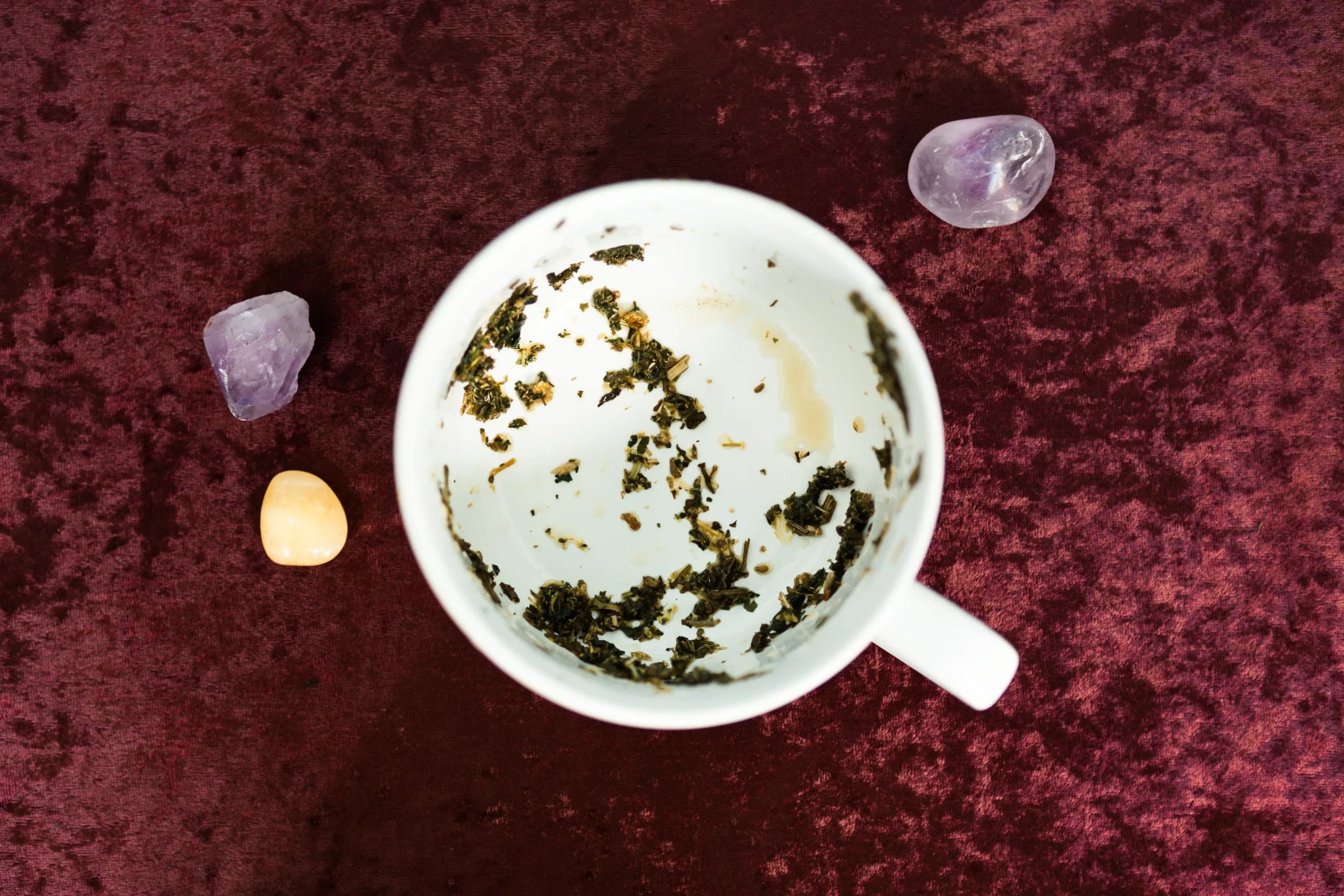


Have you ever looked at the tea leaves left at the bottom of your cup or noticed unusual patterns in coffee grounds and wondered if they meant something? For centuries, people across different cultures have believed that the remnants of everyday beverages can offer symbolic insights into life, relationships and future possibilities.
This fascinating practice is known as tasseography, also called tasseomancy, a form of divination that interprets patterns formed by tea leaves, coffee grounds or even wine residue. While it is not recognised as a scientific method of prediction, it remains a popular cultural tradition and a tool for personal reflection.
What Is Tasseography?
Tasseography is the practice of reading symbols and shapes that appear after drinking tea, coffee or wine. Practitioners believe these patterns can reveal messages about a person’s emotions, relationships, opportunities and life path.
Rather than relying on scientific evidence, tasseography is rooted in symbolism, intuition and storytelling. Many people view it as a reflective exercise that encourages self-awareness and contemplation.
Tea Leaf Reading: The Most Popular Form
Tea leaf reading is perhaps the best-known form of tasseography and has strong roots in British, Middle Eastern and Eastern European traditions.
The process involves:
- Drinking a cup of loose-leaf tea
- Leaving a small amount of liquid in the cup
- Swirling the cup gently
- Turning it upside down
- Observing the patterns left behind
Readers interpret various symbols that emerge from the leaves.
Common interpretations include:
- Birds: News, communication or travel
- Circles: Completion, success or fulfilment
- Lines: Journeys, choices or transitions
- Hearts: Love and relationships
- Trees: Growth and stability
Interpretations often vary depending on the reader’s intuition and cultural traditions.
Coffee Ground Reading: A Turkish Tradition
Coffee cup reading is especially popular in Turkey, Greece and parts of the Middle East.
After drinking traditional unfiltered coffee, the cup is turned upside down onto a saucer. As the grounds settle and dry, patterns form along the walls of the cup.
In many traditions, different areas of the cup represent:
- The past
- The present
- The future
Symbols such as animals, roads, mountains or human figures are interpreted to offer insights into upcoming opportunities, challenges or personal relationships.
Wine Reading: The Lesser-Known Practice
Though less common, some European traditions include reading the residue left by wine inside a glass.
Unlike tea and coffee readings, wine interpretations are often more abstract and focus on:
- Emotional transitions
- Personal desires
- Spiritual growth
- Life changes
Because wine leaves fluid and unpredictable patterns, interpretations tend to be highly intuitive.
Science Or Symbolism?
Experts emphasise that tasseography is not scientifically proven and should not be viewed as a method for predicting the future.
Instead, psychologists suggest that practices like tea leaf reading often work because the human brain naturally seeks patterns and meaning. The process can encourage reflection, creativity and self-exploration.
For many people, the value lies not in fortune-telling but in the opportunity to pause, reflect and consider different perspectives on their lives.
Why It Still Fascinates People Today
In an era dominated by technology and constant distractions, rituals like tea leaf and coffee cup reading offer a moment of curiosity and mindfulness. Whether approached as a cultural tradition, a social activity or a mystical practice, tasseography continues to captivate people around the world.
Sometimes, a simple cup of tea or coffee becomes more than just a beverage—it becomes an invitation to slow down, reflect and imagine what possibilities may lie ahead.