
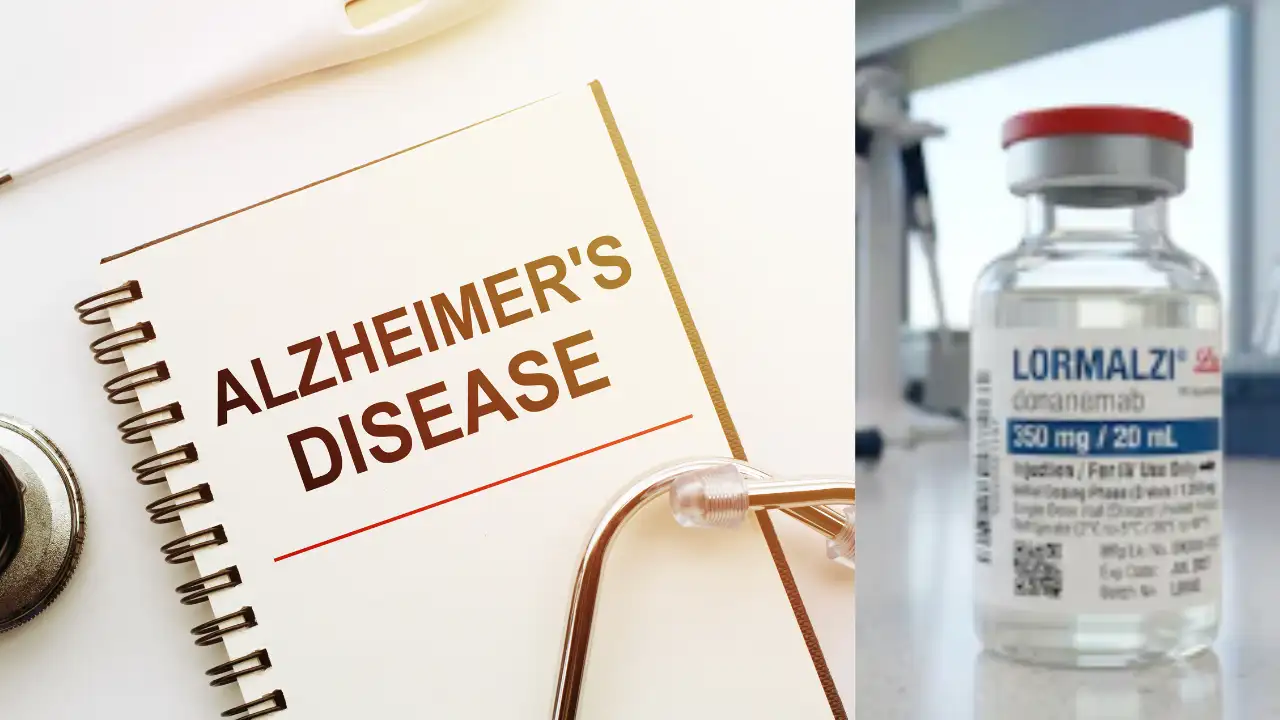


India has gained access to two significant new medicines targeting Alzheimer’s disease and lung cancer, marking an important development in advanced treatment options for patients battling two of the country’s most serious health challenges.
Eli Lilly launched Lormalzi, India’s first disease-modifying treatment for Alzheimer’s disease, while Roche introduced Tecentriq SC, the country’s first subcutaneous immunotherapy for lung cancer.
Both launches are being seen as major breakthroughs in neurological and cancer care, though experts caution that accessibility, affordability and early diagnosis remain major challenges.
Donanemab Targets Alzheimer’s Disease Itself
Unlike older Alzheimer’s treatments that mainly manage symptoms, Donanemab is designed to slow the progression of the disease itself.
The drug works by targeting amyloid-beta plaques in the brain, which are associated with Alzheimer’s disease. It uses monoclonal antibodies to help the immune system clear these plaques from brain tissue.
Clinical trial data from the Phase 3 TRAILBLAZER-ALZ 2 study showed that the drug slowed cognitive and functional decline in early-stage Alzheimer’s patients over an 18-month period.
However, doctors stress that the treatment is approved only for patients with very early Alzheimer’s disease or mild cognitive impairment linked to Alzheimer’s.
Early Diagnosis Remains A Major Challenge In India
Experts say one of the biggest obstacles in India is that most Alzheimer’s patients are diagnosed too late.
Dr Manjari Tripathi said patients in India often arrive at hospitals during middle or advanced stages of dementia, while Donanemab is intended only for very early-stage cases.
She also warned that the treatment carries risks including brain swelling and microbleeding, making informed consent and careful monitoring essential.
AIIMS Delhi specialists noted that wider use of such therapies would require major improvements in:
- Early dementia screening
- Biomarker-based diagnosis
- Advanced neuroimaging
- Memory care infrastructure
High Cost May Limit Access
Eli Lilly’s Lormalzi has been priced at around ₹91,688 per vial and is administered through monthly intravenous infusions.
The company has indicated that an alternative access programme may be offered for eligible patients, though affordability is expected to remain a significant concern for many families.
Tecentriq SC Changes How Immunotherapy Is Delivered
Roche’s Tecentriq SC introduces a new delivery mechanism for cancer immunotherapy rather than a new molecule itself.
The medicine contains atezolizumab, a PD-L1 inhibitor already used in cancer treatment. The new formulation allows the drug to be delivered as a quick subcutaneous injection in the thigh or arm instead of a lengthy intravenous infusion.
The injection reportedly takes around seven minutes compared to traditional infusion sessions lasting close to an hour.
Same Cancer Outcomes, Faster Treatment
Clinical trials found that the subcutaneous version provides similar efficacy and safety outcomes as the intravenous version.
The treatment works by blocking the PD-L1 protein that cancer cells use to suppress the body’s immune response, allowing T-cells to attack tumours more effectively.
Studies also showed strong patient preference for the newer formulation due to shorter hospital visits and reduced treatment burden.
Benefits For Hospitals And Patients
Experts believe Tecentriq SC could significantly reduce pressure on overcrowded oncology day-care centres by freeing up infusion chairs and shortening treatment timelines.
Dr Pragya Shukla said the new formulation could make cancer care more convenient and less disruptive for patients while also reducing associated hospital costs.
Expensive Advanced Therapies Raise Access Questions
Tecentriq SC has been priced at approximately ₹3.70 lakh per vial, highlighting the growing debate around affordability of advanced therapies in India.
While both launches represent important scientific advances, doctors say wider adoption will depend on:
- Early diagnosis systems
- Insurance coverage
- Cost accessibility
- Specialised healthcare infrastructure
- Long-term patient monitoring
A Shift In India’s Healthcare Landscape
The arrival of these therapies signals a broader transformation in India’s healthcare ecosystem toward precision medicine and advanced biologic treatments.
As life expectancy rises and chronic diseases become more common, experts believe demand for sophisticated neurological and cancer therapies will continue to grow rapidly.