
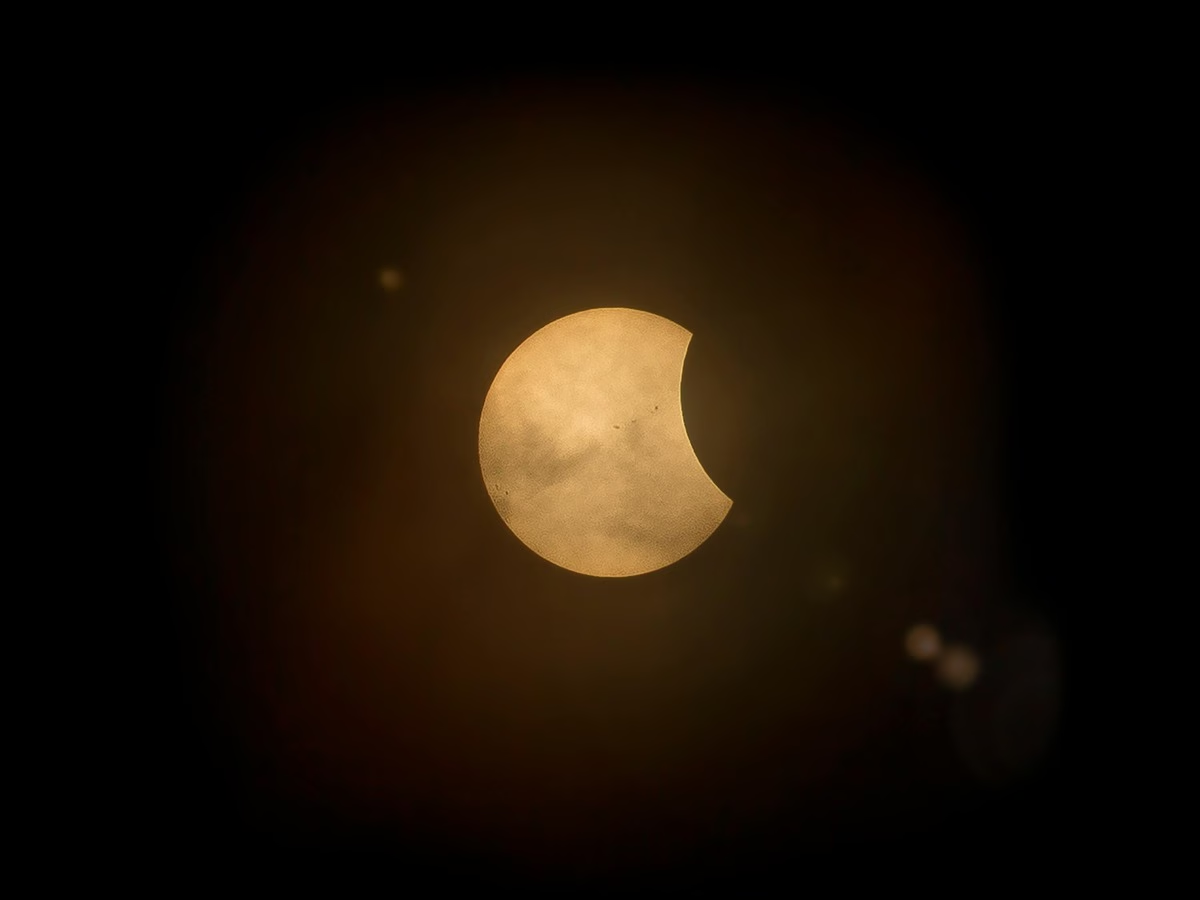


The year’s final major celestial event is heading for a rare astronomical and cultural intersection. On August 28, 2026, a total lunar eclipse will unfold across the globe. What makes this particular event highly noteworthy in India is its direct scheduling overlap with Shravan Purnima the auspicious full moon day dedicated to the celebration of Raksha Bandhan.
The unusual cosmic alignment of a major Hindu festival with a total lunar eclipse, popularly termed a “Blood Moon,” has naturally sparked questions and active discussions among devotees regarding how it might impact traditional festivities.
The Science of a Blood Moon:
A total lunar eclipse occurs when the Earth aligns directly between the Sun and the Moon, casting its full shadow over the lunar surface. As sunlight passes through the Earth’s atmosphere, shorter wavelengths of light scatter, while longer red wavelengths filter through and bend toward the Moon, bathing it in a striking, deep reddish hue.
Will the Eclipse Affect Raksha Bandhan Rituals in India?
For millions of families planning their traditional celebrations, the central question is whether eclipse-related spiritual restrictions will disrupt the auspicious timing for tying rakhis. Fortunately, astronomers and Vedic scholars offer a very reassuring answer.
Because of the specific orbital paths during this event, the total lunar eclipse of August 2026 will not be visible from India. While the visual spectacle will line up beautifully for observers across much of Europe, Africa, and parts of North and South America, skies over the Indian subcontinent will remain entirely unshaded.
Zero Impact on Sutak Kaal and Festivities
According to traditional Hindu beliefs and astrological tenets, an eclipse only carries ritualistic implications for a region if it is physically visible there. Consequently, families can proceed with their regular holiday plans without any structural changes:
- No Sutak Kaal: The Sutak Kaal (the traditional, inauspicious period of fasting and prayer restrictions observed for up to nine hours before a lunar eclipse) will not be in effect anywhere in India.
- Standard Ritual Timings: All Raksha Bandhan rituals, family gatherings, and the tying of sacred threads can be performed normally throughout the day based on standard Purnima Tithi calculations.
- Post-Eclipse Customs: While some families historically choose to perform charitable acts or cleansing prayers following global eclipses as part of general spiritual merit, there is no structural requirement to alter your festival day or avoid sweets.
Ultimately, from both a scientific perspective and traditional customs, the 2026 celestial alignment stands as a fascinating astronomical footnote rather than a disruption, allowing sibling celebrations to continue across India with full joy and zero boundary limits.