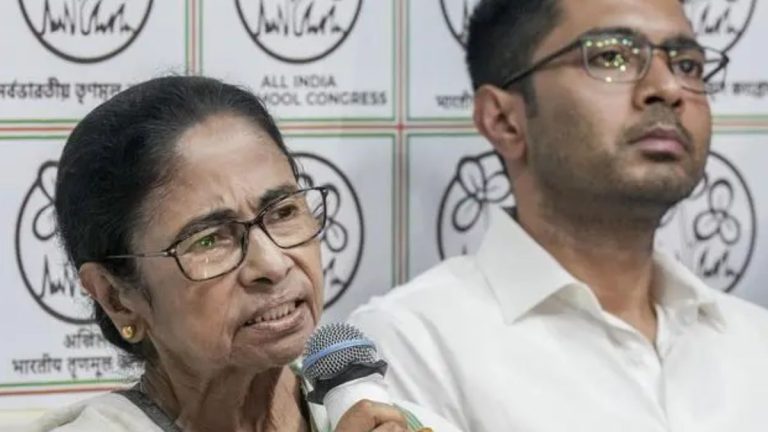
A month after losing power in West Bengal, the Trinamool Congress is battling an internal rebellion that has raised questions over leadership, succession
June 5, 2026: The Trinamool Congress (TMC) is facing its most serious internal crisis since its formation after a group of 58 rebel MLAs reportedly seized control of the legislature party and backed expelled leader Ritabrata Banerjee. The rebellion has challenged a political structure that revolved for decades around Mamata Banerjee, raising questions about whether the party can survive without her unquestioned authority. While the rebels continue to acknowledge Mamata’s leadership, they have openly rejected the influence of her nephew and political heir, Abhishek Banerjee.
The crisis has now expanded beyond the state assembly, with concerns growing that the unrest could eventually spread to Parliament. Senior TMC leaders fear that a successful legislative revolt may encourage similar challenges among the party’s MPs. With 28 Lok Sabha MPs and 13 Rajya Sabha members, the TMC remains a major opposition force nationally, making the preservation of its parliamentary strength a critical priority. Comparisons are already being drawn with the splits in Maharashtra involving the Eknath Shinde and Ajit Pawar factions.
The battle may soon shift to the Election Commission if rival factions stake claim to the party and its iconic “Flower and Grass” symbol. Political observers also suggest that the turmoil could push the TMC closer to the Indian National Congress despite decades of rivalry. While leaders like Sudip Bandyopadhyay insist that defectors have no relevance without Mamata Banerjee, others warn that the party risks disintegration if the crisis is not contained. For the TMC, the challenge is no longer just electoral recovery—it is a fight for survival, identity and leadership.