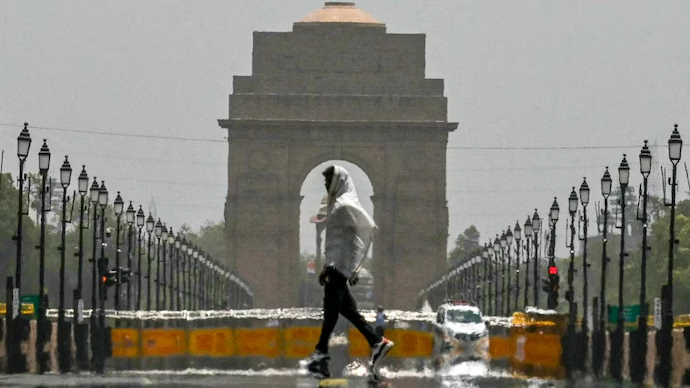
The national capital felt the first real sting of a looming summer as Delhi recorded its warmest day of the year on Tuesday, April 14, 2026. Temperatures at the Safdarjung observatory climbed to 38.2°C, marking a sharp departure from the relatively moderate start to the season.
Forecasters have issued a stern warning that this is merely the beginning, with the mercury expected to bridge the 40°C mark as early as Wednesday and potentially hitting a scorching 42°C by Friday. The sudden spike is attributed to a combination of calm winds and persistently clear skies, which have allowed heat to accumulate rapidly across the NCR.
After weeks of relief provided by intermittent rainfall and western disturbances, the weather pattern in North India has undergone a significant shift.
Tuesday’s maximum was two degrees above the seasonal average and surpassed previous 2026 highs of 36.8°C recorded in both March and early April. The trajectory has been steep: the city moved from 30.8°C on April 9 to Tuesday’s peak in less than a week. While the India Meteorological Department (IMD) has not yet issued a formal heatwave alert—which requires temperatures to exceed 40°C and be at least 4.5°C above normal—experts warn that the city is teetering on the edge of official heatwave conditions.
Meteorologists suggest that a weak western disturbance approaching the Himalayan region on Wednesday night is unlikely to offer any meaningful respite to Delhi. Instead, the “dry heat” is expected to intensify. Mahesh Palawat of Skymet noted that the lack of surface winds, which had previously helped moderate the climate, is now accelerating heat build-up across northwest India. While current figures are alarming, they remain shy of historical extremes; last year, Delhi recorded 42.1°C in late April, while the all-time record for the month remains 45.6°C, set back in 1941.
Amidst the rising heat, Delhi’s air quality has managed to stay within the “Moderate” range, providing a small silver lining for residents. However, the surge in temperature has already begun to impact neighboring regions; Noida is currently grappling with labor unrest over minimum wage disparities, and Bengaluru is seeing a spike in heat-related illnesses despite a rain forecast for Friday. As the capital braces for a “below normal” monsoon prediction later this year due to El Nino risks, the immediate focus remains on navigating the blistering week ahead.