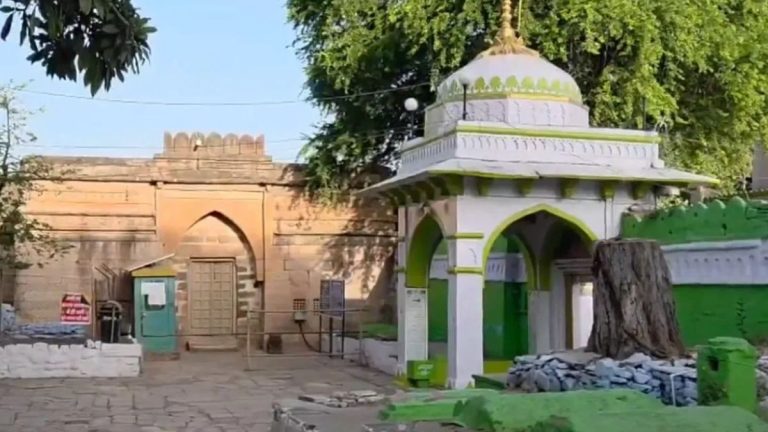
Madhya Pradesh High Court ruled that the disputed Bhojshala Temple-Kamal Maula Mosque complex is a Saraswati temple
May 16, 2026: The Indore bench of the Madhya Pradesh High Court on Friday declared the disputed Bhojshala Temple-Kamal Maula Mosque Complex a temple dedicated to Goddess Saraswati. The court held that the statutory freeze under the Places of Worship Act, 1991 would not apply because the site is a protected ancient monument governed under a separate law. Section 4 of the Act states that the religious character of a place of worship must remain the same as it existed on August 15, 1947, while Section 5 exempts only the Ram Janmabhoomi-Babri Masjid dispute in Ayodhya.
The ruling has once again brought national attention to several ongoing temple-mosque disputes across the country. One of the most closely watched cases is the Gyanvapi Mosque dispute in Varanasi, where Hindu petitioners claim the mosque was built over a pre-existing temple near the Kashi Vishwanath Temple. Multiple suits, including the Shringar Gauri-Gyanvapi case, are currently pending before courts. Similarly, the dispute involving the Shahi Idgah Mosque and the Krishna Janmabhoomi site is also under judicial consideration before the Allahabad High Court.
Other disputes linked to the Places of Worship Act include the Shahi Jama Masjid case, where Hindu petitioners have sought a survey claiming the mosque was originally a Harihar Temple. In Mangaluru, the Malali mosque dispute emerged after temple-like carvings were reportedly discovered during renovation work at the Assayed Abdullahi Madani Mosque. Another major case involved the Idgah Maidan dispute, where the Karnataka High Court ruled that the ground was public property and not exclusively protected as a religious site under the 1991 law.