
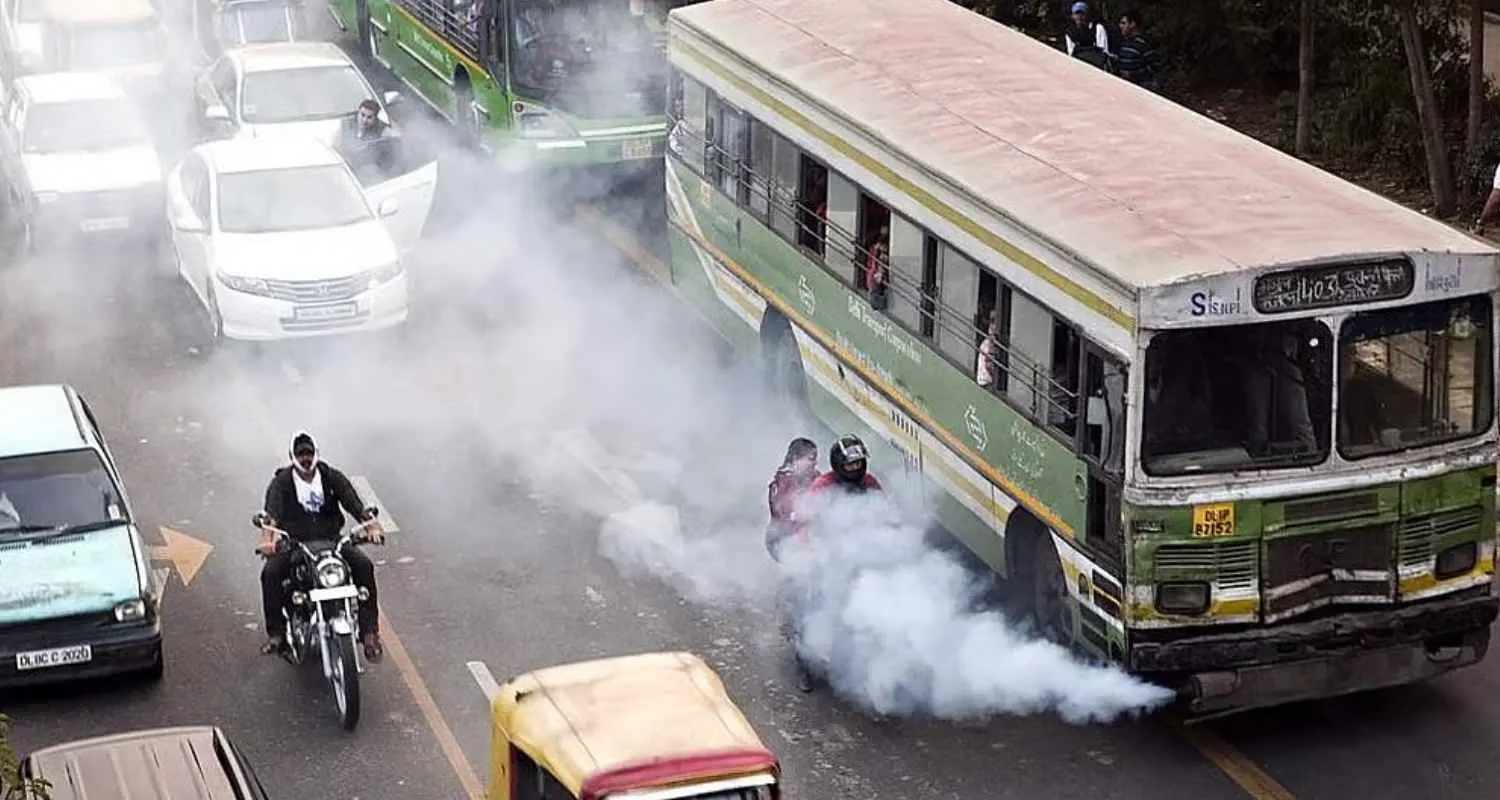


Despite years of efforts to curb air pollution, Delhi continues to rank among India’s most polluted cities. In a fresh push to improve air quality, the Centre has approved the ₹9,585 crore Naya Safar Yojana, a two-year initiative designed to phase out older commercial vehicles and replace them with cleaner BS-VI and electric alternatives.
The scheme focuses on one of the biggest contributors to transport-related pollution—ageing trucks and buses—which emit disproportionately high levels of harmful particulate matter.
Over 2 Lakh Commercial Vehicles Covered
The Naya Safar Yojana will cover nearly 2.07 lakh commercial vehicles operating across Delhi-NCR, including:
- 1.91 lakh trucks
- 16,329 buses
The government aims to accelerate the transition to cleaner transport by offering financial incentives to vehicle owners willing to replace older vehicles.
Benefits Under the Naya Safar Yojana
To encourage fleet modernisation, the scheme provides several incentives for owners purchasing BS-VI or electric commercial vehicles.
Financial incentives include:
- 5% interest subsidy on vehicle loans for five years.
- Monthly fuel vouchers of up to ₹4,800.
- Waiver of vehicle registration charges.
- Concessions on motor vehicle tax.
- 100% tax exemption on new vehicles for 10 years by state governments.
- 50% tax concession on used vehicles for 10 years.
- Waiver of pending dues on old vehicles participating in the scheme.
Replacement Rules Explained
The scheme also lays down clear guidelines for replacing older commercial vehicles.
- BS-III and older vehicles must be scrapped.
- BS-IV vehicles can either be scrapped or sold outside the National Capital Region (NCR) and non-NCAP cities.
For Delhi specifically:
- All new buses purchased under the scheme must be BS-VI CNG or electric.
- All new light goods vehicles must be fully electric.
Why Commercial Vehicles Are the Main Focus
The government’s strategy targets commercial vehicles because they contribute far more to air pollution than their share of the vehicle population suggests.
Although trucks and buses account for only around 3% of the total vehicle fleet in Delhi-NCR, they are responsible for approximately 36% of PM2.5 emissions generated by the transport sector.
Officials believe replacing ageing commercial vehicles will deliver much greater improvements in air quality than replacing an equivalent number of private vehicles.
What the Latest Study Reveals About Trucks Entering Delhi
A recent study conducted by the Air Pollution Action Group (AirPACT), IIT Delhi, and TERI sheds light on pollution caused by heavy-duty trucks entering the national capital.
Key findings:
- Around 16,900 heavy-duty trucks enter Delhi every day.
- 92% of these trucks have Delhi as their destination.
- Only 8% are passing through the city.
Emission Norm Distribution
The study found that:
- 62% of trucks comply with BS-VI emission standards.
- 28% are BS-IV vehicles.
- 10% are BS-III or older.
Older Trucks Produce Most of the Pollution
Despite representing only 38% of the fleet, BS-III and BS-IV trucks generate the majority of particulate emissions.
According to the study:
- Total PM2.5 emissions from trucks entering Delhi amount to 52.18 kg per day.
- BS-III trucks emit 17.9 kg.
- BS-IV trucks emit 14.47 kg.
- Combined, BS-III and BS-IV vehicles contribute nearly 62% of total PM2.5 emissions.
In contrast:
- BS-VI trucks, which account for 62% of the fleet, emit 19.81 kg, or roughly 38% of total PM2.5 emissions.
The report estimates that, on average, a BS-III or BS-IV truck emits nearly 2.7 times more PM2.5 than a BS-VI vehicle.
Cleaner Fleet Expected to Improve Delhi’s Air Quality
The findings reinforce the government’s strategy of targeting older commercial vehicles first. Since a relatively small number of ageing trucks account for a disproportionately large share of pollution, replacing them with cleaner BS-VI and electric vehicles is expected to deliver substantial air-quality improvements across Delhi-NCR.
The Naya Safar Yojana forms part of a broader effort to reduce emissions from the transport sector while encouraging cleaner mobility and modernising India’s commercial vehicle fleet.