
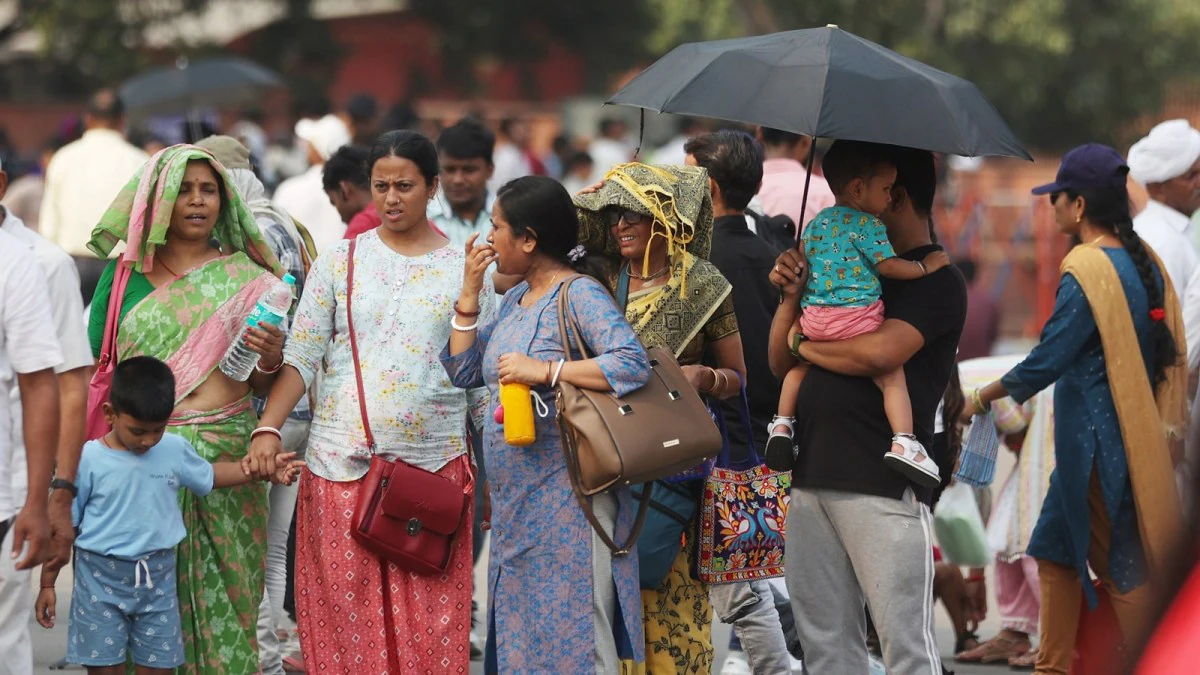


Delhi recorded its first official heatwave day of May on Tuesday as temperatures crossed the 45 degrees Celsius mark in several parts of the national capital, forcing the India Meteorological Department (IMD) to issue an orange alert for the city.
The capital witnessed its hottest day of the season so far as dry northwesterly winds blowing from the Thar Desert and adjoining regions of Pakistan intensified heat conditions across northwest India. According to weather officials, these hot and dry winds trapped heat close to the surface, causing temperatures to soar rapidly during the day.
The IMD has warned that heatwave to severe heatwave conditions are expected to persist in Delhi and several parts of northwest and central India until at least May 25.
Delhi Temperatures Breach 45°C Mark
Meteorologists said intense sunlight combined with extremely dry weather conditions pushed daytime temperatures beyond 45°C in multiple areas of Delhi.
The soaring mercury has significantly increased discomfort levels across the city, especially during afternoon hours when outdoor exposure has become particularly dangerous.
The weather department has cautioned residents about the risk of heat-related illnesses, including dehydration, heat exhaustion and heatstroke, especially among children, elderly citizens and people with pre-existing health conditions.
Air Quality Worsens, GRAP Stage 1 Reimposed
Alongside the extreme heat, Delhi’s air quality also deteriorated sharply on Tuesday. The city’s Air Quality Index (AQI) slipped into the “poor” category, reaching 336.
Following the worsening pollution levels, the Commission for Air Quality Management (CAQM) reimposed Stage 1 of the Graded Response Action Plan (GRAP) across Delhi-NCR.
Restrictions Under GRAP Stage 1 Include:
- Ban on the use of coal and firewood in tandoors at hotels, restaurants and roadside eateries
- Restriction on diesel generator usage except for emergency purposes
- Increased monitoring of dust pollution and industrial emissions
- Additional pollution-control measures across NCR regions
The combined impact of rising temperatures and deteriorating air quality has added to concerns over public health in the national capital.
Delhi’s Power Demand Hits Record High
The blistering heat also triggered a sharp spike in electricity consumption across Delhi.
According to data released by the State Load Dispatch Center (SLDC), Delhi’s peak power demand touched 7,776 MW on Tuesday — the highest recorded demand in the city so far in 2026.
The increased use of air conditioners, coolers and refrigeration systems has placed significant pressure on the city’s electricity infrastructure as residents struggle to cope with the prolonged heat spell.
IMD Advises Precautionary Measures
Authorities have urged people to avoid direct exposure to sunlight, particularly during peak afternoon hours between 12 pm and 4 pm.
Residents have been advised to:
- Stay hydrated by drinking sufficient water regularly
- Wear loose, light-coloured cotton clothing
- Use umbrellas, hats or cloth coverings while stepping outdoors
- Avoid strenuous outdoor activities during peak heat hours
- Keep emergency medical supplies handy
- Ensure proper ventilation indoors
Officials have also advised people to keep fire extinguishers at homes and inside vehicles as a precautionary safety measure during extreme heat conditions.
Heatwave Conditions Grip Northwest India
Delhi is not alone in facing severe summer conditions. Several states across northwest and central India, including Rajasthan, Haryana, Punjab and parts of Uttar Pradesh, are also witnessing intense heatwave conditions.
Weather experts say the absence of western disturbances and continued inflow of dry desert winds are likely to keep temperatures elevated for the next few days.
The IMD is expected to continue monitoring the situation closely as India enters one of the hottest phases of the summer season.