
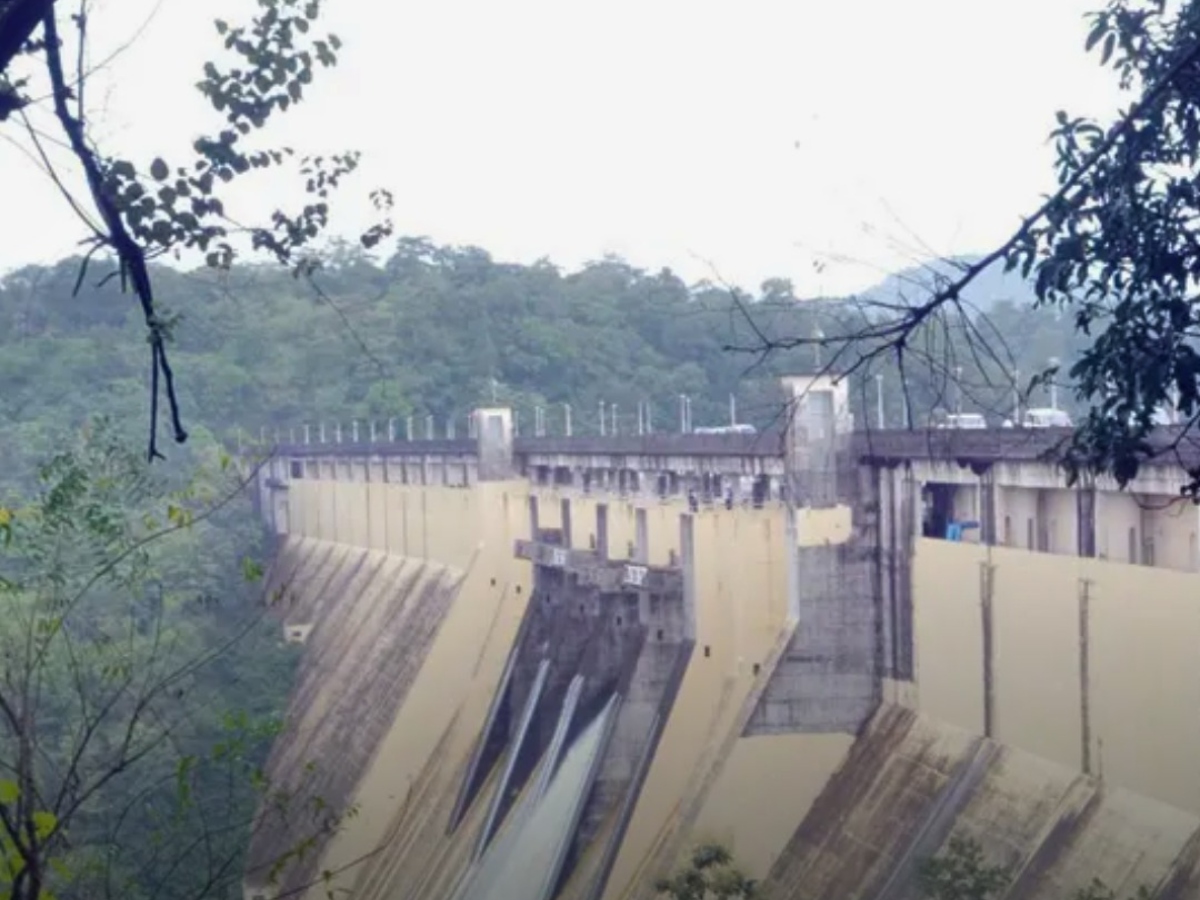


Mumbai’s water reserves have fallen to alarming levels, with the combined storage across the seven reservoirs supplying the city dropping to just 9% of total capacity, according to the latest figures released by the Brihanmumbai Municipal Corporation (BMC) on June 20.
The sharp decline comes as monsoon rainfall has yet to significantly recharge the catchment areas that feed the city’s primary water sources, raising concerns about water availability in the coming weeks.
Water Storage Falls To Critical Levels
As of 6 a.m. on June 20, the total live water stock available across Mumbai’s reservoir network stood at 130,275 million litres against a full storage capacity of 1,447,363 million litres.
Mumbai relies on seven major lakes for its drinking water supply — Upper Vaitarna, Middle Vaitarna, Bhatsa, Tansa, Tulsi, Modak Sagar and Vihar. These reservoirs are spread across Mumbai, Thane and Nashik districts and collectively serve millions of residents across the Mumbai Metropolitan Region.
Upper Vaitarna Runs Dry
Among the most concerning developments is the situation at Upper Vaitarna, one of the city’s major reservoirs.
The lake, which has a usable storage capacity of 227,047 million litres, has completely exhausted its live water stock and is effectively empty.
Tansa reservoir is also facing severe depletion. Out of its total capacity of 145,080 million litres, only 5,015 million litres remain available, leaving the reservoir at just 3.46% of its capacity.
Bhatsa Reservoir Remains Under Pressure
Bhatsa, Mumbai’s largest and most important water source, continues to operate at critically low levels.
Despite having a storage capacity of 717,037 million litres, the reservoir currently contains only 59,518 million litres of live water, accounting for just 8.30% of its total capacity.
Similarly, Middle Vaitarna holds only 20,008 million litres of water, representing 10.34% of its total storage capacity of 193,530 million litres.
Smaller Reservoirs Offer Some Relief
While the larger lakes remain under stress, some of Mumbai’s smaller reservoirs are in comparatively better condition.
Modak Sagar currently holds 32,463 million litres of water and is operating at 25.18% of capacity.
Tulsi Lake, the smallest reservoir in Mumbai’s water supply system, contains 1,792 million litres of water and is 22.28% full.
Vihar reservoir has emerged as the best-performing lake in percentage terms. It currently holds 11,478 million litres of water and stands at 41.44% of its total capacity of 27,698 million litres.
Monsoon Outlook Brings Hope
Weather forecasts suggest that Mumbai could receive stronger monsoon activity from June 22 onwards, potentially improving the reservoir situation.
On Saturday, the city is expected to experience hot and humid weather, with temperatures ranging between 29°C and 35°C. The India Meteorological Department (IMD) has issued a yellow alert for uncomfortable weather conditions.
Sunday is expected to bring similar temperatures, with partly cloudy skies and one or two spells of rain or thundershowers.
From Monday onwards, weather conditions are likely to become more active. The IMD has forecast thunderstorms accompanied by lightning, gusty winds of 30–40 kmph, and rain or thundershowers during the afternoon and evening.
The same weather pattern is expected to continue on Tuesday, with additional rainfall and storm activity likely across the city and surrounding catchment areas.
Rainfall Key To Avoiding Further Water Stress
The coming week will be crucial for Mumbai’s water security.
If the anticipated rainfall reaches the catchment regions of Bhatsa, Vaitarna, Tansa and other reservoirs in substantial quantities, lake levels could begin rising steadily after weeks of depletion.
A significant improvement in reservoir storage may also allow the BMC to reconsider or relax water conservation measures that have been implemented in parts of the city.
For now, however, Mumbai remains heavily dependent on the progress of the monsoon as reservoir levels continue to hover near critical lows.