
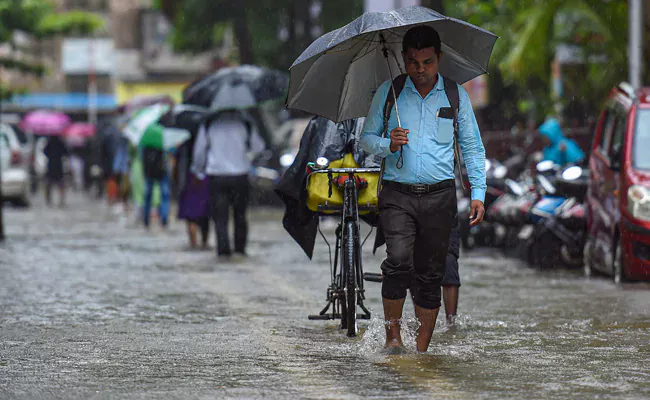


Mumbai’s annual monsoon story played out once again this week.Heavy rainfall led to flooded roads, submerged subways, traffic snarls and transport disruptions across several parts of the city. Videos of waterlogged streets in Sion, flooded subway corridors and stranded commuters quickly spread across social media, reigniting a familiar question: Why does Mumbai continue to flood despite decades of planning, studies and infrastructure upgrades?
For many residents, the answer appears frustratingly predictable. The same locations that flooded years ago continue to appear on weather advisories and news bulletins every monsoon season.
Familiar Flood Hotspots Return Every Year
Areas such as Hindmata in Dadar, Sion, Kurla, the Andheri and Milan subways, and neighbourhoods surrounding the Mithi River have long been identified as highly vulnerable to flooding.
These are not newly discovered risk zones. Many of them have featured in flood assessments and municipal reports for years.
The devastating July 2005 floods, which saw more than 900 mm of rainfall within 24 hours and claimed hundreds of lives across the Mumbai Metropolitan Region, triggered a major rethink of the city’s flood-management strategy.
In the years that followed, authorities introduced a range of initiatives, including:
- Expansion of stormwater drainage systems
- Construction of pumping stations
- Flood forecasting and early-warning systems
- Annual desilting programmes
- Emergency response protocols
- Infrastructure redesign in vulnerable zones
While these measures have improved the city’s ability to respond to flooding, they have not entirely eliminated the problem.
Mumbai Is Better Prepared Than Before
Experts acknowledge that Mumbai today is considerably more prepared than it was two decades ago.
The city now has improved weather forecasting systems, larger pumping infrastructure and more coordinated emergency management mechanisms.
Research has also suggested that mitigation efforts have reduced flooding intensity in some locations.
However, preparedness does not necessarily mean immunity.
The continued flooding of the same locations suggests that while authorities have strengthened response capabilities, many structural vulnerabilities remain unresolved.
Geography Remains One Of Mumbai’s Biggest Challenges
One of the primary reasons certain areas repeatedly flood is geography.
Many of Mumbai’s most vulnerable locations are naturally low-lying areas where rainwater tends to accumulate.
The challenge becomes even greater when intense rainfall coincides with high tide.
Under normal conditions, stormwater drains discharge excess water into the sea. During high tide, however, the outflow slows significantly or even reverses temporarily, causing water to back up into roads, residential areas and subway corridors.
As a result, even well-maintained drainage systems can become overwhelmed.
Urbanisation Has Reduced Natural Drainage
Mumbai’s rapid urban expansion has further complicated flood management.
Over the decades, large stretches of open land, wetlands and natural water-absorbing surfaces have been replaced by concrete roads, buildings and paved spaces.
This process has dramatically reduced the city’s natural ability to absorb rainfall.
Instead of soaking into the ground, rainwater now runs rapidly across impermeable surfaces and accumulates in drainage systems that often struggle to cope with sudden surges.
Urban planners frequently point to this loss of natural drainage capacity as a major contributor to recurring waterlogging.
Why Subways Continue To Flood
Mumbai’s flooded subways have become symbolic of the city’s monsoon challenges.
Locations such as the Andheri and Milan subways repeatedly face waterlogging despite the installation of pumps and drainage systems.
The problem lies partly in their design.
Subways are intentionally built below surrounding road levels. During periods of heavy rainfall, they naturally become collection points for runoff from adjacent areas.
While pumping systems help remove accumulated water, they can struggle when rainfall intensity exceeds their operational capacity.
As a result, even upgraded infrastructure sometimes proves insufficient during extreme weather events.
The Mithi River Challenge
Flooding in areas such as Kurla and surrounding neighbourhoods is closely tied to the condition of the Mithi River and associated drainage channels.
Every year, authorities undertake desilting operations to improve water flow.
However, questions continue to be raised about:
- Encroachments along riverbanks
- Reduced carrying capacity of the river
- Effectiveness of desilting efforts
- Maintenance of connected drainage channels
The situation becomes particularly severe when heavy rainfall coincides with high tides, restricting the river’s ability to discharge excess water into the sea.
Climate Change Is Making Flooding More Severe
Increasingly, experts believe Mumbai’s flooding problem cannot be understood solely as an infrastructure issue.
Climate scientists have repeatedly warned that extreme rainfall events are becoming more frequent and more intense due to climate change.
Infrastructure systems designed decades ago were not built to handle today’s rainfall patterns.
This creates a significant challenge for urban planners.
Even when drainage systems are upgraded, changing weather patterns can quickly reduce their effectiveness.
As rainfall intensity increases, locations that were once manageable become vulnerable again, while newer areas begin experiencing waterlogging for the first time.
The Human And Economic Cost
Flooding in Mumbai affects far more than transportation.
Research examining the impacts of monsoon flooding has linked heavy rainfall to:
- Drowning incidents
- Electrocution deaths
- Waterborne disease outbreaks
- Worsening of existing health conditions
- Delayed emergency services
The economic consequences are equally substantial.
Businesses lose working hours, schools are forced to close, transport systems slow down, and public infrastructure suffers repeated damage.
Researchers from the University of Chicago estimate that extreme monsoon rainfall contributes to between 2,300 and 2,700 deaths annually in Mumbai.
The economic value of those losses has been estimated at approximately Rs 10,000 crore every year.
Importantly, these figures do not account for broader disruptions such as healthcare expenses, damaged infrastructure, lost productivity and income losses.
Flooding Hits Vulnerable Communities Hardest
Studies suggest that the burden of flooding is not shared equally across the city.
Researchers have found that nearly 80 per cent of deaths associated with frequent flooding events occur among residents of Mumbai’s informal settlements and slum communities.
These populations often live in low-lying areas with limited protection from floodwaters and fewer resources to recover from repeated disruptions.
The findings highlight that Mumbai’s flooding challenge is not only an engineering issue but also a significant public health and social equity concern.
The Question That Still Remains
Every monsoon follows a familiar pattern.
Heavy rain arrives. Water begins accumulating in the same locations. Authorities deploy pumps and emergency teams. Traffic diversions are announced. Residents wait for floodwaters to recede.
Then the rain stops, attention shifts elsewhere and preparations begin for the next monsoon season.
Two decades after the catastrophic floods of 2005, Mumbai’s disaster response systems are undoubtedly stronger.
Yet the continued appearance of Hindmata, Sion, Kurla, the Andheri subway and other known hotspots on annual flood advisories raises a difficult question.
If these locations have been identified as vulnerable for years, why do they continue to remain flood-prone?
Until a lasting answer is found, Mumbai’s flood map may remain one of the most predictable aspects of the city’s monsoon season.