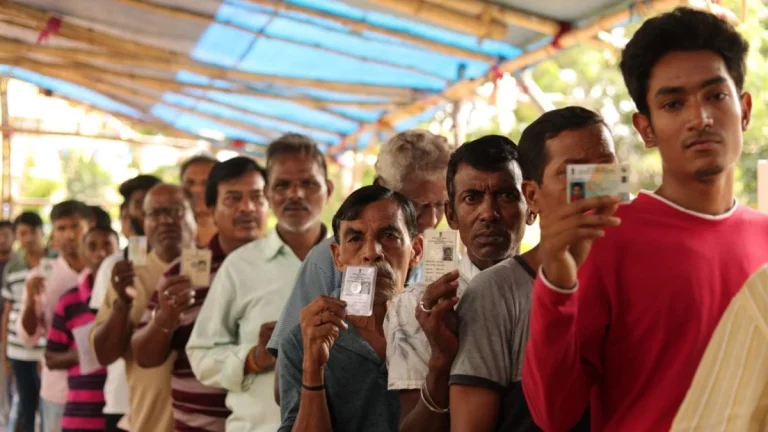
The Election Commission of India (ECI) has ordered re-polling at 15 polling stations across two constituencies in West Bengal on May 2, after reports of alleged irregularities during voting. The decision comes shortly after the state completed its two-phase assembly elections, with results scheduled for May 4.
The move has once again raised a key question: when exactly does the Election Commission decide that voting must be conducted again?
Why Re-Polling Has Been Ordered in West Bengal
Re-polling has been ordered in select booths after complaints of alleged issues such as EVM tampering, voter intimidation, obstruction of surveillance systems, and other procedural violations during polling.
According to reports, complaints were received from multiple constituencies in South 24 Parganas, including Falta, Diamond Harbour, Magrahat, and Budge Budge. Following review, the ECI declared voting at 15 booths invalid under the Representation of the People Act, 1951, and scheduled fresh polling under stricter security arrangements.
What Is Re-Polling?
Re-polling refers to the process of conducting fresh voting at specific polling stations where the original voting is considered unreliable.
It does not apply to an entire constituency or state—only to selected booths where the voting process is believed to have been compromised.
The goal is simple: ensure that voters in those booths get a fair and uncontested opportunity to cast their votes.
When Does the Election Commission Order a Re-Poll?
The Election Commission of India orders re-polling only when it finds that the integrity of voting has been seriously affected.
This includes situations such as:
- Booth capturing or violent disruption
- Voter intimidation or coercion
- Malfunctioning Electronic Voting Machines (EVMs) that impact voting
- Violation of voting secrecy
- Misconduct by polling officials
- Tampering with polling equipment or surveillance systems
The key principle is whether the irregularity could have materially affected the outcome at that polling station.
Who Takes the Final Decision?
The decision to order a re-poll is taken by the Election Commission of India after reviewing:
- Reports from returning officers
- Inputs from election observers
- Security and administrative assessments
Senior officials, including the Chief Election Commissioner, may also direct on-ground verification before approving a re-poll.
Once approved, the polling station is scheduled for fresh voting, usually within a few days, under enhanced security and monitoring.
How Re-Polling Is Conducted
When a re-poll is ordered:
- Voting is held again only at the affected booths
- Fresh arrangements are made for polling staff and security
- The earlier votes from those booths are cancelled
- The process follows the same voting procedure as a regular election
The rest of the constituency’s results remain unaffected.
Is This Common in Indian Elections?
Re-polling is not routine. It is used selectively in rare cases where the Election Commission believes that normal voting conditions were disrupted beyond acceptable limits.
In the current West Bengal election cycle, this is the first instance of re-polling across the five states and union territories that went to polls.
Why It Matters
Re-polling is a safeguard mechanism to maintain trust in the electoral process. Even a small number of compromised booths can raise questions about fairness, so the Election Commission steps in to ensure that every vote reflects genuine choice.
With counting scheduled soon, these re-polling booths could still play a role in closely contested constituencies.