
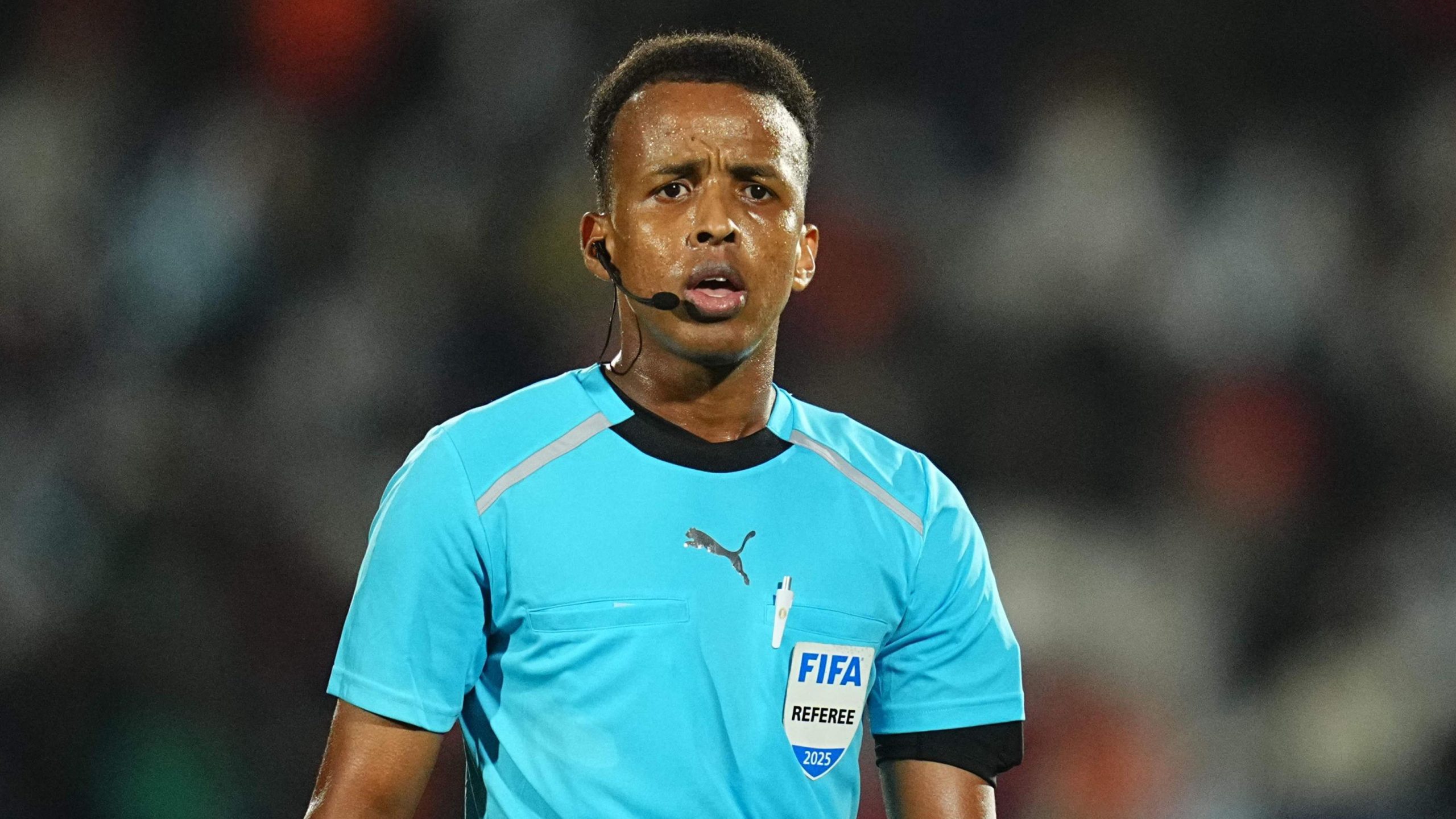


A major controversy has emerged ahead of the 2026 FIFA World Cup after Somali referee Omar Abdulkadir Artan was denied entry into the United States despite being selected as one of the tournament’s match officials.
Artan, who was among 52 referees chosen for the World Cup in North America, said the decision has ended what he described as the biggest dream of his professional career.
Speaking from Istanbul after being refused entry, the referee expressed deep disappointment at missing the opportunity to officiate at football’s biggest tournament.
Historic Moment for Somalia Cut Short
Artan’s selection for the 2026 FIFA World Cup was considered a landmark achievement for Somalia.
He was one of only seven African referees chosen for the tournament and would have become the first Somali official to referee a World Cup match.
The appointment was viewed as a significant milestone not only for Artan personally but also for Somali football.
According to the referee, participating in the tournament would have demonstrated that Somalis can achieve success on the global stage despite the challenges their country has faced for decades.
“I am very disappointed,” Artan said, adding that he had spent years preparing for the opportunity.
Detained at Miami Airport
Artan arrived at Miami International Airport on June 7 ahead of a FIFA referees’ meeting before the tournament.
Despite holding a valid visa and official FIFA documentation, he was stopped by border officials and subjected to extensive questioning.
According to his account, authorities questioned him for approximately 11 hours before transferring him to a holding area for several more hours.
He was later placed on a flight back to Istanbul.
Artan said he provided all necessary documents, including FIFA credentials and evidence of his professional refereeing career.
However, he was not given a specific explanation for the decision to deny him entry.
US Authorities Cite Vetting Concerns
In a statement, U.S. Customs and Border Protection confirmed that Artan underwent additional screening upon arrival.
The agency stated that the referee was ultimately found inadmissible due to unspecified vetting concerns.
Officials did not disclose further details regarding the reasons behind the decision.
The agency emphasized that immigration decisions are evaluated individually and based on existing admissibility requirements.
Possible Case of Mistaken Identity
The case has raised questions about whether Artan may have been affected by similarities between his name and that of another individual.
Reports indicate that a person with a similar name appears on sanctions records connected to alleged links with Al-Shabaab.
Immigration experts suggest that such a similarity could have triggered additional security checks and scrutiny.
Artan strongly denied having any connection to the militant group.
He stated that border officials repeatedly questioned him about possible links to Al-Shabaab, but he insisted he knew nothing about the organization and had never been involved with it.
Years of Preparation End in Disappointment
The referee explained that he had spent four years preparing for the World Cup.
During that period, he attended FIFA training programs and officiating courses in Qatar and the United Arab Emirates.
His reputation within African football has also grown significantly in recent years.
In 2025, Artan was named Referee of the Year by the Confederation of African Football, a recognition that highlighted his standing among the continent’s top officials.
The World Cup appointment was widely regarded as the pinnacle of his career.
FIFA Confirms He Will Not Officiate
FIFA confirmed that Artan will not participate in the tournament.
The organization stated that immigration and visa decisions remain the responsibility of host-country authorities.
FIFA added that it had been informed that Artan’s immigration status would not be changed at this time.
The governing body did not indicate whether alternative arrangements, such as assigning him to matches in Canada or Mexico, were considered.
Political Debate Follows Decision
The decision has generated criticism from football officials and several political figures.
Some have argued that denying entry to a FIFA-appointed referee damages the spirit of an international sporting event.
Others have defended the action, emphasizing the importance of security screening procedures.
Andrew Giuliani publicly defended the decision, stating that authorities had identified concerns during the vetting process.
However, no detailed evidence has been released publicly.
Uncertain End to a Historic Opportunity
For Artan, the decision marks a heartbreaking conclusion to a journey that began years ago.
After traveling from Nairobi to Istanbul and then to Miami, he was only days away from participating in the most prestigious tournament in world football.
Instead, he is returning to Mogadishu without the opportunity he spent years working toward.
His case has sparked wider discussions about immigration policies, security procedures and the challenges that international sporting participants can face when entering host nations.