
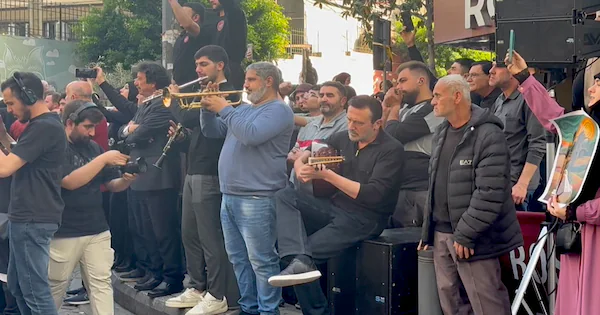


In the aftermath of a fragile ceasefire in Beirut, the sound of gunfire has been replaced, at least temporarily, by music. A concert held amid the rubble of destroyed neighbourhoods has become a powerful symbol of resilience, remembrance, and resistance for people across Lebanon.
The gathering brought together survivors, displaced families, and artists who used music and storytelling to honour those killed in Israeli airstrikes and to preserve memories of homes and communities lost during the war.
Participants described the concert as more than just an artistic event — it was a statement of survival and identity.
“This is a way to show our resilience through music, through storytelling, through any way we can reach people to keep our stories being told from the right side,” said Sumia, one of the attendees.
Displaced Families Share Stories Of Loss And Determination
Sumia, a displaced resident from the village of Yaroun near the Lebanon-Israel border, lost her home during recent bombings. Located in the Bint Jubail District, the village has been among several border areas heavily damaged during Israeli military operations.
She recalled that her house survived the early days of the war but was later destroyed during intensified attacks.
“In the initial days of the war, my home was ok — but recently they bombed so many houses in the village. My house was also bombed,” she said.
Despite the devastation, Sumia expressed determination to return and rebuild.
“They think that if our homes are gone we will not come back. But our land will remain, and we will return to rebuild our homes and recreate our memories,” she added.
Her message also carried lessons for the younger generation — to preserve memory, remain resilient, and stay connected to their homeland despite repeated displacement.
Israeli Presence Continues In Several Border Areas
Even after the ceasefire, tensions remain high. The Israel Defence Forces have reportedly maintained positions in dozens of towns and villages, including Yaroun.
Israel is believed to have occupied areas extending 8 to 10 kilometres inside Lebanese territory, declaring plans to turn these locations into a security buffer zone. This continued presence has raised concerns among residents who fear long-term displacement.
Mass demolition of homes across southern Lebanon has drawn criticism from rights groups, which have argued that the destruction of civilian infrastructure could amount to violations of international law.
Art Unites Communities Across Faith Lines
In a country deeply divided along political and religious lines, the concert also became a rare moment of unity. Participants from different faith backgrounds joined together to express solidarity.
One attendee, Dania, a Christian resident, displayed a placard reading: “Resistance is our choice and we reject any compromise.”
She voiced support for Hezbollah, stating that the group represents all communities, not just Shia Muslims.
“Hezbollah defends Muslims, Christians, Sunnis, and Shias. They defend all people,” Dania said.
Villages like Yaroun, which have historically housed mixed populations of Muslims and Christians, have seen shared devastation — reinforcing a collective sense of loss across communities.
Historic Villages And Cultural Memory Under Threat
Yaroun is considered historically significant and is even referenced in religious texts, adding emotional and cultural weight to its destruction.
Reports indicate that several villages in southern Lebanon were flattened following large-scale detonations by Israeli forces. Israeli authorities have justified the demolitions by claiming the targeted areas were linked to militant infrastructure.
However, rights organisations have argued that widespread destruction of civilian homes raises serious humanitarian and legal concerns.
Repeated Displacement Shapes Collective Memory
For many Lebanese families, displacement is not a new experience. Residents noted that the current war has forced thousands to flee their homes yet again — marking the second wave of displacement in just two years for many communities.
Despite the hardship, many believe that cultural expression — especially music and art — plays a vital role in healing emotional wounds and preserving shared memory.
After past conflicts, artistic expression has often helped communities cope with trauma and rebuild their sense of identity.
Hope Slowly Returns To Beirut After Ceasefire
With the ceasefire in place, daily life in Beirut has begun to show signs of recovery. Streets that were once marked by fear now carry cautious optimism.
Residents say that while the scars of war remain visible, the return of music, art, and public gatherings signals resilience and hope for the future.
For many, the concert amid ruins symbolised something deeper — the belief that even after destruction, culture and memory cannot be erased.