
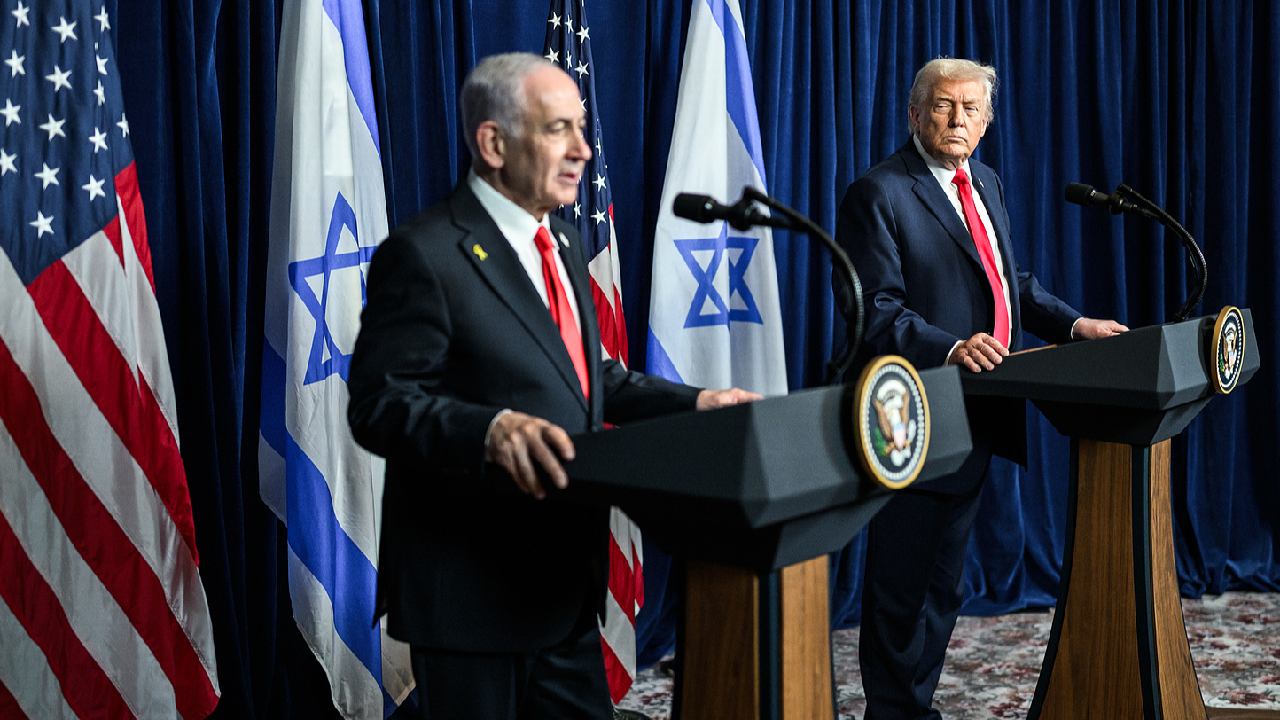


As of late April 2026, the backchannel talks in Islamabad intended to de-escalate the two-month-old US-Iran conflict have reached a grinding halt. While mediators from Pakistan and Oman struggle to find a “bridging agreement,” the central obstacle remains a familiar one: any deal between Washington and Tehran must effectively clear Benjamin Netanyahu’s “security threshold” to survive politically and strategically.
The Breakdown: Why Islamabad Talks Stalled
Despite 21-hour marathon sessions earlier this month, negotiations between US and Iranian delegations have collapsed over three non-negotiable pillars:
- Nuclear Enrichment: Iran has flatly refused the US demand to hand over its stockpile of highly enriched uranium.
- The Hormuz Toll: The IRGC has proposed a maritime “toll” for tankers passing through the Strait of Hormuz—a move the US views as an illegal shipping blockade.
- Regional Influence: Washington’s “15 conditions” for a ceasefire include the total withdrawal of Iranian support for allied groups across West Asia, a “red line” for Tehran.
Current Status: On April 26, 2026, President Trump announced the cancellation of a high-level visit by envoys Steve Witkoff and Jared Kushner to Pakistan, stating, “If they want, we can talk, but we’re not sending people… All they have to do is call!”
The Israel Constraint: Why Netanyahu is Central
History shows that US-Iran agreements do not exist in a vacuum. Prime Minister Netanyahu’s long-standing “Security Doctrine” acts as an unwritten veto on any diplomatic progress.
- The 2015 Precedent: Netanyahu famously bypassed the White House to address the US Congress in 2015, successfully eroding bipartisan support for the JCPOA (Nuclear Deal). This ensured that the deal remained politically fragile from day one.
- The “Maximum Pressure” Architect: In 2018, Israeli intelligence disclosures regarding Iran’s “Secret Atomic Archive” provided the primary justification for the US withdrawal from the nuclear deal, leading directly to the current era of “Maximum Pressure” and military conflict.
- The Zero-Capability Standard: Unlike European mediators who seek to limit Iran’s nuclear program, Israel’s doctrine demands the total elimination of Iran’s enrichment capacity. Any deal that allows Iran to keep a single centrifuge is likely to face immediate Israeli opposition.
War on the Water: The Strait of Hormuz Crisis
The military balance is further complicating the diplomacy. The IRGC has signaled that controlling the Strait of Hormuz is now a “definitive strategy,” viewing it as a deterrent against US naval blockades.
- Economic Leverage: With Brent Crude crossing $106 per barrel, Iran is using the threat of energy disruption to counter the US blockade of Iranian ports.
- US Dilemma: While Trump has authorized military action against mine-laying vessels, a full-scale operation to “reopen” the Strait by force would require a ground intervention—a prospect Washington wants to avoid ahead of the US midterm elections.
2026 Geopolitical Outlook
For a ceasefire to hold, the US must balance a three-layered equation that currently seems impossible to solve:
- US Interests: Stabilizing global oil prices and securing shipping lanes.
- Iranian Red Lines: Preserving its “Nuclear Sovereignty” and regional deterrents.
- Israeli Expectations: Ensuring Iran is stripped of all future nuclear potential.