
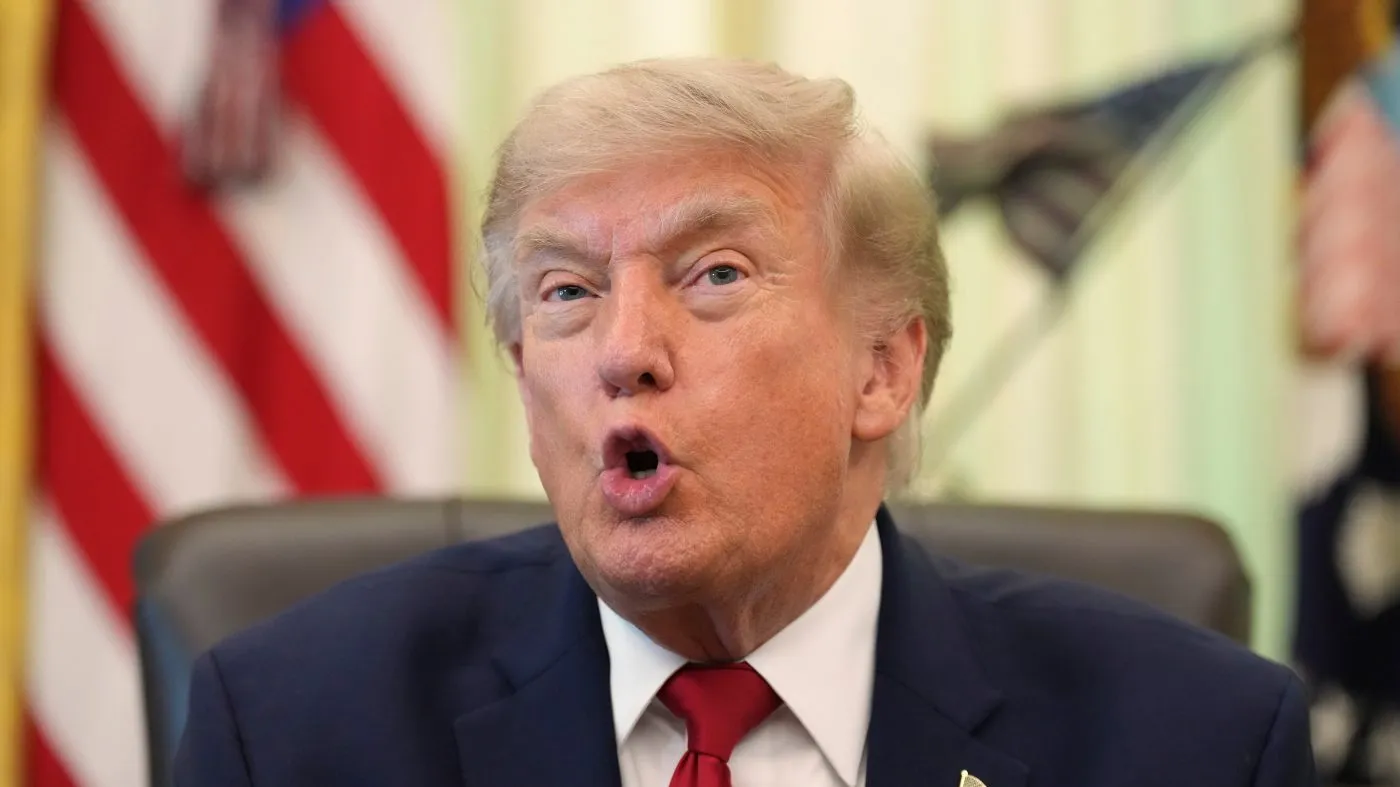


US President Donald Trump has reacted sharply after the US Supreme Court upheld the constitutional principle of birthright citizenship, calling the decision “too bad” for America. While expressing disappointment with the ruling, Trump said he would now push Congress to pass legislation aimed at ending what he described as “expensive and unfair” birthright citizenship.
Taking to social media platform X on Tuesday, Trump urged lawmakers to begin work immediately on legislation that would restrict automatic citizenship for children born in the United States to certain non-citizen parents.
“The Supreme Court upheld Birthright Citizenship, which is too bad for our Country, but we can easily make it up in Congress through Legislation, with the support of the President, that has now been determined during this process. No long and unwieldy Constitutional Amendment is necessary! Congress should start TODAY to work on ending expensive and unfair to our Country, Birthright Citizenship. They will have my Complete and Total Support!” Trump wrote.
US Supreme Court Rejects Trump’s Executive Order
Trump’s remarks came after the US Supreme Court, on the final day of its current term, struck down his executive order that sought to deny automatic citizenship to children born in the United States to parents who were either in the country illegally or staying temporarily.
In a 6-3 ruling, the Supreme Court reaffirmed that birthright citizenship remains protected under the US Constitution. The decision upheld earlier rulings by lower courts that had blocked Trump’s executive order.
Chief Justice John Roberts, writing for the majority, reaffirmed that the Citizenship Clause of the Fourteenth Amendment guarantees citizenship to nearly everyone born on American soil.
“Children born in the United States to parents unlawfully or temporarily present are ‘subject to the jurisdiction’ of the United States and are citizens at birth under the Fourteenth Amendment’s Citizenship Clause,” Roberts wrote.
Highlighting the constitutional significance of the ruling, Roberts added:
“Citizenship, then and now, was the right to have rights, to freely participate in our political community. The Framers of the Fourteenth Amendment extended that promise to ‘every free-born person in this land.’ We keep that promise today.”
Court Says Constitutional Amendment Would Be Required
The Supreme Court’s judgment effectively makes it clear that birthright citizenship cannot be eliminated through an executive order alone. Instead, any attempt to remove the constitutional guarantee would require an amendment to the US Constitution.
Roberts specifically pointed to the Fourteenth Amendment, which provides citizenship to almost everyone born within the United States, subject to only very limited exceptions.
Despite the ruling, Trump maintains that Congress can still legislate changes, although constitutional experts argue that altering birthright citizenship would require constitutional amendment rather than ordinary legislation.
Justice Department Defends Crackdown
Following the ruling, the US Department of Justice reiterated its commitment to combating what it called illegal “birth tourism” schemes.
In a statement posted on X, the department said:
“Actors seeking to exploit loopholes to obtain automatic citizenship for their children pose a national security threat and will be brought to justice.”
The Justice Department added that it would continue working with US Attorneys across the country to investigate and prosecute such cases.
Birthright Citizenship Was Key Part Of Trump’s Immigration Agenda
The executive order signed by Trump on the first day of his second presidential term formed a central pillar of his broader immigration crackdown.
The birthright citizenship order became the first major immigration policy introduced during Trump’s second term to receive a final ruling from the US Supreme Court.
Why The Decision Matters For Indians
The Supreme Court’s decision carries significant implications for the Indian-American community, one of the fastest-growing immigrant populations in the United States.
Hundreds of thousands of Indian professionals currently live and work in the US on H-1B work visas, L-1 intra-company transfer visas and F-1 student visas. In addition, more than one million Indians remain stuck in the lengthy employment-based green card backlog.
For these families, birthright citizenship has remained an important legal safeguard, making immigration policies and citizenship rights issues particularly relevant to the Indian community.