
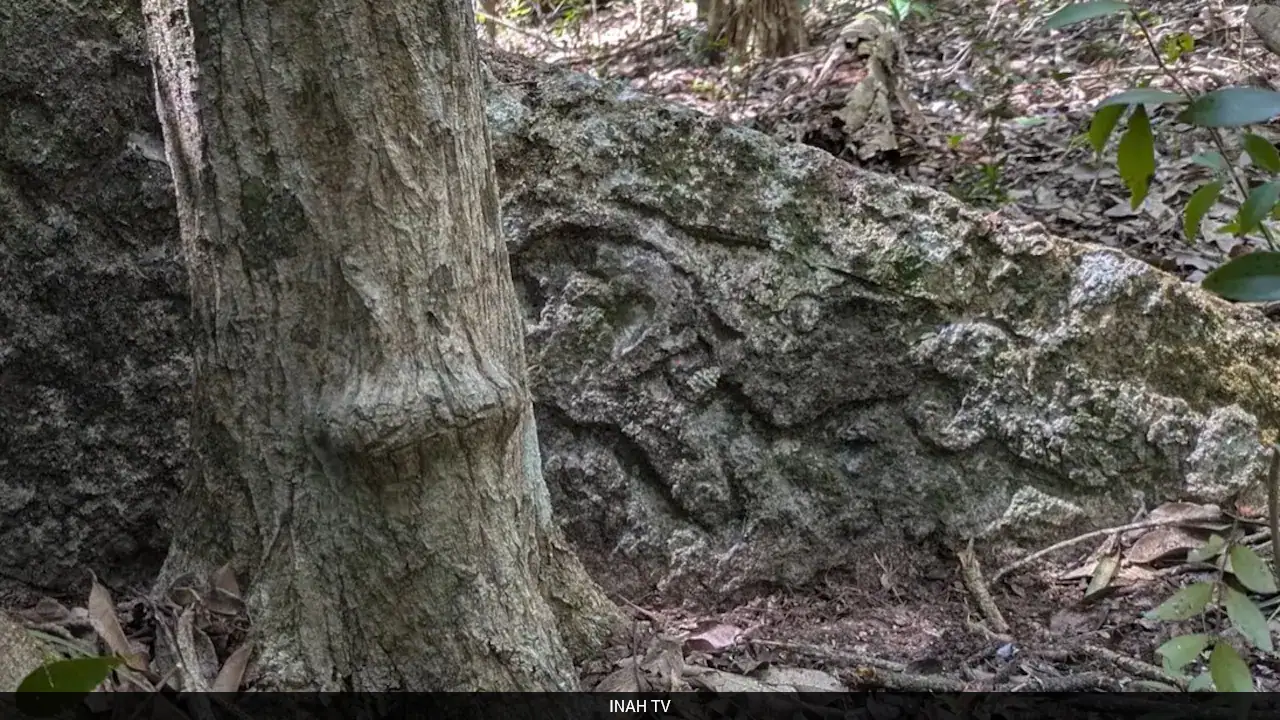


A previously unknown Maya city that remained hidden and largely undisturbed for more than a millennium has been discovered deep within the dense jungles of southern Mexico, in what researchers are describing as one of the most important archaeological finds in recent years.
The ancient settlement, named Minanbe, was uncovered in a remote section of the Calakmul Biosphere Reserve in Mexico’s Campeche state by a joint Mexican-Slovenian archaeological team led by archaeologist Ivan Sprajc of the Research Centre of the Slovenian Academy of Sciences and Arts.
The name Minanbe comes from a Yucatec Maya phrase meaning “there is no road,” a reference to the extreme difficulty researchers faced while reaching the isolated site hidden beneath thick tropical forest.
The discovery marks the culmination of nearly three decades of archaeological exploration across the Central Maya Lowlands and is expected to provide valuable new insights into one of the most advanced civilisations in ancient Mesoamerica.
LiDAR Technology Revealed The Lost City
Researchers first identified the settlement using LiDAR (Light Detection and Ranging) technology, which uses laser pulses from aircraft to detect structures hidden beneath dense vegetation.
The aerial scans revealed evidence of a large urban centre spread across approximately 15 hectares, concealed beneath the forest canopy.
Subsequent ground surveys confirmed the existence of a sophisticated Maya city featuring ceremonial, residential and administrative structures.
Archaeologists found:
- A 43-foot-high pyramid temple
- Fourteen carved stelae and altars
- Large ceremonial plazas
- Palatial buildings
- Residential terraces
- Complex water management infrastructure
- Hydraulic channels and wetlands
The findings suggest the city possessed a high degree of urban planning and territorial organisation.
Four-Storey Pyramid Temple Found Intact
One of the most remarkable discoveries at the site is a pyramid temple standing approximately 43 feet tall, roughly equivalent to a modern four-storey building.
According to Mexico’s National Institute of Anthropology and History (INAH), the temple exhibits characteristics of the Rio Bec architectural style, a distinctive Maya architectural tradition that flourished between the 7th and 12th centuries CE.
Archaeologist Vitan Vujanovic, who participated in the field survey alongside colleagues Atasta Flores Esquivel, Israel Chato Lopez and Quintin Hernandez Gomez, described the structure as exceptionally well-preserved.
“This is the first time I have recorded a temple that is more or less well-preserved,” Vujanovic said.
The discovery is particularly significant because many Maya sites in the region have suffered from centuries of looting, environmental damage or modern human activity.
City Remained Untouched For Centuries
Unlike several previously discovered archaeological sites, Minanbe appears to have remained almost entirely untouched.
Researchers noted the absence of:
- Logging roads
- Modern settlements
- Looting activity
- Significant structural disturbance
Reaching the site required researchers to cut through dense jungle vegetation, travel on all-terrain vehicles and complete long treks through harsh tropical terrain.
The lack of modern interference has preserved valuable archaeological evidence that could help experts better understand Maya society and urban development.
Flourished During The Height Of Maya Civilization
Archaeologists believe Minanbe reached its peak during the Late Classic Period (600–900 CE), when the Maya civilisation was at its most influential.
During this era, millions of people inhabited the Maya lowlands across present-day Mexico, Guatemala, Belize and parts of Honduras and El Salvador.
Researchers believe the city played an important role in:
- Regional agriculture
- Trade networks
- Political administration
- Religious activities
The presence of sophisticated water management systems indicates advanced engineering knowledge and suggests the settlement supported a substantial population.
Signs Of Conflict And Decline
While the city prospered for centuries, evidence recovered from the site suggests its later history may have been marked by political instability or conflict.
Archaeologists identified signs of deliberate damage to monuments and carved structures, raising the possibility that the city experienced external attacks, internal power struggles or broader regional upheaval before its eventual abandonment.
Further excavation and analysis are expected to shed light on how the settlement evolved and why it ultimately disappeared.
Discovery Could Transform Understanding Of Maya History
Experts believe Minanbe may significantly expand current knowledge of Maya civilisation, particularly regarding urban planning, regional political relationships and environmental adaptation.
The combination of monumental architecture, extensive infrastructure and exceptional preservation provides researchers with a rare opportunity to study a Maya city that remained hidden for more than 1,000 years.
As investigations continue, archaeologists hope the site will reveal more about the people who once lived there, their social structure, economic systems and the factors that contributed to the decline of one of history’s most fascinating civilisations.