
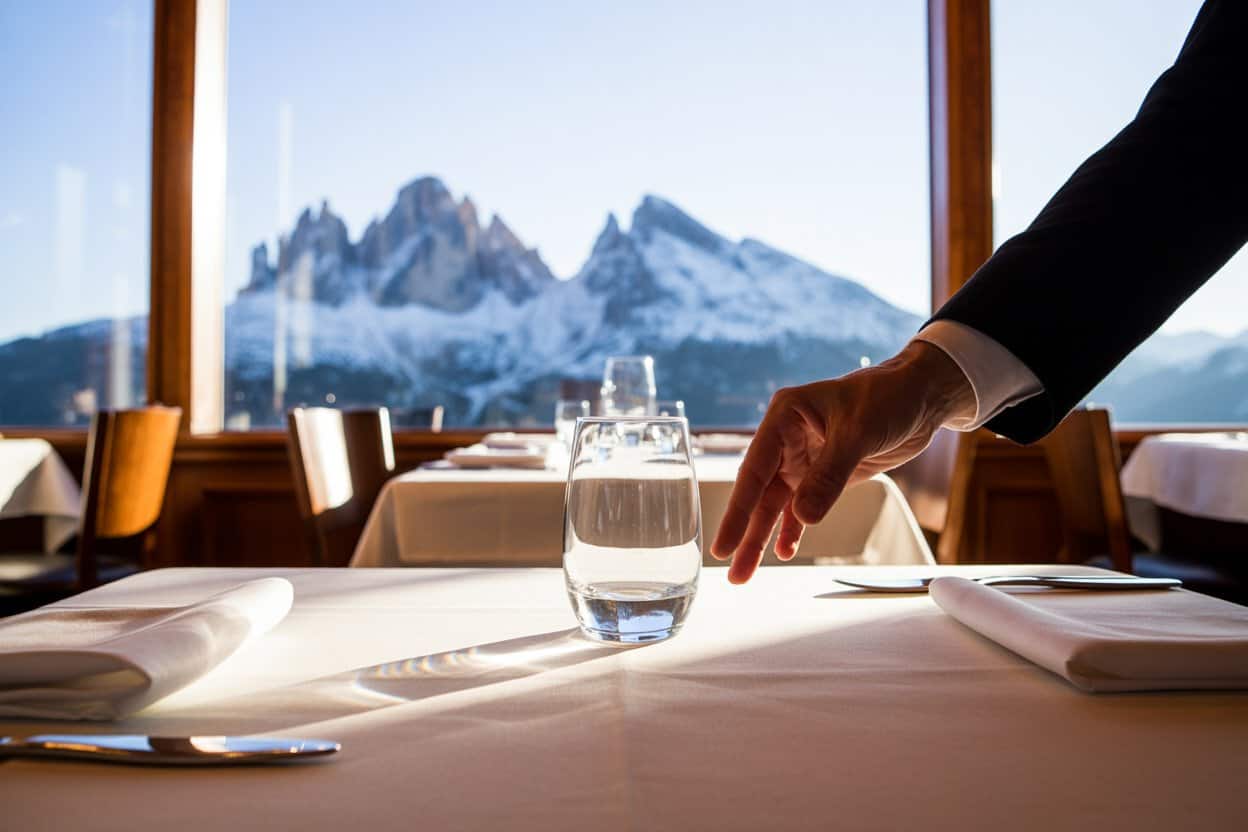


A recent ruling by Italy’s Supreme Court has sparked global debate after the country’s top judicial body declared that hotels are not legally required to provide guests with free tap water. The decision came after a long-running dispute involving a tourist at a ski resort in the Italian Dolomites, where a hotel allegedly refused to serve complimentary drinking water and instead insisted on selling bottled mineral water.
While the verdict has triggered discussions across Europe about water access and consumer rights, the legal situation in India is significantly different and far more consumer-friendly.
Italy’s Supreme Court Says Free Tap Water Is Not Mandatory
According to reports, Italy’s Supreme Court of Cassation ruled that hotels can legally refuse to serve free tap water to guests because there is no specific legal obligation requiring them to do so.
The judgment reportedly ended a seven-year legal battle initiated by a tourist who challenged a hotel’s decision to deny complimentary drinking water. The court ultimately sided with the hotel, reinforcing the position that bottled water can legally be treated as a commercial product rather than a free hospitality service.
The ruling has since reignited broader debates about whether access to drinking water in restaurants and hotels should be considered a basic right or a paid service.
Indian Law Guarantees Access To Free Drinking Water
In contrast, Indian laws strongly protect customers’ rights to access free potable drinking water in hotels and food establishments.
One of the oldest legal protections comes from the Indian Sarais Act, 1867. Under Section 7(2) of the law, registered hotels and lodges are required to provide free drinking water and washroom access to travellers and visitors.
This means that in India, a traveller can legally request drinking water at many registered hospitality establishments without being forced to purchase bottled water.
FSSAI Rules Also Protect Consumers
The Food Safety and Standards Authority of India has also issued clear guidelines regarding free drinking water access.
Under the Food Safety and Standards Act, 2006, licensed food business operators are required to provide safe and clean drinking water to customers free of cost.
In a clarification issued in 2017, the food regulator and the Department of Consumer Affairs reportedly stated that forcing customers to purchase bottled water despite the availability of potable tap water may amount to an unfair trade practice and deficiency in service.
The guidelines were introduced to ensure that consumers are not pressured into unnecessary purchases for basic necessities like drinking water.
Consumer Courts Have Reinforced The Right
Indian consumer courts have also repeatedly upheld the right to free drinking water in restaurants and hospitality establishments.
In a notable 2026 ruling involving a Faridabad restaurant, a consumer commission reportedly penalised the establishment for denying a customer free tap water and forcing the purchase of a bottled water product.
The commission observed that access to free drinking water is not optional but a legally enforceable consumer right under Indian regulations.
Debate Highlights Cultural And Legal Differences
The contrasting approaches adopted by Italy and India reflect broader differences in legal systems, hospitality norms and consumer protection frameworks.
While Italy’s ruling treats drinking water primarily as a commercial service within private hospitality businesses, Indian regulations continue to view access to potable water as a basic public necessity that businesses serving customers must provide without additional charges.
The debate has also drawn attention to growing conversations worldwide around sustainability, bottled water consumption and public access to essential resources in hotels and restaurants.