
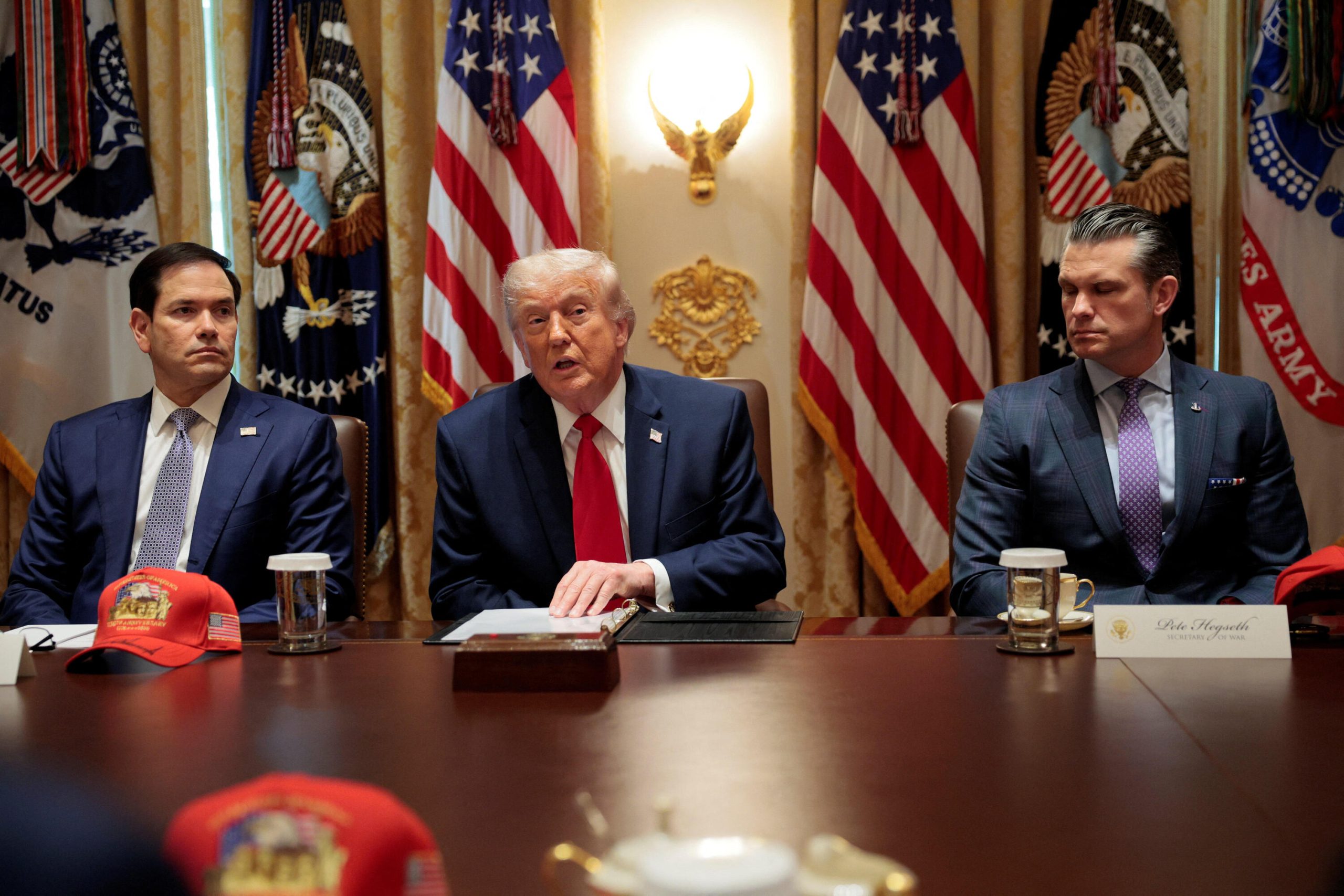


A high-stakes meeting between US President Donald Trump and senior officials ended without a final decision on a possible agreement with Iran.
The two-hour session took place in the White House Situation Room as tensions between Washington and Tehran continued to affect global energy markets and regional stability.
Although reports suggest that both sides are moving closer to a deal, officials said several important issues still need to be resolved before any agreement can be finalized.
White House Says Discussions Are Ongoing
Before entering the meeting, Trump said he would make a “final determination” on the next steps regarding a possible ceasefire arrangement.
However, no final announcement followed the discussions.
According to a White House statement, Trump remains focused on securing an agreement that aligns with US interests.
An administration official told media outlets that negotiations are progressing, but details involving frozen Iranian assets and other conditions are still being debated.
The White House also repeated its position that Iran must never obtain a nuclear weapon.
Trump Outlines Possible Terms
Earlier, Trump posted on Truth Social about several issues being discussed during negotiations.
He claimed that Iran would remove mines placed in the Strait of Hormuz. In return, the United States would lift its naval blockade, allowing commercial shipping traffic to resume.
Trump also stated that Iran’s highly enriched uranium would be located and destroyed.
Additionally, he rejected reports suggesting that immediate financial payments would be made to Tehran, saying no money would be exchanged at this stage.
Iran Says No Agreement Has Been Reached
Iranian officials have pushed back against suggestions that a final deal is already in place.
Iranian Foreign Ministry spokesperson Esmaeil Baghaei said negotiations are continuing and no formal agreement has been finalized.
According to Baghaei, Iran’s current priority is ending the conflict rather than discussing technical details related to uranium enrichment.
He added that communication between the two sides remains active.
Strait of Hormuz Remains a Major Sticking Point
One of the biggest issues in the negotiations is the future of the Strait of Hormuz.
The strategic waterway is among the world’s most important shipping routes because roughly one-fifth of global oil supplies pass through it.
Baghaei stated that decisions regarding the strait concern only Iran and Oman.
Meanwhile, the United States wants the route reopened and any mines removed to ensure safe passage for international shipping.
Because of its importance to global energy markets, developments involving the strait are being closely watched around the world.
Iranian Leaders Demand Action Before Concessions
Several Iranian officials have signaled that Tehran is unwilling to make concessions without concrete steps from Washington.
Iranian negotiator Mohammad Bagher Ghalibaf said on social media that Iran gains leverage through strength rather than dialogue alone.
He also stated that Iran does not trust promises and expects actions before making commitments.
Similarly, Ebrahim Azizi emphasized that any agreement must involve equal exchanges between both sides.
Key Issues Still Dividing Washington and Tehran
Iran’s Nuclear Program
The United States wants Iran to stop enriching uranium and transfer its existing enriched uranium stockpile to another country.
According to international assessments, Iran possesses hundreds of kilograms of uranium enriched to levels that are technically close to weapons-grade material.
Iran has not accepted Washington’s demands and continues to defend its nuclear activities.
Frozen Iranian Assets
Another major issue involves Iranian funds held abroad.
Reports indicate that Tehran is seeking access to billions of dollars in frozen assets as part of any future agreement.
Iranian media estimates place the total value of frozen assets at more than $100 billion.
However, the exact amount remains unclear.
Security Guarantees
Iran is also seeking assurances that any future agreement will be honored.
This demand stems largely from the US withdrawal from the 2015 nuclear deal during Trump’s first term in office.
As a result, Iranian officials continue to express skepticism about long-term American commitments.
Regional Conflicts
Tehran reportedly wants any agreement to include arrangements related to tensions involving Israel and the Iran-backed group Hezbollah.
The issue adds another layer of complexity to already difficult negotiations.
Ceasefire Faces Fresh Challenges
The current ceasefire has come under increasing pressure in recent weeks.
Both Washington and Tehran have accused each other of violating the truce around the Strait of Hormuz.
Reports of military exchanges, including strikes near the Iranian port city of Bandar Abbas, have raised concerns that tensions could escalate again.
Consequently, diplomats face growing pressure to secure a lasting agreement before the situation deteriorates further.
Uncertainty Continues Despite Signs of Progress
While officials on both sides acknowledge that negotiations are advancing, significant disagreements remain unresolved.
Issues involving uranium enrichment, frozen assets, regional security and the Strait of Hormuz continue to complicate efforts to reach a final agreement.
For now, the talks remain active, but neither side appears ready to make the concessions needed for a breakthrough.