
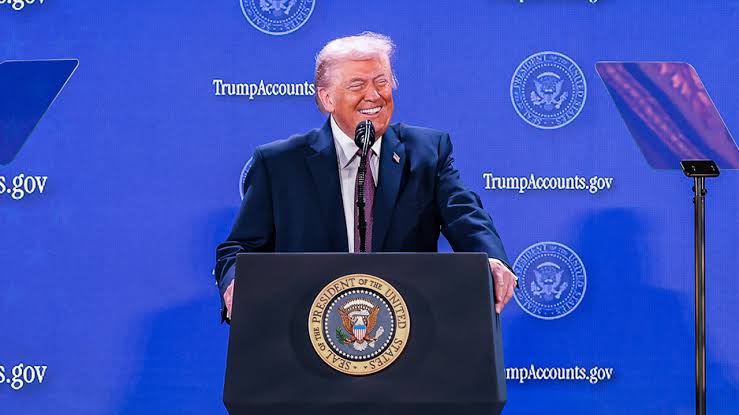


U.S. President Donald Trump announced on Monday that the federal government has made the first $1,000 deposits into more than 500,000 “Trump Accounts,” marking the rollout of a new investment initiative designed for newborn Americans.
Speaking from the Oval Office, Trump rang the opening bell for the stock market alongside senior executives from the New York Stock Exchange (NYSE) and Nasdaq, describing the program as a way to give children an early financial foundation through long-term investing.
What Are Trump Accounts?
The Trump Accounts program is available to U.S. citizens born between 2025 and 2028.
Each eligible child receives an initial $1,000 government contribution, which is automatically invested in a low-cost index fund intended for long-term growth.
According to the administration, account holders gain control of their funds when they turn 18 years old, allowing them to either withdraw the money or continue investing. Investment gains will be taxed when withdrawn.
Trump said the initiative aims to help children begin adulthood with financial assets, particularly those born into families with limited wealth.
Trump Encourages Long-Term Investing
During the announcement, Trump urged families not to withdraw the funds early, arguing that remaining invested in the stock market could generate greater long-term returns.
He also highlighted the rare collaboration between the NYSE and Nasdaq executives present at the event, saying it demonstrated cooperation that political leaders often struggle to achieve.
Supporters Say Program Promotes Financial Literacy
Supporters of the initiative argue that the accounts will encourage long-term investing, financial education, and wealth creation from an early age.
Republican Senator Ted Cruz praised the program during the launch event.
“Trump Accounts are about making every child and every American a capitalist. Every one of our kids is now going to be an owner of the biggest producers in our country,” Cruz said.
Critics Raise Concerns
Critics argue that while the initial government contribution is beneficial, families with limited disposable income may be unable to make additional contributions, potentially reducing the long-term benefits compared with wealthier households.
They also note that the program joins existing savings options such as college savings plans and retirement accounts, raising questions about whether it will significantly improve wealth inequality.
Major Companies Back the Initiative
Several major U.S. companies have pledged to support the program through employer matches or additional funding.
Among the companies participating are:
- Visa
- Dell Technologies
- Comcast
- Micron Technology
Micron has committed $250 million to help support the initiative.
The administration says these partnerships are intended to expand opportunities for children to build long-term investment portfolios from birth.