


Long after the Seattle Seahawks celebrated their Super Bowl triumph, much of America’s attention remained fixed on the halftime stage.
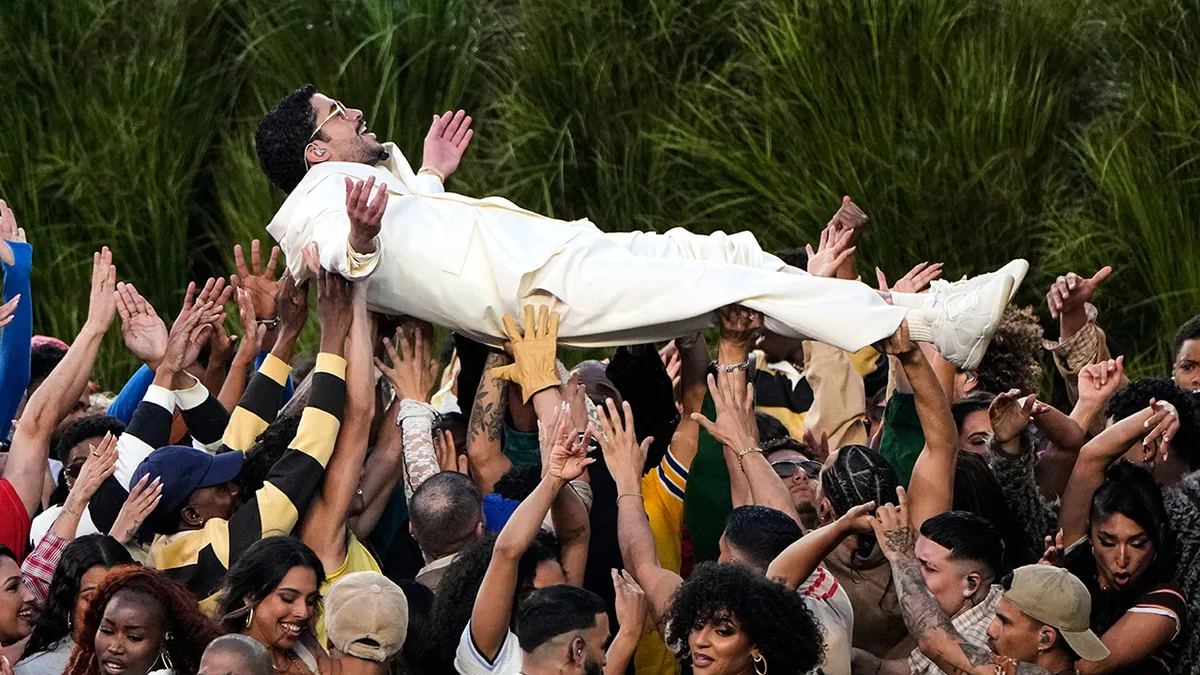
Bad Bunny delivered one of the most discussed halftime performances in recent NFL history, sparking widespread debate across television, social media and political circles. While millions praised the show’s energy and cultural symbolism, thousands of viewers complained that parts of the performance were inappropriate for a family-oriented broadcast.
Despite the controversy, US federal regulators have now officially concluded their review and determined that the performance did not violate broadcast indecency standards.
FCC Reviews Thousands Of Complaints
According to reports, more than 2,000 complaints were filed with the Federal Communications Commission (FCC) after the halftime show aired during the Super Bowl broadcast.
Several viewers criticised the choreography, costumes and stage presentation, arguing that some dance sequences were too explicit for children and families watching television during prime-time hours.
One complaint reportedly stated: “I did not appreciate the explicit sexual content and lyrics played on television at the Super Bowl halftime show by Bad Bunny. As a family with teens, we did not need to be subjected to that.”
The criticism extended beyond the performance itself. Some viewers objected to the heavy use of Spanish-language lyrics and Latin American imagery, with critics calling the show “un-American” during an already tense political climate in the United States surrounding immigration debates and ICE-related issues.
Donald Trump Reacts To Halftime Show
Among those who publicly criticised the performance was Donald Trump.
Posting on Truth Social after the broadcast, Trump described the halftime show as “absolutely terrible” and “one of the worst ever.”
“It makes no sense, is an affront to the greatness of America, and doesn’t represent our standards of success, creativity, or excellence,” he wrote.
The remarks further amplified the national conversation surrounding the performance and turned the halftime show into a broader cultural and political flashpoint.
FCC Finds No Violation
Despite the public backlash, FCC Commissioner Anna Gomez later confirmed that regulators found no breach of federal indecency rules.
According to reports, the commission reviewed transcripts and edited performances of songs including Tití Me Preguntó, Monaco and Safaera before concluding that there was no legal basis for further action.
The decision effectively closed the case despite the unusually high volume of complaints.
Controversy Boosts Bad Bunny’s Popularity
Ironically, the controversy appeared to expand Bad Bunny’s cultural influence rather than damage it.
Following the Super Bowl broadcast, the artist’s music surged across streaming platforms, with several tracks climbing the Billboard Hot 100 rankings.
One of the most talked-about moments of the performance came during Debí Tirar Más Fotos, when dancers carrying Latin American flags transformed the stadium into a visual celebration of identity, heritage and representation.
Industry observers noted that backlash surrounding Super Bowl halftime performances has become increasingly common in recent years.
Last year, Kendrick Lamar also faced criticism over explicit content during his NFL halftime appearance.
Bad Bunny ultimately closed his performance with a message that many supporters viewed as a direct response to the criticism and political outrage surrounding the show.
Displayed prominently across the stadium screens were the words: “The only thing more powerful than hate is love.”