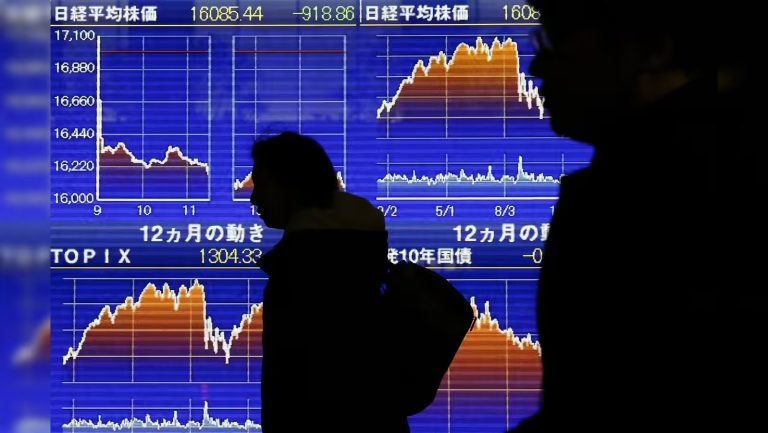
Asian equities declined for a second consecutive session on Wednesday as the recent rally in semiconductor stocks lost momentum and investors reacted to hotter-than-expected inflation data from the United States.
The MSCI Asia Pacific Index slipped 0.5 per cent, with South Korean markets leading regional losses. The Kospi plunged 2.8 per cent as investors booked profits in chipmakers and concerns intensified over labour tensions at Samsung Electronics.
Shares of Samsung Electronics fell as much as 3.9 per cent after wage negotiations between the company and its workers’ union reportedly broke down, increasing fears of a potential strike at the tech giant.
While most regional markets traded in the red, Japan’s Topix index bucked the trend and gained 0.4 per cent. Australia’s S&P/ASX 200, meanwhile, dropped 0.6 per cent. Futures linked to Hong Kong’s Hang Seng Index remained largely flat, indicating a muted opening for the market.
Semiconductor Rally Begins To Lose Steam
The latest weakness in Asian markets comes after a strong rally in global equities that had been fuelled by optimism around artificial intelligence and solid earnings from major technology companies.
However, investors are now beginning to question whether semiconductor stocks have become overvalued after months of aggressive gains linked to AI enthusiasm.
A key US semiconductor index dropped 3 per cent overnight, while an Asian semiconductor gauge extended its losses for a second straight day.
Market participants are increasingly cautious about whether heavy spending on artificial intelligence infrastructure will translate into sustained long-term earnings growth for chipmakers and technology firms.
US Inflation Data Adds To Market Concerns
Investor sentiment was further dented after fresh US inflation data came in stronger than expected, raising fears that the US Federal Reserve may have to keep interest rates elevated for longer or even consider another rate hike next year.
According to the latest data, US consumer prices rose 3.8 per cent in April compared to a year earlier, marking the fastest pace of inflation since 2023. Core inflation, which excludes volatile food and energy prices, climbed 2.8 per cent.
Following the data release, US Treasury yields moved higher. The two-year Treasury yield approached 4 per cent, while the 30-year bond yield climbed above 5 per cent.
Government bond yields in Japan and Australia also edged higher, reflecting growing expectations that global borrowing costs may remain elevated amid persistent inflationary pressures.
Oil Prices Ease Slightly But Stay Elevated
Oil prices provided limited relief to investors after easing slightly on Wednesday following a sharp rally earlier in the week.
Brent crude slipped around 1 per cent to trade near $106.60 per barrel, while West Texas Intermediate crude declined 0.8 per cent to approximately $101.35 per barrel.
Despite the pullback, crude prices remain elevated as tensions in the Middle East continue to disrupt energy markets. Concerns remain high over the effective closure of the Strait of Hormuz and the lack of meaningful progress toward a peace agreement between the United States and Iran.
Trump-Xi Meeting In Focus
US President Donald Trump said trade would be the main focus of his upcoming meeting with Chinese President Xi Jinping, attempting to downplay speculation that the ongoing Iran conflict would dominate discussions between the two leaders.
Global investors are expected to closely monitor the outcome of the meeting for signals on trade relations, geopolitical risks and the broader outlook for global growth.