US markets pulled back sharply on Tuesday as investors reacted to sticky inflation data and renewed geopolitical concerns, halting a strong rally that had pushed equities close to record highs in recent weeks.
The S&P 500 Index slipped 0.2 per cent, while the Nasdaq 100 declined 0.9 per cent as technology stocks came under pressure after weeks of outsized gains.
Chipmakers were among the biggest losers on the day. The Philadelphia Semiconductor Index dropped 0.9 per cent, extending losses after a remarkable six-week rally of nearly 60 per cent driven by artificial intelligence optimism.
Investors have increasingly become cautious about elevated valuations in the technology sector, especially as geopolitical uncertainty and inflation risks add fresh pressure on markets.
Market Breadth Signals Weakness Beneath Surface
Despite benchmark indices trading near record levels, analysts warned that the broader market structure remains fragile.
According to data shared by Thomas Thornton, founder of Hedge Fund Telemetry LLC, the number of S&P 500 companies hitting new 52-week lows has exceeded those reaching new highs for three consecutive trading sessions.
The trend suggests that a narrow group of AI-linked mega-cap technology stocks has been carrying the broader market higher, masking underlying weakness across several sectors.
US Inflation Rises Faster Than Expected
Investor sentiment weakened further after fresh inflation data showed consumer prices in the United States accelerated more than economists had anticipated in April.
According to the Bureau of Labor Statistics, the Consumer Price Index (CPI) rose 3.8 per cent year-on-year, marking the fastest pace of inflation since 2023. On a monthly basis, prices increased 0.6 per cent.
Core inflation, which excludes food and energy costs, rose 0.4 per cent from March and 2.8 per cent annually. Analysts attributed part of the increase to higher rent calculations and rising fuel prices linked to the ongoing Middle East conflict.
The inflation data strengthened expectations that the US Federal Reserve could keep interest rates elevated for longer and may even consider another rate hike next year if price pressures persist.
Oil Prices Climb Above $100 Amid Iran Conflict
Geopolitical tensions also continued to weigh heavily on investor confidence.
US President Donald Trump rejected Iran’s latest peace proposal and described Tehran’s response as a “piece of garbage”, warning that the ceasefire was now on “life support”.
Meanwhile, shipping activity through the Strait of Hormuz remained severely disrupted, fuelling fears over global energy supplies and pushing oil prices back above the $100-per-barrel mark.
The sharp rise in gasoline prices since the beginning of the Iran conflict has also contributed significantly to higher inflation in the United States.
Analysts Remain Bullish Despite Volatility
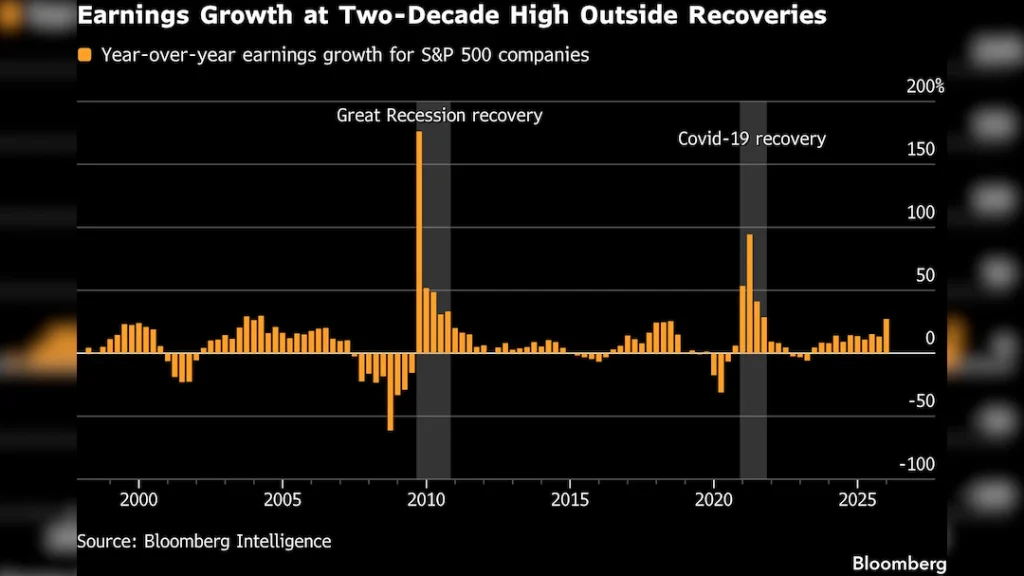
Despite the market volatility, several Wall Street strategists continue to maintain a positive outlook on equities, supported by strong corporate earnings and continued investment in artificial intelligence infrastructure.
Jeff Buchbinder, Chief Equity Strategist at LPL Financial, said inflation could have been significantly worse given the ongoing Middle East tensions.
Meanwhile, Tim Urbanowicz of Goldman Sachs Asset Management said investors remain more focused on earnings growth, economic resilience and AI-driven capital expenditure rather than short-term inflation spikes.
A number of major financial institutions, including RBC Capital Markets, HSBC and Barclays, have recently raised their year-end targets for the S&P 500.
Veteran market strategist Ed Yardeni issued one of the most bullish forecasts on Wall Street, projecting the S&P 500 could climb to 8,250 by the end of the year.
Individual Stocks In Focus
Among individual stocks, eBay rejected a reported $56 billion takeover proposal from GameStop CEO Ryan Cohen, calling the offer “neither credible nor attractive”.
Shares of Hims & Hers Health plunged 14 per cent after the company reported a quarterly loss and weaker-than-expected sales amid rising costs tied to its expansion into branded weight-loss drugs.
On the other hand, Quantum Computing surged 16 per cent after posting first-quarter revenue that exceeded analyst expectations.