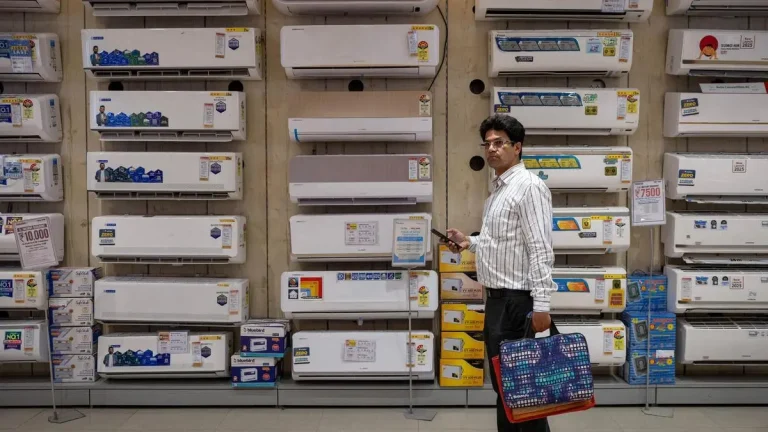
Blue Star may need to increase product prices by at least another 8% during the remainder of the current fiscal year, Managing Director B. Thiagarajan said, warning that continued cost pressures are making further hikes unavoidable.
Speaking to NDTV Profit, Thiagarajan said the company has already implemented 5-8% of a planned 13% cumulative price increase, but additional hikes will be necessary to protect profit margins amid mounting global and domestic economic pressures.
Blue Star Says More Price Hikes Are Unavoidable
According to Thiagarajan, the company will need to pass on at least 5% more in the coming months to maintain margins at last year’s levels.
“Five percent more minimum is required in order to protect the margins at last year’s level,” he said.


He attributed the rising cost burden to increasing prices of copper, petroleum-based components such as plastics, and the weakening Indian rupee, all of which have significantly impacted manufacturing expenses.
Thiagarajan added that the company plans to implement the remaining hikes in phases rather than introducing a sharp one-time increase.
Two-Stage Price Hike Planned Before Festive Season
Blue Star plans to complete around 5% of the additional increase by the end of May and through June, while another 3% hike is expected before the festive season begins later this year.
“Additional three more percent minimum will be required for the festive season. Every month or every week you have got additional challenges that are coming up in terms of input raw material as well as the exchange rate,” Thiagarajan said.
The comments come at a time when appliance manufacturers across India are grappling with volatile commodity prices and uncertain consumer demand.
Summer Sales Lower Than Expected
Thiagarajan also acknowledged that primary sales during the summer season have fallen short of expectations.
According to him, dealers had already stocked up inventory in advance due to anticipated changes in energy efficiency ratings and expected price increases, which affected fresh orders during the peak season.
While secondary sales — referring to retail movement to end consumers — have shown signs of improvement, fresh primary demand from dealers remains slower than expected.
“It is not very bad, but it is not an easy walk at all,” he said.
Consumer Spending Pressure Emerging
Thiagarajan also cautioned that repeated price increases could eventually hurt consumer demand, especially in a challenging macroeconomic environment.
“Consumers are going to tighten their spends and they are not going to be affording this kind of increase once again,” he said.
The warning reflects growing concerns across the consumer durables sector that inflationary pressures and higher living costs may force households to delay discretionary purchases such as air conditioners and appliances.
Industry Faces Cost And Demand Challenges Simultaneously
India’s air-conditioner industry has been witnessing strong long-term demand growth due to rising temperatures and expanding urban consumption. However, companies are now navigating a difficult balance between protecting margins and maintaining affordability.
Manufacturers remain particularly exposed to fluctuations in imported raw material prices and currency movements, as many critical components continue to depend on global supply chains.