

)
India is reviving a long-pending mega energy infrastructure project—the Middle East–India Deepwater Pipeline (MEIDP)—a proposed undersea gas pipeline from Oman to Gujarat aimed at reducing dependence on vulnerable sea routes like the Strait of Hormuz and strengthening long-term energy security.
The move gains urgency amid global energy disruptions triggered by the West Asia crisis and instability in oil and gas supply chains.
What Is The Oman–India Deep-Sea Pipeline?
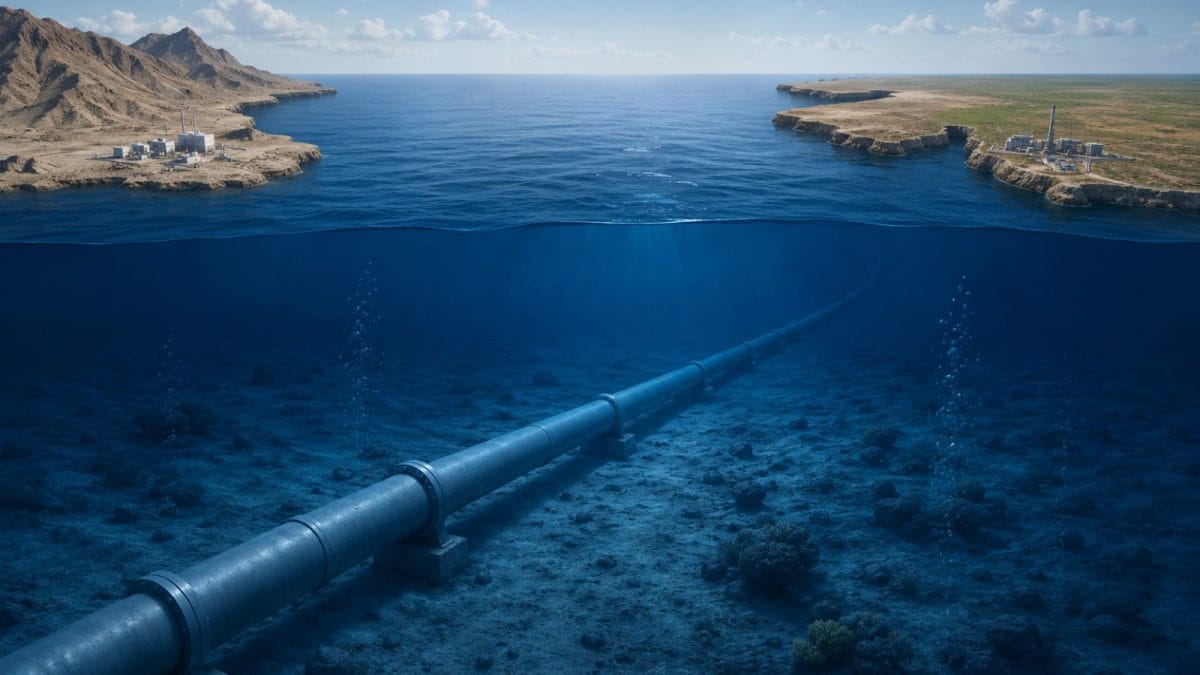
The proposed project is a massive undersea pipeline system that would connect Oman’s coastline directly to India’s western state of Gujarat.
Key features of the project include:
- Length: ~2,000 km undersea pipeline
- Cost: Around ₹40,000 crore (approx. $4.7–4.8 billion)
- Depth: Up to 3,450 metres below sea level
- Timeline: 5–7 years (estimated)
The project is being studied by Indian state-run companies including GAIL India, Indian Oil Corporation, and Engineers India Limited.
Why The Project Is Being Revived Now
The plan has regained attention due to escalating geopolitical tensions and disruptions in maritime energy routes.
The Strait of Hormuz—one of the world’s most critical oil and gas chokepoints—has reportedly been affected by conflict-related instability, raising concerns over tanker movement from Gulf nations.
India, which imports nearly 85–90% of its crude oil and a significant share of its gas, is especially vulnerable to such disruptions.
How The Pipeline Would Work
The proposed MEIDP would function as a direct subsea energy corridor, transporting natural gas from Oman to India without relying on tanker shipping routes.
If completed, the pipeline could also be designed to carry gas from multiple suppliers across the region, including:
- Oman
- UAE
- Saudi Arabia
- Qatar
- Iran (subject to geopolitical conditions)
- Turkmenistan (via extended supply networks)
This would transform the pipeline into a multi-source energy corridor rather than a single-supplier system.
Strategic Importance For India
The biggest advantage of the project is reduced dependency on vulnerable maritime routes such as the Strait of Hormuz.
It is expected to:
- Improve energy security
- Reduce exposure to shipping disruptions
- Stabilise long-term gas supply contracts
- Lower reliance on LNG tankers
- Strengthen India’s west-coast energy infrastructure
Unlike oil, India does not maintain large strategic reserves of natural gas, making uninterrupted supply chains especially important.
Engineering Challenge At Global Scale
The pipeline would be one of the most complex underwater infrastructure projects ever attempted.
At depths reaching 3,450 metres, it would exceed many existing deep-sea pipeline systems globally and require advanced engineering solutions for pressure, temperature, and seabed stability.
A pilot feasibility exercise has already tested sections of pipeline laid at around 3,000 metres depth to study seabed conditions.
Capacity And Supply Potential
Once operational, the pipeline is expected to supply around 31 million standard cubic metres per day (mmscmd) of natural gas to India, primarily landing in Gujarat.
This could significantly boost India’s long-term gas availability and support its transition toward cleaner energy sources.
Broader Energy Security Strategy
The project reflects India’s broader push to diversify energy routes amid volatile global oil markets, rising crude prices, and geopolitical instability.
It is part of a larger strategy to reduce vulnerability to external shocks and ensure more stable energy access for industry and households.
Conclusion
The Oman–India deep-sea pipeline represents one of India’s most ambitious energy security projects to date. While still in the feasibility and planning stage, it highlights how geopolitics and energy security are increasingly shaping long-term infrastructure decisions.
If implemented successfully, it could redefine India’s gas import strategy for decades.