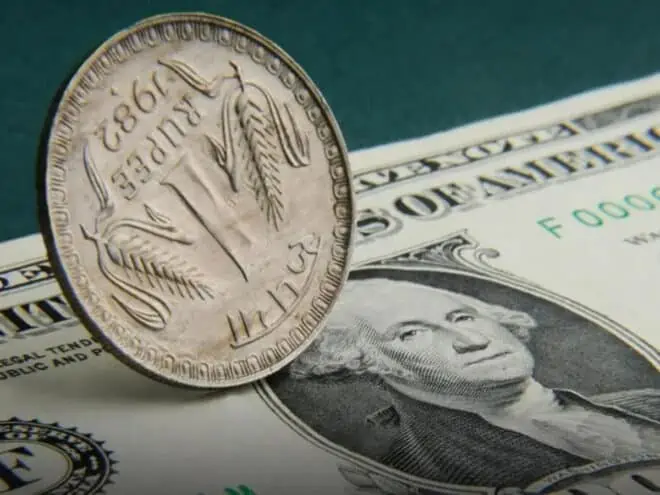
The Indian rupee plunged to a historic low on Friday, breaching the 96 mark against the US dollar for the first time ever amid rising crude oil prices, a stronger dollar, and escalating geopolitical tensions in West Asia.
The domestic currency touched an all-time low of 96.14 during intraday trade, making it the weakest-performing Asian currency so far this year.
Rupee Hits Record Low
The Indian rupee opened at 95.86 in the interbank foreign exchange market before sliding further to 96.14 against the US dollar.
The currency had closed at 95.64 in the previous trading session, marking a sharp fall within a single day.
According to market analysts, the rupee has now weakened by more than 6% against the dollar this year.
Rising Crude Oil Prices Hurting India
One of the biggest reasons behind the rupee’s decline is the sharp increase in global crude oil prices.
India imports more than 85% of its crude oil needs, meaning higher oil prices increase the country’s import bill and raise demand for US dollars.
Brent crude prices climbed above $107 per barrel amid fears of supply disruptions linked to tensions around the Strait of Hormuz.
The recent hike in petrol and diesel prices in India also reflects growing pressure from elevated global energy costs.
Stronger US Dollar Adds Pressure
The strengthening US dollar has further weakened emerging market currencies, including the rupee.
The dollar index, which tracks the greenback against major global currencies, moved higher after stronger-than-expected US economic data reduced expectations of aggressive interest rate cuts by the US Federal Reserve.
Market experts say global investors are increasingly shifting funds toward the dollar, which is traditionally viewed as a safe-haven asset during periods of uncertainty.
Impact on Indian Economy
A weaker rupee can have mixed effects on the economy.
Negative Impact
- Higher fuel and import costs
- Increased inflationary pressure
- Costlier electronics and industrial imports
- Higher expenses for overseas travel and education
Potential Benefits
- Better earnings for export-oriented sectors
- IT and pharmaceutical companies may benefit due to higher dollar revenues
What Investors Are Watching Next
Analysts say the rupee’s direction will depend heavily on:
- Crude oil price movements
- Developments in the Iran-Israel conflict
- Foreign investor flows
- Intervention measures by the Reserve Bank of India
Market participants are also closely tracking whether the RBI steps in more aggressively to control currency volatility.
Why This Matters
The rupee crossing the 96 mark is being viewed as a significant psychological milestone for financial markets and policymakers.
If oil prices continue rising and geopolitical tensions remain elevated, economists warn that India could face stronger inflationary pressure and slower economic momentum in the coming months.