
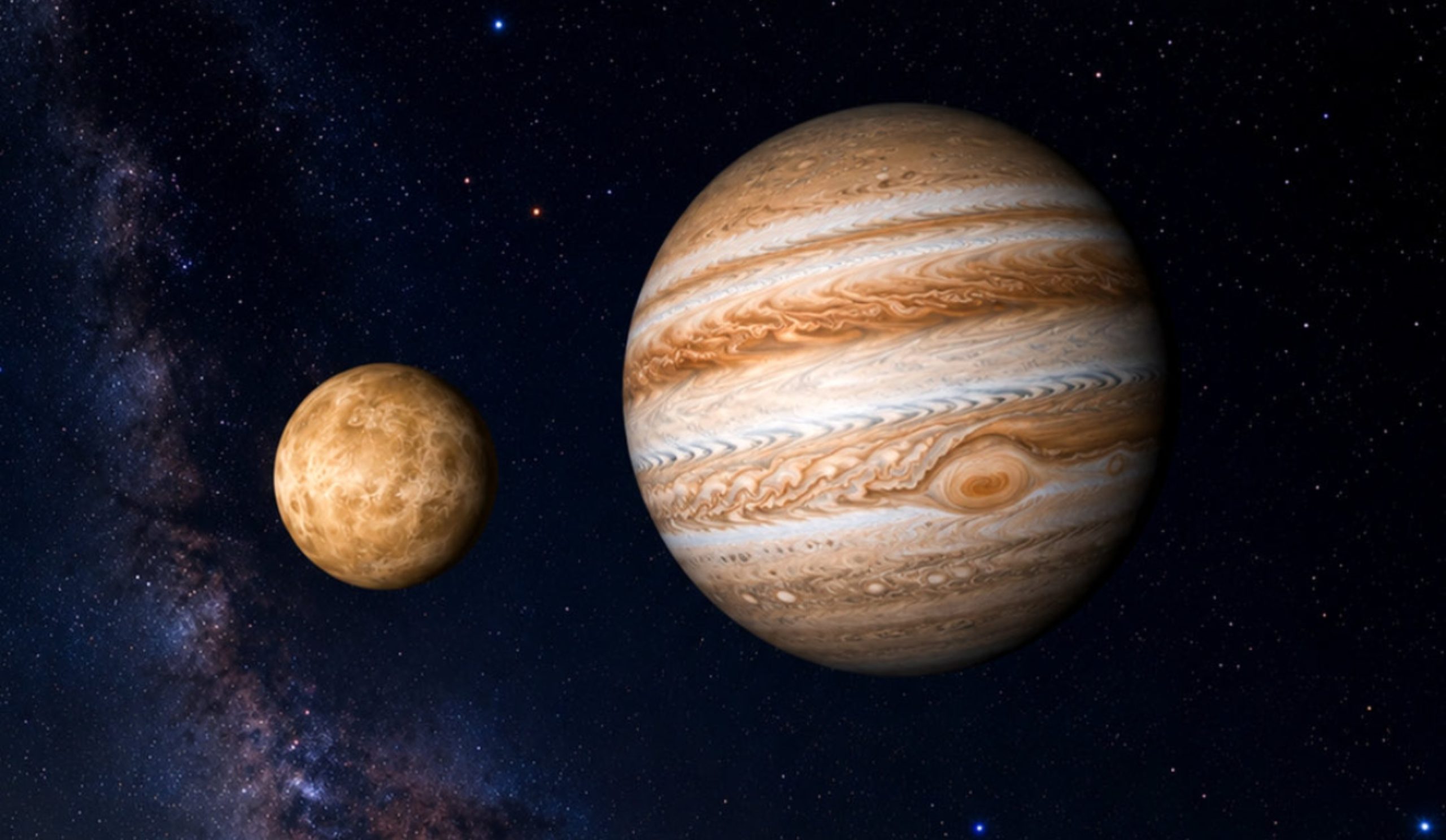


A beautiful celestial event will light up the evening sky on June 9 as Venus and Jupiter appear extremely close to each other in a phenomenon often called the “kissing planets.”
Although the two planets will seem almost side by side from Earth, they will actually remain millions of miles apart in space. The striking appearance is simply an optical illusion created by their positions relative to our planet.
Venus and Jupiter Will Shine Brightly in the Evening Sky
One of the biggest attractions of this event is its visibility. According to astronomy experts, both Venus and Jupiter will appear bright enough to be seen without telescopes or binoculars.
As a result, casual skywatchers and astronomy enthusiasts alike will be able to enjoy the spectacle with the naked eye.
The close visual pairing of the two brightest planets in the night sky is expected to create a memorable sight for observers around the world.
How and When to Watch the ‘Kissing Planets’
For the best view, look toward the west-northwestern horizon approximately 45 minutes to two hours after sunset.
Clear weather and an unobstructed western horizon will provide the most favorable viewing conditions. Furthermore, moving away from bright city lights can improve visibility and make the planets stand out even more.
Since both planets are exceptionally bright, spotting them should be relatively easy once the sky begins to darken.
Mercury Will Join the Planetary Show
The celestial display will become even more impressive on June 11 when Mercury joins Venus and Jupiter in the evening sky.
Mercury will appear lower on the horizon than the other two planets. Therefore, viewers will need a clear western view to catch a glimpse of the smallest planet in our solar system.
The three-planet gathering will offer another excellent opportunity for skywatching during the month.
Some Observers May See Venus Disappear Behind the Moon
In another exciting event, some fortunate observers may witness Venus briefly disappear as the Moon passes directly in front of it.
This rare occurrence, known as an occultation, happens when one celestial object blocks another from view. Depending on location, viewers could see Venus vanish behind the Moon and then reappear a short time later.
More Sky Events Coming in June
June will continue to offer several exciting astronomical events.
On June 21, the June Solstice will mark the official beginning of astronomical summer in the Northern Hemisphere. The day will also bring the longest period of daylight of the year for many locations.
Later in the month, the annual Bootid meteor shower is expected to peak around June 27. While the shower is known for being unpredictable, it can occasionally produce impressive bursts of meteors.
The month will conclude with the Micro Strawberry Moon on June 29. Because the Moon will be near its farthest point from Earth, it will appear slightly smaller than a typical full moon.
A Great Month for Stargazers
June is shaping up to be an exciting month for anyone interested in astronomy. From the dazzling meeting of Venus and Jupiter to meteor showers and a unique full moon, skywatchers will have several chances to enjoy remarkable sights above them.