According to the latest IMF estimates, India has transitioned from the world’s fifth-largest economy to the sixth in 2025. While India remains the fastest-growing major nation, the United Kingdom has marginally reclaimed the fifth spot with a GDP of $4 trillion compared to India’s $3.92 trillion.
The Paradox: Growth vs. Ranking
The decline in ranking does not indicate a shrinking domestic economy. In fact, India’s real economic growth remains strong. The slip is primarily attributed to currency valuation:
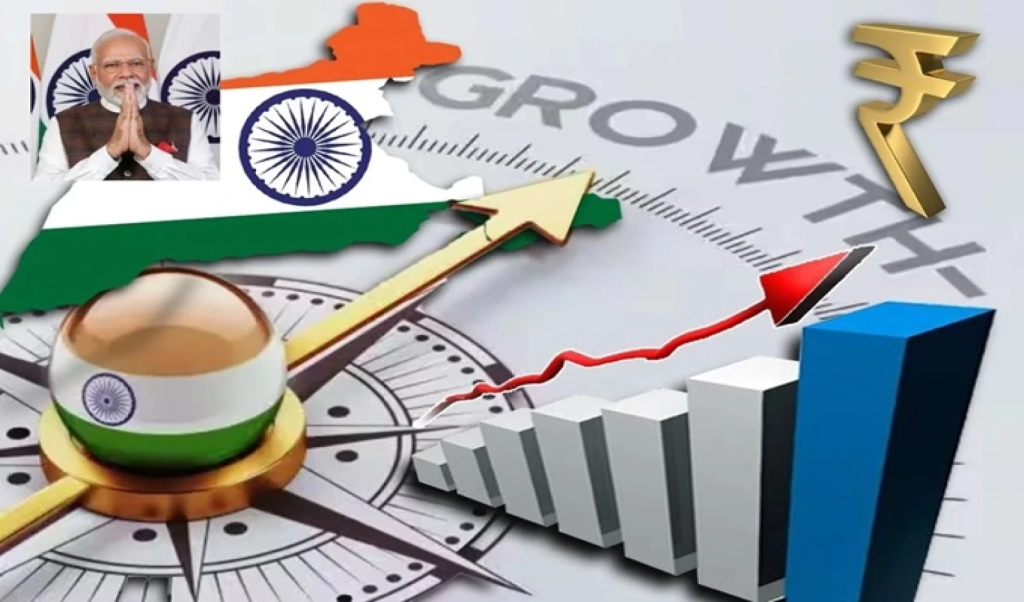
- Nominal Dollar Terms: Global rankings are calculated based on the US dollar at prevailing market exchange rates.
- Weakening Rupee: Over the past year, the Indian rupee has faced pressure from a strong US dollar, high US interest rates, and global geopolitical uncertainties.
- Diluted Gains: Even though the economy grew significantly in rupee terms, the depreciating currency reduced the total dollar value of the GDP when converted for global comparison.
Global Economic Standings (2025)
| Rank | Country | GDP (Nominal) |
| 1 | United States | $30.8 Trillion |
| 2 | China | $19.6 Trillion |
| 3 | Germany | $4.7 Trillion |
| 4 | Japan | $4.44 Trillion |
| 5 | United Kingdom | $4.0 Trillion |
| 6 | India | $3.92 Trillion |
Future Outlook: Reclaiming the Lead
Despite the temporary setback, the IMF’s long-term outlook for India remains highly optimistic:
- Reclaiming 4th Place: India is projected to overtake the UK again by 2027, with an estimated GDP of $4.58 trillion.
- The 3rd-Largest Milestone: Revised IMF trajectories indicate India may become the world’s third-largest economy by 2031. By then, India’s GDP is projected to reach $6.79 trillion, significantly surpassing Japan’s estimated $5.13 trillion.
- Continued Momentum: GDP growth is projected to hold steady at 6.5% for both 2026 and 2027, bolstered by strong domestic momentum and favorable trade conditions.