
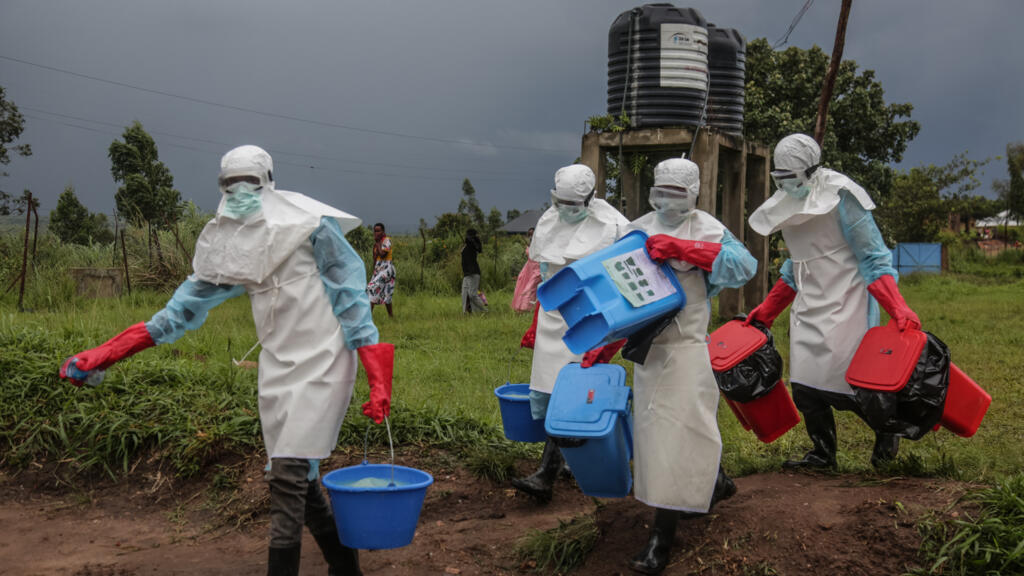


The ongoing health crisis in the Democratic Republic of the Congo (DRC) has taken a sharper turn. Health authorities report that suspected Ebola cases have officially surpassed the 900 mark in the volatile eastern region of the country.
The Congolese Ministry of Communication announced the updated figures via a public update. Local data indicates there are now 904 suspected cases alongside 119 suspected deaths tied directly to the rapidly expanding outbreak.
Regional Footprint and Previous Tolls
This latest surge represents a steep increase from the previous official caseload. Prior updates from health teams documented just over 700 suspected infections and more than 170 suspected fatalities.
The epicentre of the transmission remains heavily concentrated within the Ituri province. However, local monitoring teams have tracked a distinct geographical expansion of the virus into neighboring North Kivu and South Kivu provinces, making containment efforts significantly more complex.
The Specific Strain and Global Warnings
The current outbreak involves the rare Bundibugyo virus strain of Ebola. This classification introduces significant medical obstacles for response teams:
- Vaccine Absence: Unlike more common variants of the disease, there is currently no approved vaccine or specific, specialized antiviral treatment available for the Bundibugyo strain. Press Release Page | Press Information Bureau
- WHO Designation: Because of the rapid expansion, the World Health Organization (WHO) officially determined the outbreak to be a Public Health Emergency of International Concern (PHEIC). Wikipedia
- Risk Assessment: The WHO maintains that the structural danger poses a “very high” risk domestically for the DRC and its immediate neighbors—such as Uganda and South Sudan—but cautions that the risk of the disease spreading globally remains fundamentally low. The Guardian
Dangerous Ground Realities Facing Health Workers
Local medical teams and international aid workers are trying to stem the infection while navigating an incredibly hostile operational environment. The eastern provinces have been deeply destabilized by years of continuous violence linked to armed rebel groups, massive civilian displacement, and recent international aid funding cuts.
This deep-rooted political instability has fueled intense local skepticism and community anger. Shockingly, this friction resulted in coordinated arson attacks on two separate Ebola treatment centres in eastern towns. These security breaches have stripped vulnerable communities of critical isolation units, heavily disrupting contact tracing and preventing sick individuals from seeking safe, organized medical care.