
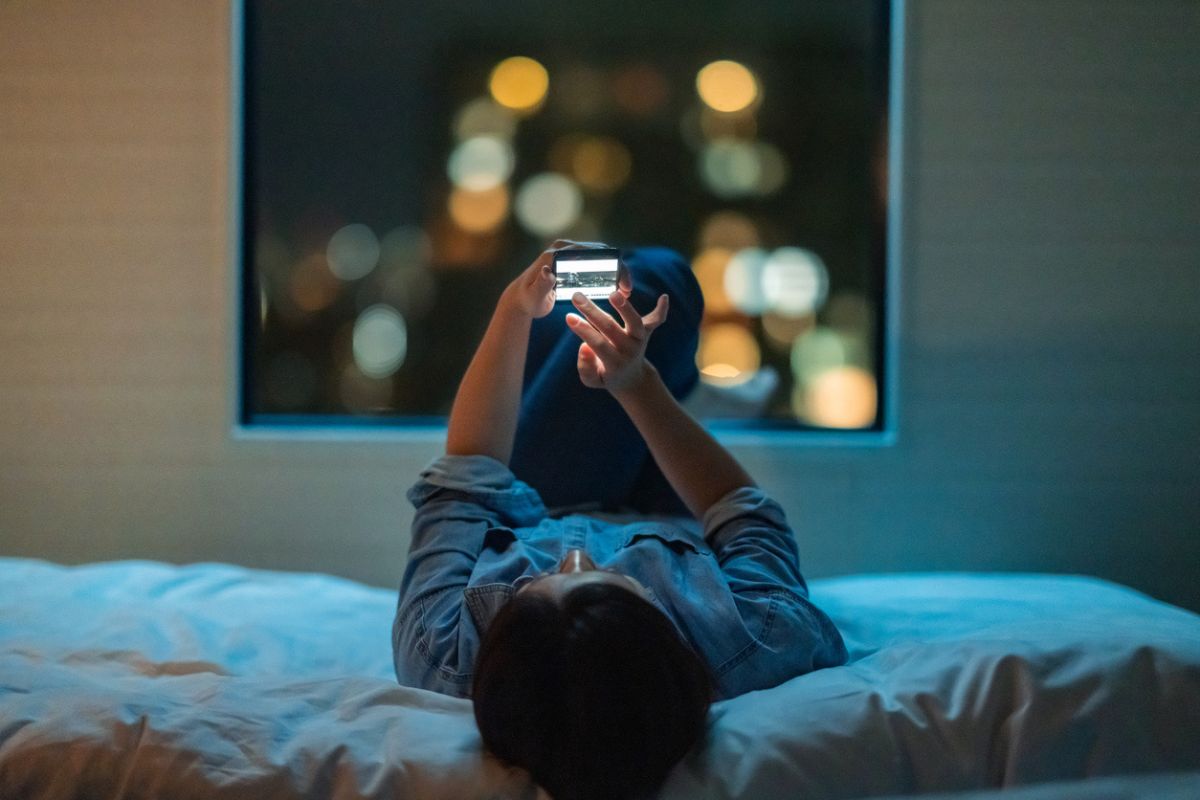


Most people intuitively know that spending hours doomscrolling every day isn’t doing their brain any favors. However, two recent studies reveal that the cognitive and psychological damage of nonstop smartphone use is much more severe than previously thought—and conversely, how rapidly the brain recovers during a digital timeout.
The Science: Reversing 10 Years of Brain Aging
Recent clinical data shows that you don’t need to permanently abandon technology to experience a massive mental health upgrade. Even brief, moderate reductions in screen time yield immediate results.
1. The PNAS Nexus Study
Researchers tracked 467 adult participants (with an average age of 32) who restricted internet access on their smartphones for two weeks while keeping standard calls and texts active. The most startling discovery was a profound surge in sustained attention spans. The improvement in focus was roughly equivalent to reversing 10 years of normal, age-related cognitive decline.
2. The Harvard-Linked JAMA Network Open Study
Another trial evaluated the psychological shifts in individuals who scaled back their phone utilization for just a single week. The metrics recorded a sharp drop in clinical symptoms across the board:
1-Week Digital Reduction Outcomes
─────────────────────────────────────────────────────────────────────────────
• Anxiety Symptoms:         Decreased by 16%
• Depression Symptoms:      Reduced by nearly 25%
• Sleep Quality:            Measurable increase in deep sleep cycles
Why Phones Hit the Brain Differently
Unlike stationary desktop computers, smartphones create a state of “continuous partial attention.” Because they are physically attached to us, they routinely fracture face-to-face conversations, family meals, and winding-down routines. Social media algorithms are intentionally designed to exploit dopamine loops, ensuring users engage in compulsive, mindless scrolling that deprives the brain of essential resting states.
6 Realistic Steps for a Micro ‘Brain Reset’
You don’t need to throw your device into the ocean to fix your focus. Behavioral experts stress that small, friction-inducing adjustments are enough to break the psychological loop.
- Introduce App Friction
Move social media off the home screen
Bury compulsive apps like TikTok, Instagram, and YouTube inside folders on your secondary or tertiary home screens. Removing them from your immediate line of sight interrupts the unconscious, muscle-memory tapping reflex.
2. Aggressively Strip Notifications
Silence the dopamine triggers
Disable all non-essential alerts. Strip away notifications for shopping apps, breaking news banners, social media likes, and promotional pings. Keep only the bare minimum: direct phone calls, calendar events, and direct text messages.
3. Practice Physical Separation
Leave the device behind
Intentionally leave your phone in another room or inside a drawer during short walks, grocery runs, meals, and when using the bathroom. Cultivating short 20-to-30-minute intervals of complete phone-free time lowers baseline hyper-vigilance.
4. Enforce a Low-Phone Bedroom Zone
Protect your sleep architecture
Late-night scrolling delays sleep onset, drives mental stimulation, and raises cortisol (stress) levels. Charge your phone entirely outside the bedroom, purchase a traditional analog alarm clock, and implement a strict no-screen rule 30 to 60 minutes before bed.
5. Outsource Your Willpower to Blocking Software
Use digital barriers
Do not rely purely on self-control. Deploy specialized blocking tools to systematically locking out distracting domains during specific hours of the day.
- Recommended Software: Freedom, Opal, ScreenZen, Forest, or native tools like Apple Screen Time and Android Digital Wellbeing.
6. Substitute the Scrolling Reflex
Replace digital loops with physical acts
When boredom strikes, consciously redirect the impulse to grab your phone toward physical, tactile habits. Keep a book nearby, go for a quick stretch, practice journaling, or step outside for a brief walk to retrain your attention span.
The Hidden Financial Benefit: Curbing Impulse Spending
Beyond the psychological benefits, cutting back on your daily screen time acts as an immediate shield for your bank account. Continuous scrolling leaves you perpetually exposed to highly optimized hyper-targeted ads, algorithmic product recommendations, and influencer marketing loops.
Try a “Low-Buy Weekend”: Disengage from both social media platforms and retail applications for a continuous 48-hour window. Most individuals quickly realize that a vast percentage of their casual, unnecessary spending is driven entirely by visual boredom rather than actual material need.