


India’s strategic decision to assist in the conservation of Indonesia’s iconic Prambanan Temple highlights the growing role of heritage diplomacy in strengthening cultural ties across Asia. The formal launch of the 9th-century Shiva temple complex restoration project is set to be a key cultural highlight of Prime Minister Narendra Modi’s three-nation tour to Yogyakarta this week. Managed by the Archaeological Survey of India (ASI), the project adds Prambanan to an expansive international portfolio of ancient temple restorations that trace back to shared civilizational links.
Located in the Special Region of Yogyakarta, Prambanan is Indonesia’s largest Hindu temple complex and a UNESCO World Heritage Site dedicated to the Trimurti—Brahma, Vishnu, and Shiva. To ensure structural authenticity, ASI experts are deploying the anastylosis method, a precise conservation technique where a monument is rebuilt using its original stones, introducing new blocks only when structural integrity is compromised. Given the thousands of scattered stone blocks across the landscape, Indonesian authorities are exploring artificial intelligence and digital mapping technologies to assist the archeological team.
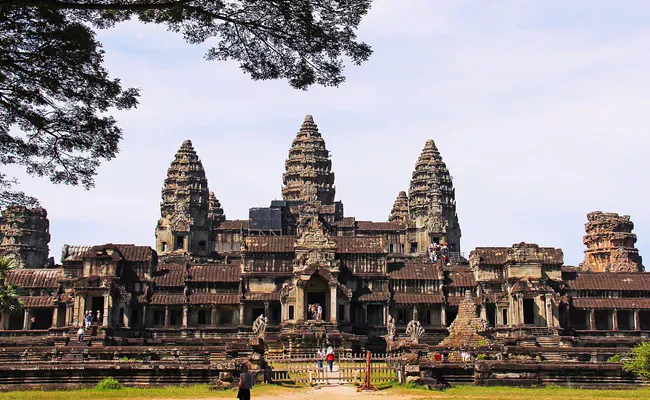
This milestone follows a long-standing tradition of Indian heritage interventions across Southeast Asia. India’s flagship overseas project took place between 1986 and 1993 at Cambodia’s legendary Angkor Wat, the world’s largest Hindu temple complex. The ASI cleared dense vegetation, optimized regional drainage, and stabilized delicate stone bas-reliefs. This initial footprint expanded to other Cambodian marvels like Ta Prohm—the famous temple intertwined with massive tree roots—as well as the Preah Vihear Temple.
Beyond Cambodia, India’s heritage footprint spans multiple countries:
- Vietnam: In 2017, the ASI initiated restoration work at the UNESCO-listed Mỹ Sơn Sanctuary, the ancient religious heart of the Shaivite Champa kingdom. During the process, archaeologists unearthed a centuries-old Shiva Linga, confirming historic ties to the subcontinent.
- Laos: Since 2009, India has provided structural conservation and technical expertise to preserve Vat Phou, an 11th-century Khmer Shiva shrine that later transitioned into a Buddhist place of worship.
- Sri Lanka: Since 2012, the ASI has actively conserved the historic Thiruketheeswaram Temple, one of the five sacred Pancha Ishwarams dedicated to Lord Shiva.
Looking forward, the Ministry of External Affairs has institutionalized heritage diplomacy as a core pillar of its Act East policy, with more than 50 cultural and heritage projects completed globally and 25 currently underway. Future blueprints include conservation mapping for Nepal’s Pashupatinath Temple and surveys at the Dong Duong Buddhist Monastery in Vietnam. India’s restorative footprint also encompasses non-Hindu structures, including Myanmar’s Ananda Temple and the earthquake-damaged pagodas of Bagan, illustrating a pluralistic approach to preserving Asia’s shared historical legacy.