
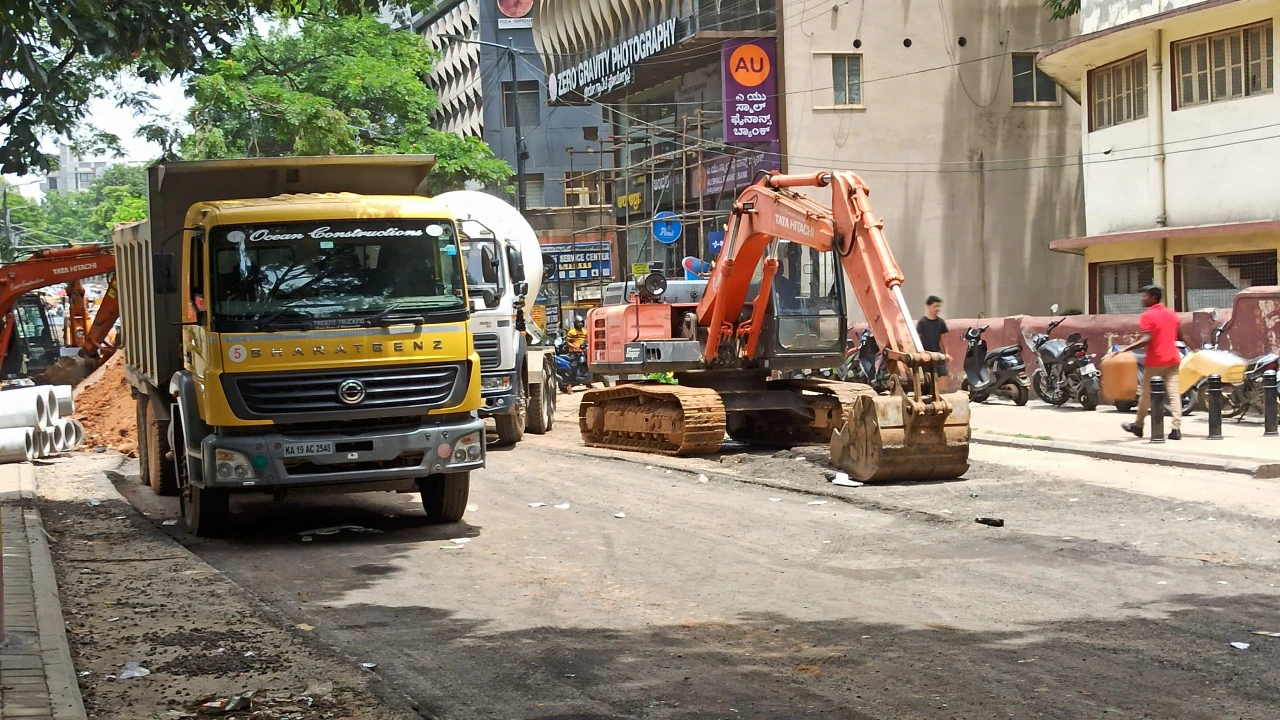


BENGALURU – As the “Garden City” grapples with a blistering April 2026 heatwave, temperatures have consistently surged 2–3°C above normal, hitting a peak of nearly 36°C. While global climate patterns and delayed pre-monsoon showers are the primary culprits, a local infrastructure debate has intensified: Is Bengaluru’s massive push for white-topped (concrete) roads making the city unlivable?
The White Topping Dilemma
White topping—the process of layering concrete over existing asphalt—has been the civic agency’s go-to solution for potholes. In early 2026 alone, the government cleared Rs 94 crore for white topping 11 major roads in South Bengaluru, with over 500 km of roads slated for the transformation over three years.
| Feature | Asphalt (Bitumen) | White Topping (Concrete) |
| Durability | 3–5 years; prone to potholes. | 20+ years; low maintenance. |
| Albedo (Reflectivity) | Low; absorbs and stores heat. | High; reflects more sunlight. |
| Heat Impact | Heats up quickly, cools slowly. | Reflects heat onto pedestrians/buildings. |
The “Radiant Heat” Effect
While concrete has a higher albedo (reflecting more sunlight than dark asphalt), urban planners and scientists at the Indian Institute of Science (IISc) warn of a hidden cost.
- Secondary Radiation: Reflected heat doesn’t just disappear; it bounces off the white road and hits pedestrians, vehicles, and glass buildings. This creates a “radiant heat load” that makes the perceived temperature significantly higher for someone walking on the street.
- Urban Heat Islands (UHI): A recent IISc study highlighted that Bengaluru’s built-up area has exploded by 1055% since 1973. Concrete roads and buildings retain heat long into the night, preventing the city from cooling down after sunset.
- Loss of Canopy: Most white-topping projects involve road widening, which has led to the removal of thousands of heritage trees. Without the cooling effect of evapotranspiration and natural shade, the concrete surfaces are directly baked by the sun.
Current Weather Context
The IMD reports that the current heatwave is driven by dry westerly winds and a lack of convective rainfall. However, in hotspots like Peenya, Hennur, and Nagawara, the combination of dense traffic and extensive concrete surfacing has made the “felt” temperature nearly unbearable for outdoor workers and commuters.
The Way Forward: ‘Cool City’ Strategies
Experts argue that white topping isn’t the “villain” in isolation, but rather its execution without green cover. Proposed solutions include:
- Integrated Greenery: Ensuring that for every kilometer of concrete laid, a double row of shade-giving trees is planted.
- Permeable Pavements: Using materials that allow water to seep through, helping lower ground temperatures.
- Shaded Corridors: Designing footpaths with permanent awnings or vertical gardens to counteract reflected heat.