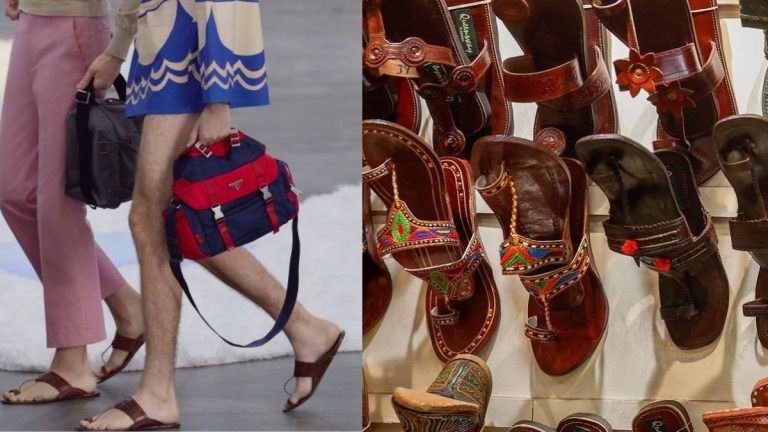
In a move aimed at repairing ties with Indian artisans and consumers, Italian luxury fashion house Prada has announced the launch of limited-edition Kolhapuri sandals manufactured in India, with each pair expected to cost around Rs 83,000 ($881).
The decision comes less than a year after the brand faced sharp criticism for allegedly appropriating Indian cultural designs without acknowledging their origins.
Controversy Began After Kolhapuri-Like Designs Appeared Without Credit
The backlash against Prada began in June last year when the brand showcased open-toe braided sandals that closely resembled traditional Kolhapuri sandals, a handcrafted footwear style historically produced in parts of Maharashtra and Karnataka.
Initially, the company described the footwear simply as “leather sandals” without referencing their Indian heritage. This omission triggered widespread criticism from artisans, designers, and social media users, who accused the luxury label of cultural appropriation.
As the controversy intensified, Prada acknowledged the inspiration behind the designs and moved to address concerns raised by Indian craftsmen and industry stakeholders.
Limited-Edition Collection To Be Manufactured In India
Following the backlash, Prada confirmed that it would produce a limited-edition Kolhapuri-inspired collection in collaboration with Indian artisans.
According to the brand’s official statement, approximately 2,000 pairs of Kolhapuri sandals will be manufactured in India, specifically in regions traditionally associated with the craft in Maharashtra and Karnataka.
The sandals will be sold through 40 selected Prada stores worldwide as well as on the brand’s online platform, positioning the iconic Indian footwear on the global luxury stage.
Three-Year Training Programme Announced For Artisans
In addition to the product launch, Prada has introduced a three-year training programme aimed at supporting artisans from eight districts historically known for Kolhapuri sandal-making.
The programme is expected to begin next month and initially benefit around 180 artisans. Training will be delivered through structured six-month modules in collaboration with the National Institute of Fashion Technology (NIFT) and other leading design institutes.
Officials say the initiative is designed to enhance technical skills, improve craftsmanship standards, and strengthen global market opportunities for Indian artisans.
Tanu Kashyap, Director General at NIFT, highlighted the importance of recognising Indian craftsmanship globally.
“It is time that Indian traditional crafts take their rightful place on the world stage,” she stated.
Artisans participating in the programme will also be given opportunities to visit the Prada Group Academy in Italy to gain exposure to advanced technical expertise and global fashion practices.
Cultural Appropriation Debate Continues In Global Fashion Industry
The Prada controversy is not an isolated incident. Global luxury brands have repeatedly faced criticism for allegedly adopting traditional Indian designs without acknowledging their cultural roots.
In another recent instance, American fashion label Ralph Lauren drew criticism after reportedly rebranding a traditional Indian bandhani-print skirt as a “print cotton wrap skirt,” again sparking debate over cultural recognition in the fashion industry.
Experts say such controversies underline the need for ethical collaborations and proper credit when traditional crafts inspire modern fashion collections.
Kolhapuri Sandals Gain Global Spotlight
With Prada’s upcoming launch, traditional Kolhapuri footwear is expected to gain renewed global attention. Industry observers believe that if executed responsibly, such collaborations could create new economic opportunities for Indian artisans while preserving centuries-old craftsmanship.
The move is being closely watched by fashion experts, cultural advocates, and artisan communities alike, as it may set a precedent for how global brands engage with traditional crafts in the future.