
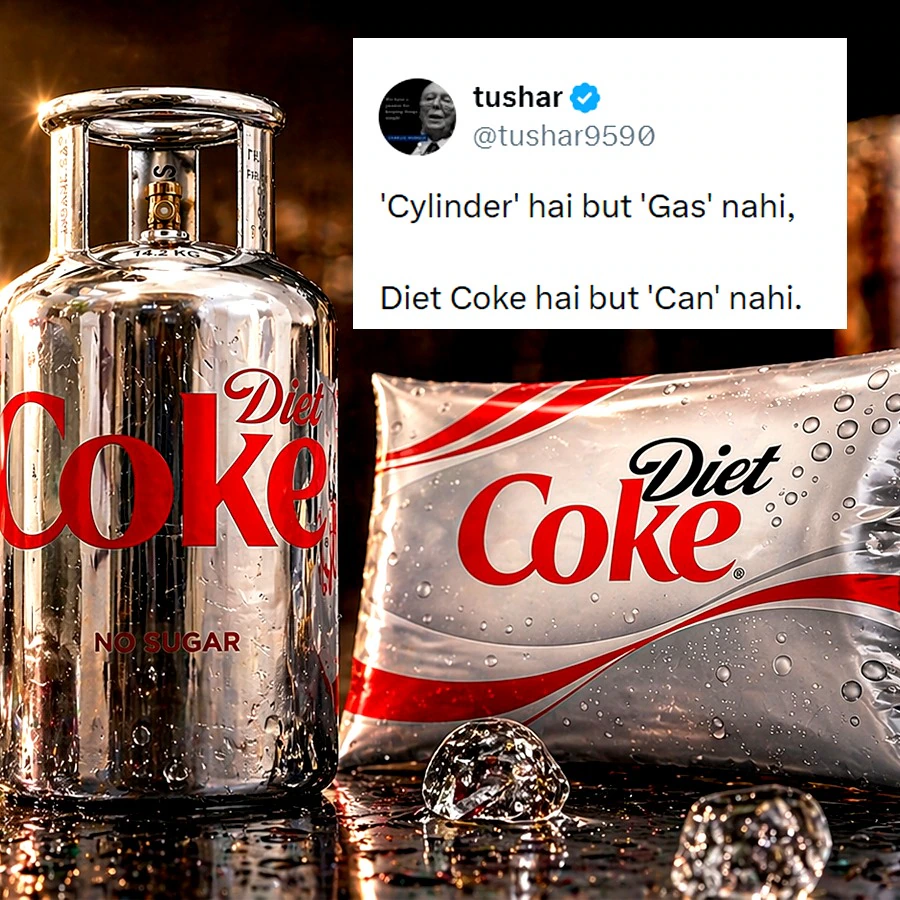


A temporary shortage of Diet Coke in India has triggered a wave of reactions across social media platforms, with users flooding timelines with memes, videos, and humorous posts about the beverage’s sudden disappearance from store shelves.
The trend has particularly gained traction among younger consumers, especially Gen Z users, who have been actively discussing the unavailability of the popular soft drink online and sharing their frustration in creative ways.
No worries for weight-watchers in Kerala!#TenderCoconut #KeralaTourism pic.twitter.com/TsOym9YCfB
— Kerala Tourism (@KeralaTourism) April 23, 2026
Kerala Tourism Joins Viral Trend With ‘Tender Coke’o’nut’ Twist
Amid the ongoing online chatter, Kerala Tourism joined the conversation through its official account on X (formerly Twitter).
The department shared an image of a coconut labelled “Tender Coke’o’nut”, accompanied by the caption:
“No worries for weight-watchers in Kerala!”
The post quickly caught attention, adding a lighthearted spin to the ongoing online responses to the shortage and showcasing how brands and institutions are leveraging humour to stay relevant during trending moments.
Why Diet Coke Is Trending Among Younger Consumers
For many young consumers, Diet Coke has become more than just a beverage — it is viewed as a daily companion during meals and a regular choice in quick-commerce orders.
As supplies dwindled, users began sharing screenshots showing empty listings on delivery apps, sparking comments like:
- “How will we survive summer without the fizz?”
- “Guess I’ll have to stick to plain water for now.”
- “People only realise the addiction when the supply actually disappears.”
One viral trend titled “how to kidnap a Gen Z kid” humorously depicted a truck filled with Diet Coke cans being used as bait. Another video portrayed Diet Coke as being “overwhelmed with love” and temporarily disappearing due to the surge in demand.
What’s Causing the Diet Coke Shortage in India?
Contrary to speculation, the shortage is not linked to beverage production, but rather to packaging constraints, specifically the limited availability of aluminium cans.
Recent developments affecting supply include:
- Aluminium prices rising by 14–20% in recent weeks
- Prices reaching approximately $3,672 (around ₹3.45 lakh) per tonne
- Can production operating nearly 20% below demand
- Logistical disruptions linked to tensions surrounding the Strait of Hormuz
- Stricter BIS certification norms affecting imported materials
These factors have slowed packaging operations and disrupted the supply chain, making it difficult to maintain steady availability of canned beverages like Diet Coke.
Rising Demand Adds Pressure on Supply
Increased consumption of packaged beverages, particularly in urban markets, has also contributed to the shortage.
With more consumers relying on quick-commerce platforms and ready-to-drink products, demand has surged beyond the current capacity of can manufacturers.
Although the beverage itself continues to be produced, limited packaging materials have delayed restocking, leaving many retailers unable to meet customer demand.
Social Media Turns Crisis Into Comedy
Despite the inconvenience, social media users have largely responded with humour.
One viral post joked:
“LPG crisis is manageable, but I can’t deal with a Diet Coke shortage,” accompanied by an image of a gas cylinder redesigned to resemble a Diet Coke can.
Such posts highlight how internet culture often transforms everyday inconveniences into shared moments of humour and creativity.