
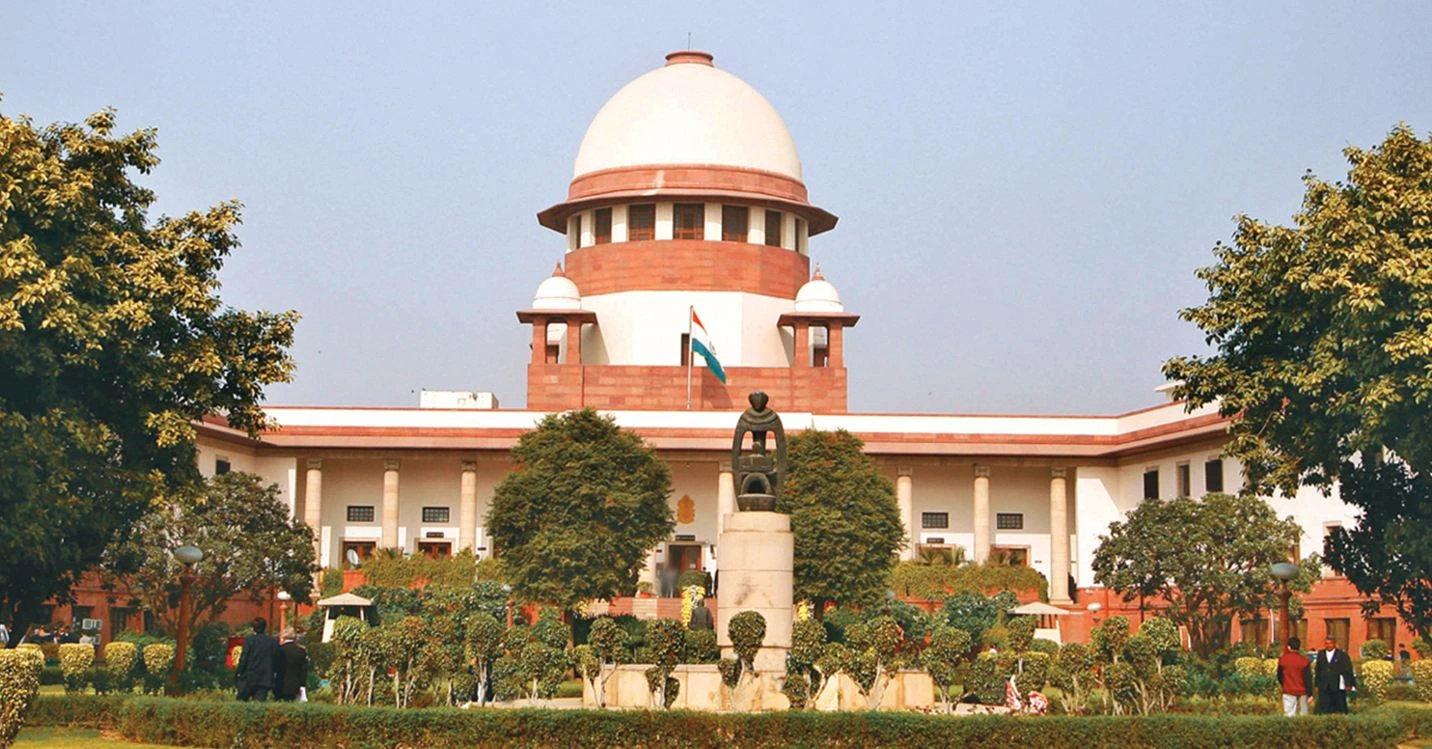


The Supreme Court on Thursday indicated that it is not inclined to entertain the Chandigarh Administration’s petition challenging the Punjab and Haryana High Court’s decision to quash a rioting case against Punjab Chief Minister Bhagwant Mann and other Aam Aadmi Party (AAP) leaders over a 2020 protest against electricity tariff hikes.
A bench comprising Chief Justice of India Surya Kant, Justice Joymalya Bagchi, and Justice V. Mohanawas was hearing the administration’s appeal against the High Court order that had set aside the FIR and chargesheet filed in the case.
“Sloganeering Happens in a Democracy”: CJI
Appearing for the Chandigarh Administration, Additional Solicitor General (ASG) S.V. Raju informed the bench that the administration was facing technical objections in three separate petitions challenging different High Court orders and sought time to address the issues.
Responding to the submission, Chief Justice Surya Kant observed:
“Mr Raju, naarebaazi (sloganeering) everyone does it in a democracy. Now that he (Mann) is holding some responsible position, we understand that he will understand his responsibility also. It’s alright I think now. If you are going to argue on merits, we will hear you. Otherwise, we are not inclined to interfere.”
Raju, however, argued that the High Court had effectively conducted a “mini trial” while quashing the case and said he would present arguments on the merits of the matter. The bench subsequently adjourned the hearing.
High Court Had Quashed FIR and Chargesheet
The Punjab and Haryana High Court had earlier ruled that no prima facie case was made out against Bhagwant Mann and the other AAP leaders.
The court quashed the FIR and chargesheet registered under the following provisions of the Indian Penal Code (IPC):
- Section 147 – Rioting
- Section 149 – Unlawful assembly
- Section 332 – Voluntarily causing hurt to deter a public servant from duty
- Section 353 – Assault or criminal force to deter a public servant from discharging duty
No Evidence of Instigation, High Court Said
In its order, the High Court noted that the prosecution had failed to specify any act of instigation by the accused.
“The nature of alleged instigation by the petitioners has also not been mentioned, nor have specific words or gestures of any kind been attributed to them. Therefore, there is no basis to ascribe the alleged act of throwing stones by the mob to the petitioners.”
The court further observed:
“It is a case where no act, voluntary or otherwise, has been attributed to the petitioners. Instead, the allegations are that on shooting mild water on the mob they started throwing stones which hit the officials present there.”
Court Found No Unlawful Assembly
The High Court also held that there was no prohibitory order under Section 144 of the Criminal Procedure Code (CrPC) in force at the time of the protest, meaning the gathering could not be termed an unlawful assembly.
It further pointed out that while the chargesheet named the petitioners, it also referred to 750–800 unidentified persons, indicating that investigations were still incomplete.
The court observed that no specific speeches, gestures or actions had been attributed to the AAP leaders and concluded that the injuries sustained by officials appeared to have resulted from crowd movement rather than any deliberate assault.
The order also noted that the alleged stone-pelting began only after the duty magistrate directed that water be sprayed on the protesters, weakening the prosecution’s claim that the petitioners had instigated the violence.