
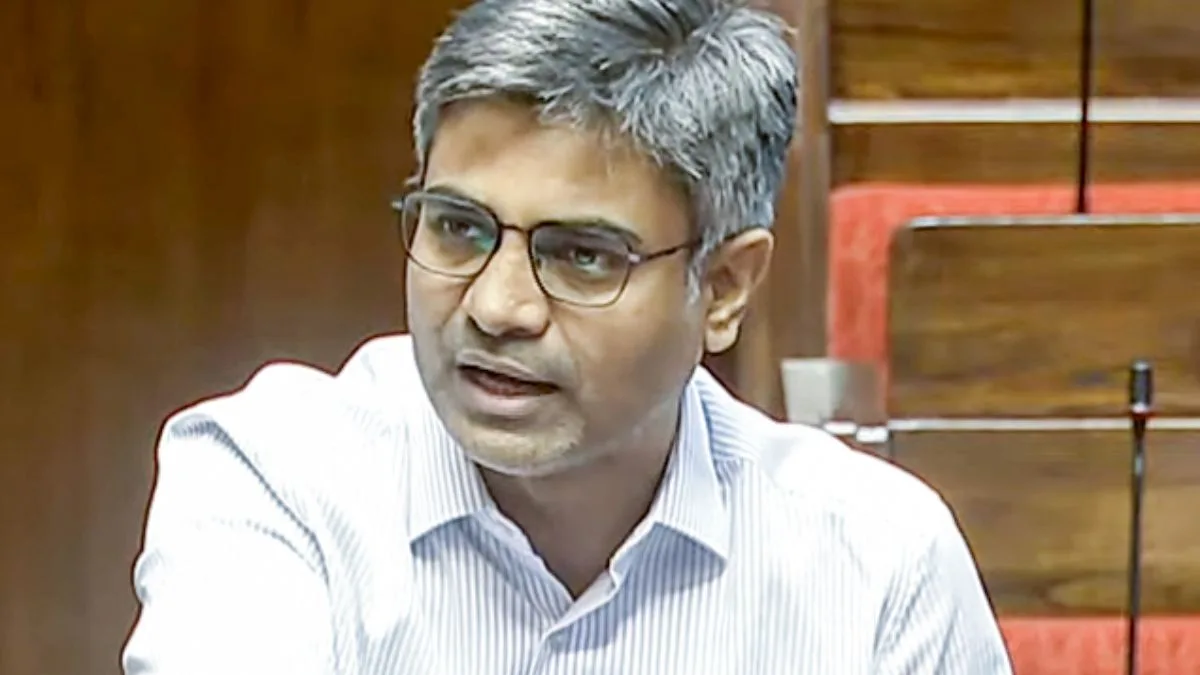


NEW DELHI– The Aam Aadmi Party (AAP) is facing its most significant internal crisis to date as seven of its Rajya Sabha MPs, led by Raghav Chadha and Sandeep Pathak, defected to the BJP on April 24, 2026. While Chadha is the party’s most recognizable public face, insiders reveal that the exit of Sandeep Pathak is the far more devastating blow to the party’s long-term survival.
The mass defection includes: Raghav Chadha, Sandeep Pathak, Ashok Mittal, Harbhajan Singh, Vikram Sahney, Rajinder Gupta, and Swati Maliwal.
The “Machinery” vs. The “Image”
The consensus within the party and among political analysts is clear: Raghav Chadha’s exit is a branding crisis, but Sandeep Pathak’s exit is a structural collapse.
- Raghav Chadha (The Face): As a suave, articulate Member of Parliament, Chadha was AAP’s primary bridge to the national media and urban youth. His departure damages the party’s optics and its narrative of being a “young, clean alternative.”
- Sandeep Pathak (The Brain): Pathak was the “silent mastermind” behind the scenes. As the National General Secretary (Organization), he was the architect of AAP’s historic 2022 Punjab victory. His data-driven approach, booth-level planning, and survey-based execution are the bedrock of AAP’s current power base.
Why Pathak’s Departure is a “Shock”
Unlike Raghav Chadha or Swati Maliwal, whose friction with the party leadership had been simmering for months, Pathak was considered “unshakeable.”
- Inner Circle Access: Pathak was one of the few individuals—alongside Sunita Kejriwal—allowed to meet Arvind Kejriwal while he was in custody. His loyalty was viewed as absolute.
- Organizational Pillar: He was not just an MP; he was a member of the Political Affairs Committee (PAC), the party’s highest decision-making body. He built the “system” that allowed AAP to function as a national entity.
- The “Outlier” Status: Having been with the party since the Delhi Dialogue Commission days in 2016, Pathak was seen as an organic part of the party’s DNA, unlike several other defecting MPs (like Ashok Mittal or Vikram Sahney) who joined more recently.
The Constitutional “Save”
Raghav Chadha has claimed that the group represents two-thirds of AAP’s Rajya Sabha strength (7 out of 10-11 members), attempting to frame the move as a “merger” of the legislative group with the BJP. This is a strategic move to bypass the Anti-Defection Law, which would otherwise lead to their disqualification as MPs.
The Fallout: A Weakened Punjab Strategy
The timing could not be worse for AAP. With Pathak’s exit, the party loses its most effective strategist in Punjab—the only state where it currently holds a full majority. While the BJP gains a ready-made organizational blueprint, AAP is left to rebuild its entire ground-level machinery from scratch.
“Chadha’s exit damages AAP’s image, while Pathak’s exit weakens its machinery.” — AAP Party Functionary