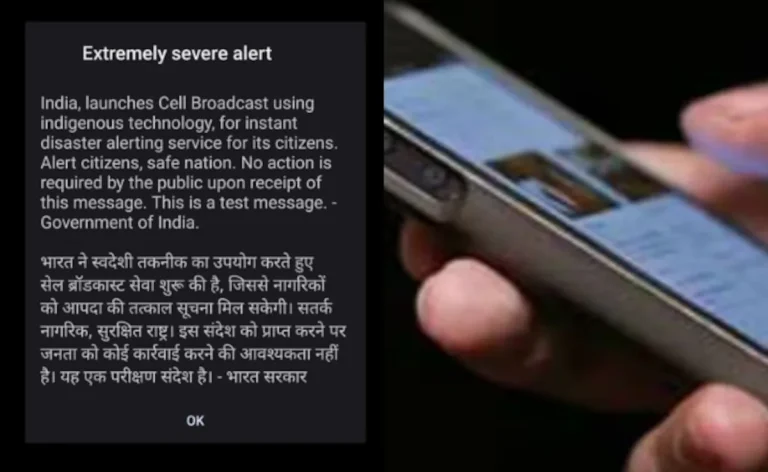
If your smartphone suddenly emitted a loud, piercing beep and displayed an “Extremely Severe Alert” notification today, May 2, 2026, there is no cause for alarm.
The Government of India is currently conducting a massive, nationwide trial of its indigenous Cell Broadcast Alert System. This initiative, a collaboration between the National Disaster Management Authority (NDMA) and the Department of Telecommunications (DoT), is designed to deliver life-saving emergency warnings to millions of citizens within seconds during real-world disasters.
The Message: “No Action Required”
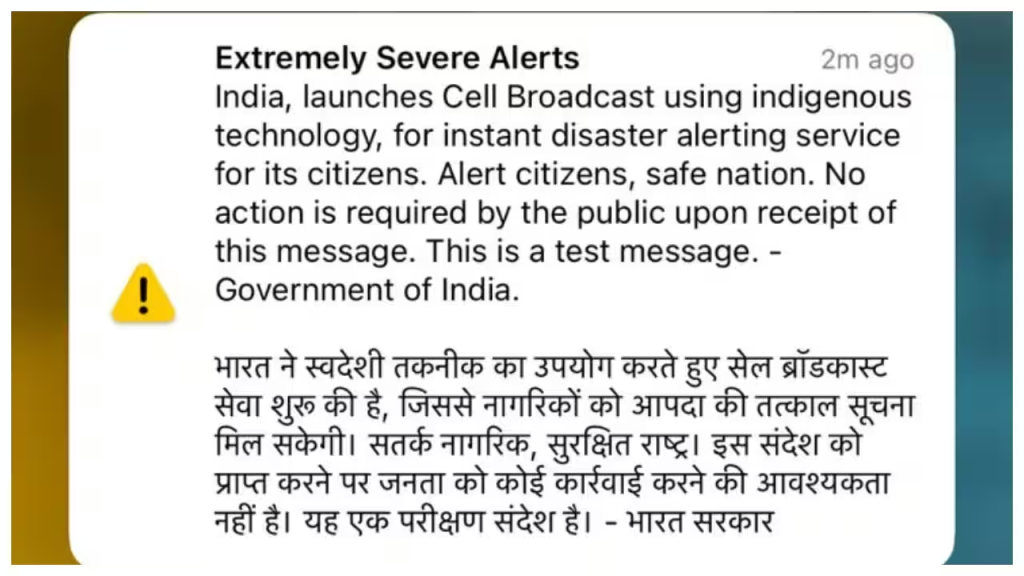
The test alert, which appeared in both English and Hindi, clearly stated: “India launches Cell Broadcast using indigenous technology for instant disaster alerting service for its citizens. Alert citizens, safe nation. No action is required by the public upon receipt of this message.” Authorities have emphasized that these beeps and pop-ups are strictly for testing the reliability of the system across different mobile networks and tower locations. Users may receive the alert multiple times as various frequencies are evaluated.
How It Works: Technology That Defies Network Congestion
Unlike traditional SMS messages, which can be delayed by heavy network traffic during an emergency, the Cell Broadcast technology transmits alerts to every single mobile device within a specific geographic area simultaneously.
- Targeted Warnings: Alerts can be sent to a specific neighborhood, a city, or an entire state.
- Infrastructure: Developed indigenously by the Centre for Development of Telematics (C-DOT), the system is integrated with the SACHET platform.
- Emergency Scope: Once fully operational, the system will provide instant warnings for tsunamis, earthquakes, flash floods, lightning strikes, and man-made hazards like gas leaks.
How to Manage Alerts on Your Device
While the government encourages keeping these alerts active for safety, users can check their device settings to ensure they are set up to receive these critical messages. You can find these options under: Settings > Safety and Emergency > Wireless Emergency Alerts > Test Alerts.
As the trials conclude, this home-grown technology is expected to be formally inaugurated later this year, placing India among a select group of nations with a robust, automated emergency communication infrastructure.