
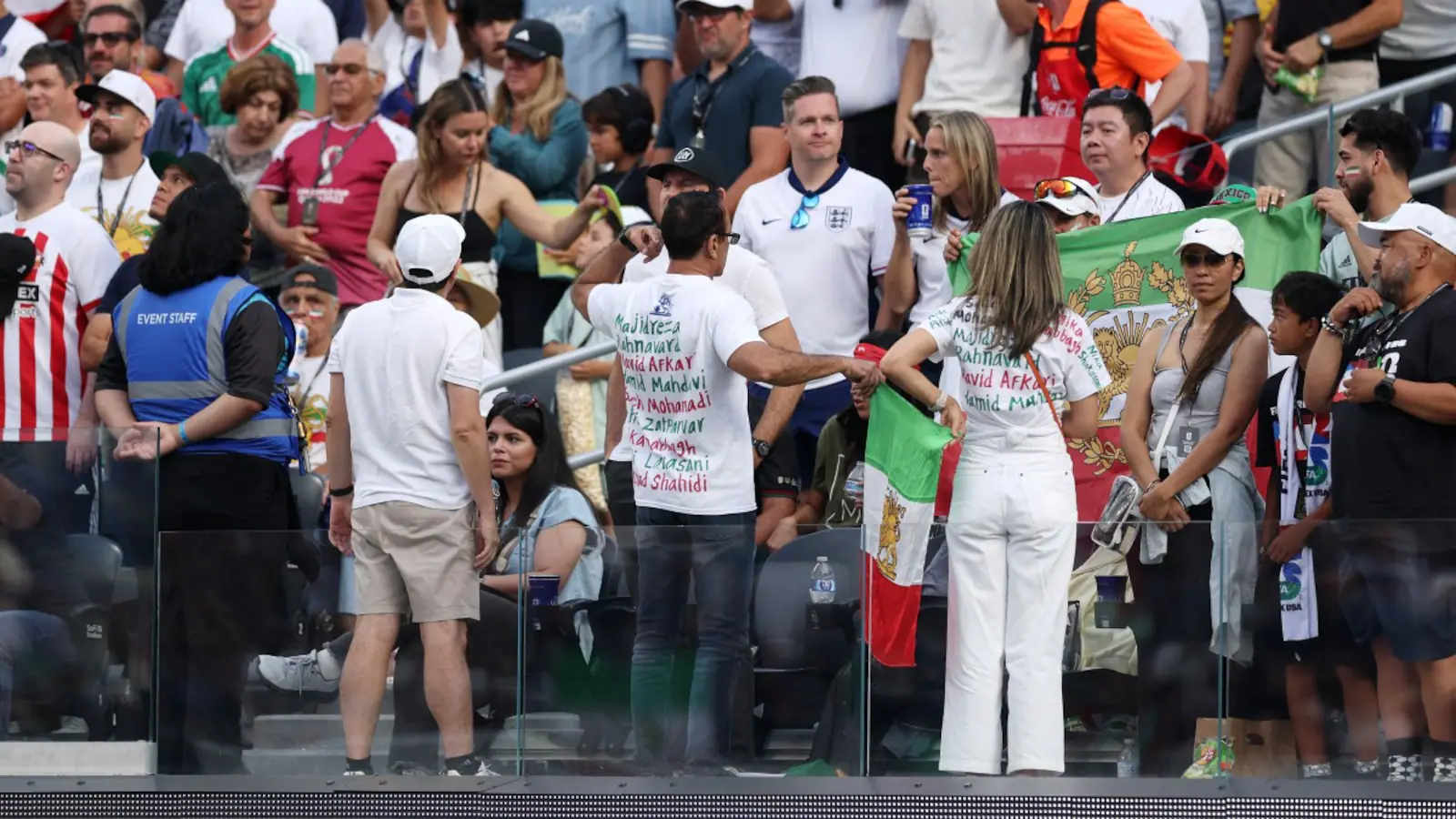


The opening match of Iran’s 2026 FIFA World Cup campaign against New Zealand was heavily overshadowed by intense political friction before the ball was even kicked in Los Angeles. As the Iranian national anthem played ahead of the Group G fixture, audible boos and whistles echoed from sections of the crowd inside the stadium. The tense atmosphere directly reflected recent escalating diplomatic and military standoffs between Tehran and the United States, one of the tournament’s co-hosts.
The choice of venue amplified these deep divisions, as Los Angeles is home to one of the largest Iranian diaspora communities in the world. Outside the stadium, hundreds of Iranian-American demonstrators gathered to voice their dissent, waving pre-revolutionary Iranian flags and carrying anti-government messages. Meanwhile, inside the arena, the crowd remained starkly divided between those protesting and the loyal supporters who turned out to back Team Melli on footballing terms.
Geopolitical hurdles had already disrupted Iran’s World Cup preparations long before their arrival in California. Due to a string of visa complications, travel difficulties for delegation members, and compounding security concerns, the team was forced to alter its original schedule and hold its training camp in Mexico.
Despite the heavily charged emotional and political backdrop, the action on the pitch delivered a highly competitive contest, ultimately ending in a 2-2 draw. Iran showed immense resilience by fighting their way back after falling behind, with veteran player Ramin Rezaeian playing a pivotal role in rescuing a crucial opening-round point. The dramatic scenes in California serve as a stark reminder that Team Melli’s tournament run will continue to be heavily scrutinized through a complex lens of national identity and global politics.