
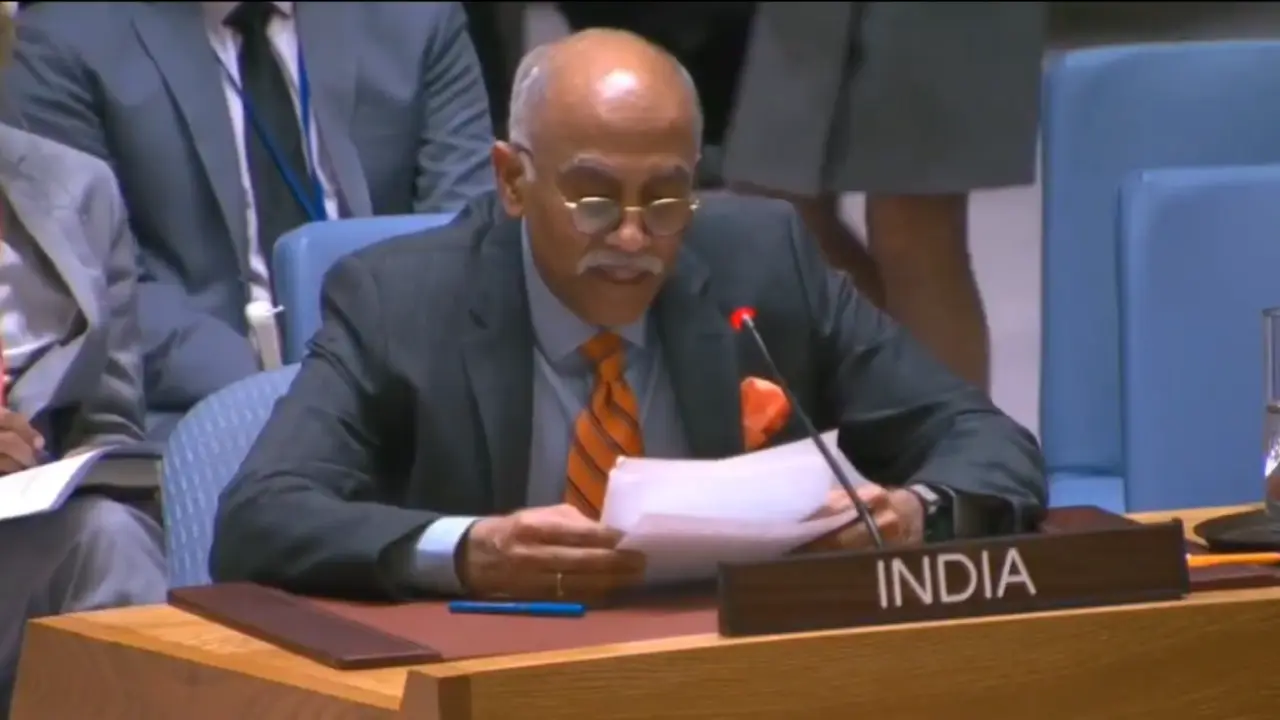


India has mounted a strong challenge to the latest Elements Paper circulated by the co-chairs of the Inter-Governmental Negotiations (IGN) process on United Nations Security Council reform, accusing the document of being subjective, inaccurate and disconnected from the clear majority view among member states.
Speaking at the IGN session on June 15, India’s Permanent Representative to the United Nations, Ambassador Harish Parvathaneni, delivered a detailed critique of the document, aligning New Delhi’s position with statements made by St Vincent and the Grenadines on behalf of the L.69 group and Japan on behalf of the G4 before outlining India’s concerns in an extensive eight-point rebuttal.
Security Council Reform Debate Continues To Intensify
The debate over reforming the United Nations Security Council remains one of the most complex and long-running issues in international diplomacy.
Established in the aftermath of World War II, the Security Council currently consists of five permanent members — the United States, Russia, China, France and the United Kingdom — all of whom possess veto power. Critics argue that the structure reflects the geopolitical realities of 1945 rather than the modern international order.
To address these concerns, the Inter-Governmental Negotiations process was established under UN General Assembly Resolution 62/557 to facilitate discussions on Security Council reform and identify solutions with the widest possible political support.
Over the years, several influential groups have emerged with competing visions for reform. The G4 nations — India, Germany, Japan and Brazil — advocate the creation of new permanent seats. The African Union supports at least two permanent seats for Africa under the Ezulwini Consensus, while the L.69 group of developing countries broadly backs expanded permanent representation. Opposing countries have generally favoured expanding only the non-permanent category.
India Questions Methodology Behind Elements Paper
Ambassador Parvathaneni questioned the methodology used in drafting the Elements Paper, particularly its interpretation of “convergence” among member states.
He argued that convergence should be understood as reflecting the majority position rather than requiring unanimity. According to India, the document applies the concept inconsistently and introduces ambiguity into a process that should be guided by clearly identifiable member state positions.
The ambassador also challenged references to so-called “bridging proposals” contained in the paper. He pointed out that the IGN’s foundational mandate does not refer to bridging proposals and noted that such mechanisms typically emerge only after formal text-based negotiations have commenced.
India Rejects Fixed Regional Seats Proposal
One of the most significant aspects of India’s criticism focused on the proposal for “Fixed Regional Seats”, which the Elements Paper describes as a possible avenue for expanding the permanent category.
India firmly rejected the proposal, arguing that it neither creates genuine permanent membership nor strengthens meaningful regional representation.
Parvathaneni contended that elected representatives occupying such seats would continue to act in their national capacities rather than serving broader regional interests. He further argued that the proposal risks creating a confusing hybrid model that blurs the distinction between permanent membership and veto-related privileges.
India also warned that such arrangements could undermine the interests of Small Island Developing States (SIDS), whose representation New Delhi has consistently supported in multilateral forums.
Permanent Membership Debate Remains Central
On the broader issue of permanent membership, India maintained that the UN Charter already provides sufficient clarity.
Referring to Article 23 of the Charter, Parvathaneni stated that the distinction between permanent and non-permanent members is already well-defined and does not require the additional clarification suggested by the Elements Paper.
India also took issue with language in the document that described support for permanent membership expansion as coming from only “a significant number of delegations.”
According to New Delhi, this characterisation significantly understates the actual level of support. India argued that positions held by the G4, the African Group, CARICOM and the L.69 group together represent a substantial majority of the UN’s 193 member states.
Call For Formal Text-Based Negotiations
India’s strongest demand centred on moving the reform process beyond procedural discussions and into formal text-based negotiations.
Parvathaneni urged the IGN co-chairs to establish a structured negotiation framework with clearly defined milestones and timelines, similar to other UN negotiating processes.
He argued that the Security Council reform process should not operate under a different set of rules than other multilateral negotiations and cautioned against using the principle of “nothing is agreed until everything is agreed” as a tool to indefinitely delay progress.
India called on the co-chairs to revise the Elements Paper to better reflect member state positions and provide a more objective basis for future discussions.
Pressure Mounting For Meaningful Reform
India’s intervention comes at a time when calls for Security Council reform are growing louder across the developing world.
As the United Nations approaches its 80th anniversary, questions surrounding the legitimacy, representativeness and effectiveness of the Security Council have gained renewed prominence.
Monday’s discussions highlighted the deep divisions that continue to shape the reform debate. However, India’s remarks also underscored its determination to push for an expanded permanent membership category and a more representative Security Council structure.
For New Delhi, which has long campaigned for a permanent seat, incremental reforms appear increasingly unacceptable as pressure builds for meaningful changes to one of the world’s most influential international institutions.