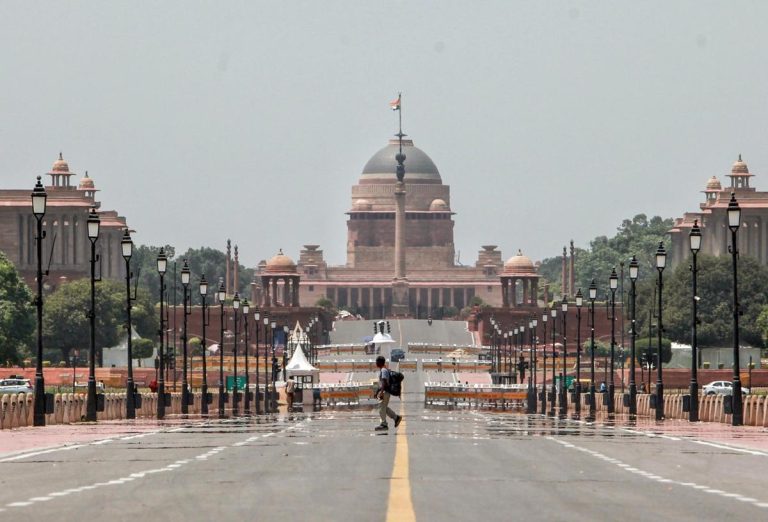
Delhi Temperature is sweltering under a relentless summer sun as the India Meteorological Department (IMD) issued an orange alert for Sunday, April 26, 2026.
Mercury levels are expected to soar to 44 degrees Celsius at isolated places across the city by the evening. While a partly cloudy sky may offer occasional psychological relief, the combination of high temperatures and developing heat stress has prompted authorities to advise residents against unnecessary outdoor exposure during peak hours.
Morning Stats and Air Quality Concerns
Delhi began the day with a minimum temperature of 26.2 degrees Celsius, which is surprisingly 2.4 notches below the seasonal average. However, the respite was short-lived as relative humidity stood at 43% by 8:30 AM, adding to the discomfort. Adding to the weather woes, the city’s air quality remained in the ‘poor’ category, with an Air Quality Index (AQI) of 223 recorded at 9 AM. Environmental experts warn that stagnant winds and rising heat can often trap pollutants closer to the ground, exacerbating respiratory issues for sensitive groups.
A National Heat Stress Scenario
The heatwave is not localized to Delhi. The IMD has noted abnormally high temperatures across Northwest, Central, and Peninsular India, with Sri Ganganagar in Rajasthan recording a staggering 44.5 degrees Celsius on Saturday. Similar alerts have been issued for Uttar Pradesh, Punjab, Haryana, and Gujarat. While the northern plains continue to bake, the southern tip of the country is seeing a different pattern, with Kerala placed on a yellow alert for summer rain starting April 27, offering a stark contrast to the parched conditions in the capital.
Looking Ahead: Potential Relief on the Horizon?
While the heatwave is expected to persist for the next 48 hours, the IMD’s extended outlook suggests a possible shift in weather patterns. From April 27 to April 30, a fresh Western Disturbance is likely to bring isolated light rain, thunderstorms, and gusty winds (reaching speeds of 30-40 kmph) to Delhi, Punjab, and Haryana. This could lead to a gradual drop in temperature by 2-3 degrees Celsius, providing much-needed relief from the current “orange” severity.