
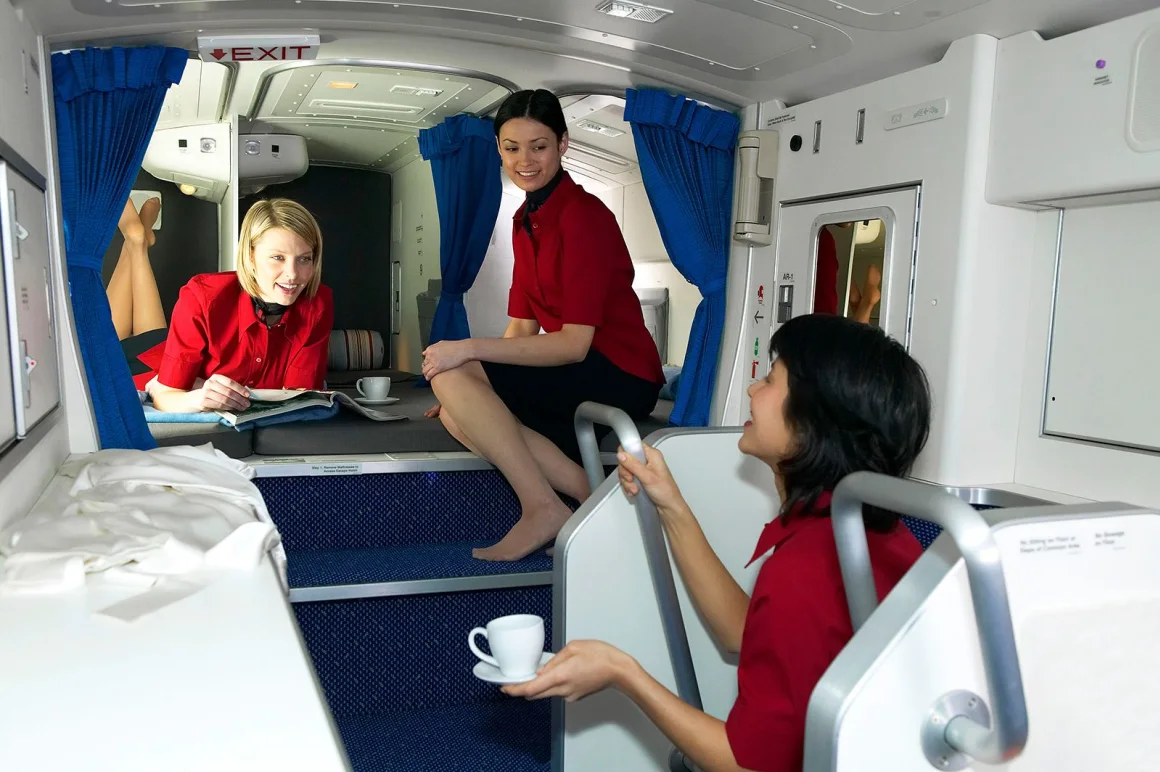


Ever wondered how flight attendants remain energetic and composed on an 18-hour journey? While passengers are struggling to get comfortable in their seats, the crew has access to “secret bedrooms” hidden within the aircraft. These specialized compartments, known as Crew Rest Areas (CRAs), are essential for maintaining safety and service standards on ultra-long-haul flights.
Hidden Locations and Access
Most travelers never notice these areas because they are cleverly integrated into the plane’s “dead space.”
- Location: Typically situated either above the ceiling of the first-class cabin or below the floor in the cargo hold.
- Entry: Accessed via unmarked doors that look like closets or through small, steep staircases and ladders hidden behind the galley.
- Aircraft Types: These are standard features on wide-body planes like the Boeing 777, 787 Dreamliner, and Airbus A350.
What’s Inside the Bunks?
Don’t expect luxury; these spaces are designed for maximum utility in a cramped environment.
- Capsule Design: The beds are narrow, similar to Japanese capsule hotels.
- Amenities: Each bunk usually includes a thin mattress, a pillow, a heavy blanket, a reading light, and a privacy curtain.
- Safety Features: Because the crew might be sleeping during unexpected movement, each bunk is equipped with emergency oxygen masks and seatbelts/harnesses to keep them secure during turbulence.
Strict Scheduling and Regulations
Aviation authorities like the DGCA and FAA mandate specific rest periods to prevent crew fatigue, which is a critical safety risk.
- Shift Work: The crew is divided into shifts. While one half manages the cabin, the other retreats to the bunks. No one sleeps at the same time.
- Communication: Each bunk has an intercom system so the flight deck or cabin crew can wake up colleagues in case of an emergency.
- Pilot vs. Crew: Pilots have their own separate rest areas, which are often slightly more spacious and located closer to the cockpit to ensure they remain focused for landing.
Why It Matters
On flights lasting 12 to 18 hours, these hidden bedrooms are the only thing preventing total exhaustion. They ensure that your flight attendants are not just there to serve coffee, but are physically and mentally prepared to handle medical emergencies or evacuations at any moment.