
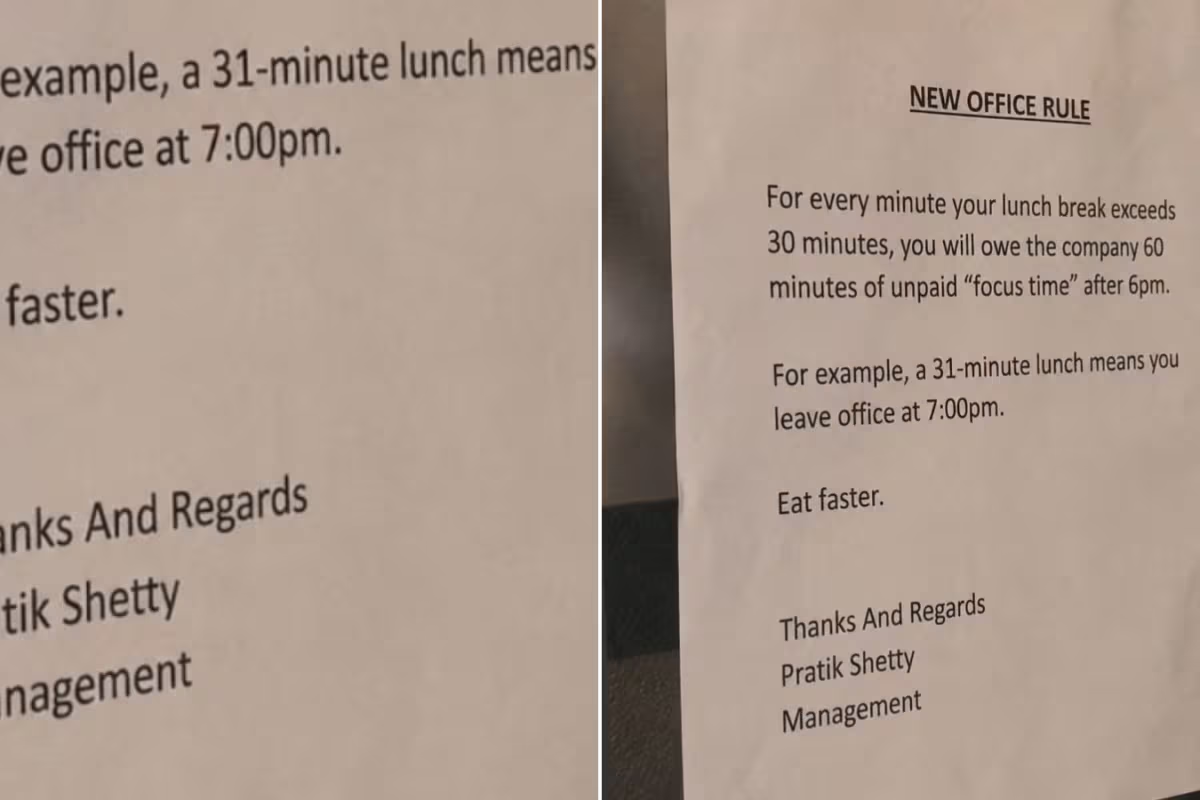


A workplace notice allegedly instructing employees to “eat faster” has triggered widespread criticism online after imposing what many social media users described as an excessive penalty for extending lunch breaks beyond the allotted time.
The notice, whose authenticity and origin have not been independently verified, outlined a strict policy limiting lunch breaks to 30 minutes. Any employee exceeding that duration would reportedly be required to compensate with significantly longer unpaid work hours after the regular workday.
If your management writes policies like this, don't be surprised when your best employees write resignation emails. pic.twitter.com/3v5jZGA3XS
— Nalini Unagar (@NalinisKitchen) June 22, 2026
What The Viral Notice Said
According to the circular, employees who take more than 30 minutes for lunch would be required to stay back after office hours as part of what the company described as “unpaid focus time.”
The notice stated:
“For every minute your lunch break exceeds 30 minutes, you will owe the company 60 minutes of unpaid ‘focus time’ after 6 pm.”
To illustrate the rule, the circular explained that if an employee returned from lunch just one minute late, they would not be allowed to leave at 6:00 pm and would instead be required to remain at work until 7:00 pm.
The memo concluded with a blunt two-word instruction:
“Eat faster.”
Social Media Reacts
The image of the notice was shared on X (formerly Twitter) on June 22 and quickly gained traction online, attracting more than 142,000 views and sparking a fierce discussion about workplace expectations and employee treatment.
Many users criticised the policy, calling it an extreme example of workplace micromanagement and questioning both its fairness and legality.
One user responded sarcastically by suggesting employees should adopt a similar formula for overtime compensation.
“Employees should write that for every minute worked extra, the company owes one hour of salary. For example, if someone works until 6:01 pm, the company should pay an extra hour’s salary,” the user wrote.
Another commenter argued that such policies could ultimately harm productivity rather than improve it.
“If you genuinely want your company to grow, this is the wrong approach. The way employees are treated directly impacts the quality of their work and overall output,” the user said.
Several others described the notice as an example of an unhealthy workplace culture that prioritises surveillance over trust.
Debate Over Workplace Culture
The viral post soon evolved into a broader conversation about employee rights, work-life balance and the growing pressure many workers face in corporate environments.
Critics argued that punishing a one-minute delay with an hour of unpaid work appeared disproportionate and could potentially violate labour regulations depending on the jurisdiction.
Many also questioned whether such rigid monitoring of lunch breaks would create a positive work environment or simply increase employee dissatisfaction.
The discussion drew comparisons with other recent debates surrounding workplace practices, including overtime expectations, attendance tracking and productivity monitoring.
Some Users Defend The Policy
Despite the widespread backlash, not everyone opposed the rule.
A section of social media users defended the company’s approach, arguing that employees are expected to adhere to agreed working hours and workplace policies.
“There is nothing wrong with this. The company pays the agreed salary and employees should work the agreed hours, including lunch schedules. Given the current job market, this is still better than layoffs,” one user commented.
Another user suggested that critics were overlooking the challenges faced by business owners.
“When you run a business and see employees routinely extending their lunch breaks, you understand the problem. Running a business in India is not as simple as posting opinions on social media for attention,” the user wrote.
Authenticity Remains Unverified
While the notice continues to circulate widely online, the identity of the company behind it has not been confirmed.
Nevertheless, the incident has reignited discussions about workplace boundaries and whether strict productivity measures help organisations succeed or risk damaging employee morale and trust.
As the debate continues, the viral memo has become another flashpoint in the ongoing conversation about modern workplace culture and the balance between accountability and employee well-being.